Thursday, November 12, 2020

Amazon faces lawsuit alleging failure to provide PPE to workers during pandemic

Christian Smalls, a former Amazon warehouse employee, filed a lawsuit against the company today alleging Amazon failed to provide personal protective equipment to Black and Latinx workers during the COVID-19 pandemic.

The class action suit alleges Amazon failed to properly protect its warehouse workers and violated elements of New York City’s human rights law, as well as federal and state laws.

“I was a loyal worker and gave my all to Amazon until I was unceremoniously terminated and tossed aside like yesterday’s trash because I insisted that Amazon protect its dedicated workers from COVID-19,” Smalls said in a statement. “I just wanted Amazon to provide basic protective gear to the workers and sanitize the workplace.”

Amazon did not specifically comment on the lawsuit but said it stands in solidarity with Black employees, customers and its partners.

“Amazon’s mission is to be the earth’s most customer-centric company, and this mission is central to our work in diversity and inclusion,” Amazon spokesperson Lisa Levandowski told TechCrunch. “Diverse teams help us think bigger, and differently, about the products and services that we build for our customers and the day-to-day nature of our workplace – this is reinforced within our 14 Leadership Principles, which remind team members to seek diverse perspectives, learn and be curious, and constantly earn others’ trust.”

The lawsuit suit has support from Rev. Jesse Jackson, who said he stands in solidarity with Smalls and other Amazon warehouse workers.

“COVID-19 has disproportionately impacted Black and Brown communities on so many levels, from warehouses to jailhouses,” Rev. Jackson said in a statement. “It’s an invisible enemy that is killing our communities. Chris ‘case is a classic example of how corporate greed and insensitivity can literally expose communities to untold and unnecessary risks.”

Smalls was fired from Amazon in March after organizing a walkout at one of the company’s fulfillment centers in Staten Island. As a result, New York’s attorney general is investigating if Amazon violated federal worker safety laws and New York state’s whistleblower protections laws by firing Smalls.

Smalls’ termination helped galvanize other warehouse workers who later organized formed an international organization to demand change inside Amazon’s warehouses. Organizers pointed to worker retaliation as one of the driving factors for the formation of Amazon Workers International. Meanwhile, Amazon executives reportedly discussed discrediting Smalls and making him the face of the organizing movement.

An Amazon spokesperson previously told TechCrunch the company did not fire Smalls for organizing a protest. Instead, Amazon said it fired him for “putting the health and safety of others at risk and violations of his terms of employment.”

“Mr. Smalls received multiple warnings for violating social distancing guidelines,” the spokesperson said. “He was also found to have had close contact with a diagnosed associate with a confirmed case of COVID-19 and was asked to remain home with pay for 14-days, which is a measure we’re taking at sites around the world. Despite that instruction to stay home with pay, he came onsite further putting the teams at risk.”


from Amazon – TechCrunch https://techcrunch.com/2020/11/12/amazon-faces-lawsuit-alleging-failure-to-provide-ppe-to-workers-during-pandemic/

Nana nabs $6M for an online academy and marketplace dedicated to appliance repair

A lot of the focus in online education — and, let’s face it, education overall — has been about professional development for knowledge workers, education for K-12 and how best to deliver cost-effective, engaging higher learning to those in college and beyond. But in what might be a sign of the times, today a startup that’s focused on e-learning and the subsequent job market for a completely different end of the spectrum — home services — is announcing some funding to continue building out its business in earnest.

Nana, which runs a free academy to teach people how to fix appliances, and then gives students the option of becoming a part of its own marketplace to connect them to people needing repairs — has picked up $6 million.

The seed round is being led by Shripriya Mahesh of Spero Ventures, and Next Play Ventures (ex-LinkedIn CEO Jeff Weiner’s new fund), Lachy Groom, Scott Belsky, Geoff Donaker of Burst Capital, and Michael Staton of Learn Capital are among those also participating.

Nana has now raised $10.7 million, with past backers including Alpha Bridge Ventures, Bob Lee, and the Uber Syndicate, an investment vehicle to back Uber alums in new ventures. Founder and CEO David Zamir is not actually an Uber alum, but one of his first employees, VP of Engineering Oliver Nicholas, is an early Uber engineer, and the company has also found a lot of traction of Uber drivers this year, after many found themselves out of work after the chilling effect that the pandemic had on ridesharing.

Nana — full name Nana Technologies (and not to be confused with Nana Technology, tech built for older adults) — is partly a labor/future of work play, partly an educational play, partly a tech/IoT play, and partly an ecological play, in the eyes of Zamir, who himself trained as an appliance repairperson, running his own successful business in the Bay Area before pivoting it into a training platform and marketplace.

“There are 5.9 million tons of municipal solid waste [which includes lots of electronics like washing machines, blenders and everything in between] in the U.S.,” he said in an interview, “and only 50% of that is capable of getting recycled. We’re in a vicious cycle with appliances, and it’s partly because there aren’t enough people with the knowledge to repair them. But what if you had the liquidity to do that? We’re talking about creating jobs, but also saving the environment.”

Nana’s proposition starts with free lessons to fix a range of appliances — currently, dishwashers, refrigerators, ovens, stoves, washers and dryers — and their typical breakdown/poor performance issues to anyone who wants to know how to repair them. These classes are available to anyone — an individual simply interested in learning how to fix a machine, but more likely someone looking to pick up a skill and then use it to make some money.

Once you take and pass a course — currently remote — you have the option (but not requirement) to register on Nana’s platform to become a repair person who picks up jobs through it to get jobs fixing that particular issue. Nana already has partnerships with major appliance and warranty companies including GE, Miele, Samsung, Assurant, Cinch and First American Home Warranty, so this is how it gets most of its work in, but it also accepts direct requests from consumers for repair of dishwashers, refrigerators, ovens, stoves, washers and dryers.

Over time, Zamir said, the plan is not just to take in jobs and send out technicians to fix things in an Uber-style dispatch service — but to expand it to fit the kinds of next-generation appliances that are being built today, with IoT diagnostic monitoring and helping also to integrate these appliances into connected homes. It also seems to be slowly expanding into other home services too, alongside appliance repair (which remains its main business).

Nana has to date registered hundreds of technicians in 12 markets across the U.S. and said it expects to expand to 20 markets by the end of 2021.

Nana has an unlikely founder story that speaks to how so much of the tech world is still about hustle and finding opportunities in the margins.

Founder and CEO David Zamir hails from Israel, but unlike many of the transplants you may come across from there to the Bay Area tech world, he’s not a tech guy by education, training or work experience. He used to run clothing stores in Tel Aviv and vaguely liked the idea of being involved in a tech business at some point — Israel loves to call itself “startup nation” and so that bug is bound to bite even those who don’t study computer science or engineering — but he didn’t know what to do or where to begin.

“The clothing business didn’t make much money,” he said. So after a period Zamir and his American wife decided to move to the U.S. and try their luck there.

While initially based on the east coast near her family and wondering about what kind of job to pursue, Zamir spoke with a friend of his in Toronto who was an working as an independent tradesperson fixing appliances, and the friend suggested this as an option, at least for a while.

“So I hopped on an airplane to shadow my friend,” he recalled. “The lightbulb went off. I thought, I should do this in San Francisco,” where he had been wanting to move to crack in to the tech world, somehow. “I thought that I’d start with fixing appliances while I figured out how to find my way into tech.”

That turned into more than a temporary income stopgap, of course. After finding that his business taking off, Zamir saw that technology would be the avenue to growing it.

He was helped in part to build the idea and the business through his grit. Josh Elman, the famous tech investor, complained about a broken dryer back in April, and asked the Twitter hive mind whether he should get a new one or go through the pain of fixing it. Someone flagged the question to Zamir, who reached out and connected Elman with one of Nana’s online teaching technicians. Twelve hours later, Elman’s drier was diagnosed (by Elman), on its way to getting fixed, and Elman signed on as an advisor to the company.

Move fast and fix things

The world of tech is all about building new things and solving problems, with “breaking” being more synonymous with disruption (=”good”) and fearlessness (see: Facebook’s old mantra to its early employees to move fast and break things). But behind that, there is an interesting disconnect between the tech version of “broken” and objects that are actually “broken” in the real world.

Many of us these days find using apps and other digital interfaces second-nature, but most of us would have no idea how to repair or work with much more basic electronic systems. And nor do most of us want to. More often than not, we give up on it, decide it’s not worth fixing, and click on Amazon et al. to get a new shiny object.

Looked at on a wider scale, this is actually a big problem.

Electronics can be recycled, but in reality only about half the materials can be usefully reused. Meanwhile, Nana estimates that the appliance repair market is a $4 billion opportunity, with some 80 million appliances in need to being serviced annually in the US. But currently there are only some 31,000 trained technicians in the market. Nana estimates that to meet the demand of growing numbers, an additional 28,000 new technicians will be needed by 2025.

At the same time, the move to automation in many skilled labor jobs is putting people out of work: research from the Brookings Institution estimates that some 30 million people will lose their jobs in coming years because of it.

The idea here is that a platform like Nana can help some of those people retrain to fill the gap for appliance technicians, while at the same time extending the life of people’s appliances in a less painful way — putting less stuff into landfill — while at the same time expanding knowledge for anyone who cares for it.

Zamir said that Nana was named after his mother, who raised David as a single parent after his father passed away, a reference to working hard and being practical.

That sentimentality seems to motivate him in a bigger way, too: Zamir himself is a guy with a lot of heart and emotion vested into the concept of his startup. When I told him an anecdote of how our dishwasher broke down earlier this year and both a customer service rep from the maker (Siemens) and a separate repair person advised me to replace it, he got visibly agitated over our video call, as if the subject was something political or significantly more graver than a story about a dishwasher.

“I am not a supporter of what they told you,” he said in an angry voice. “It’s really upsetting me.” (I calmed him down a little, I think, when I told him that myself I uninstalled the broken dishwasher and installed the new one myself, because Covid.)

Zamir said that there are no plans to charge for its academy courses, nor to tie people into signing up with Nana to work once they take the courses. The fact that it provides a lot of inbound jobs attracts enough turnover — between 40% and 60% of those taking courses stay on to work when they took in-person classes, and for now the online figures are between 15% and 35%.

“It’s still early days,” he said, “but we’re finding the take up impressive… Most want to participate in the marketplace.” He says that there are other call-out services where they could register but the tech that Nana has built makes its system more efficient, and that means better returns.

All of this has played well with those who have become Nana’s investors. People like Jeff Weiner — who in his time as CEO of LinkedIn led the company to acquire Lynda as part of a bigger emphasis on the importance of skills training and education — see the opportunity and need to provide an equivalent platform not just for knowledge workers but those who have more manual jobs, too.

“We are excited by Nana’s vision of providing training, access and opportunity for rewarding, satisfying work while also filling a critical gap in our economy,” said Shripriya Mahesh of Spero Ventures, in a statement. “Nana has created a new, scalable approach to giving people the agency, tools and support systems they need to build new skills and pursue fulfilling work opportunities.”

The round was oversubscribed in the end, and Nana shouldn’t find it too hard to raise again if it sticks to its plan and the market continues to grow as it has. That does not seem to be the motivation for Zamir, though.

“We just think it’s super important to build Nana for the people,” he said.


from Amazon – TechCrunch https://techcrunch.com/2020/11/12/nana-nabs-6m-for-an-online-academy-and-marketplace-dedicated-to-appliance-repair/

Are subscription services the future of fintech?

Subscription services are on the rise. During the pandemic, Americans have been spending more time at home and more money on the digital products that make navigating our new normal easier.

More than ever, Americans’ lives are aided by companies like Netflix, Instacart and, of course, Amazon, which reported record-setting earnings from its 2020 Prime Day savings event.

A recent survey even found that spending on subscription services had more than tripled since March, with one in three respondents saying they’d purchased a new online subscription while quarantining.

Now, a new concern lingers: Is the market getting oversaturated? The question doesn’t just apply to streaming services and food delivery companies — it’s an issue financial technology businesses can’t afford to ignore.

As subscriptions become an increasingly alluring business model, fintechs will be forced to consider whether this proven strategy is worth the risk.

Fintechs should take note of subscription services

In the CompareCards survey, two-thirds of respondents said they purchased a new streaming service mainly for entertainment. Still, that doesn’t mean there isn’t room for fintechs to carve out their own space.

Bradley Leimer, co-founder of the financial consulting firm Unconventional Ventures, said he’s certainly seen more fintechs exploring subscription models. As Leimer explained, the financial services industry may have not fully embraced the idea, but it’s “starting to take notice.” Leimer, who has more than 25 years of experience in the industry, believes fintechs can learn a lot from subscription services — provided they’re willing to look in the right place.

One major lesson? Transparency. Subscription services give companies an opportunity to be upfront about their fees, as well as their benefits.

“When we talk about subscriptions, the more clear and more transparent we are, the better,” Leimer said.

Acorns is an easy case study. The microinvesting app offers three subscription levels — lite, personal and family — each with a clearly explained list of features. For what it’s worth, the company added more than 2 million users between March 2019 and March 2020, according to Forbes.

Leimer said fintechs should also take note of the way subscription services collaborate. For example, he pointed out how Amazon users can add an HBO subscription to their Prime Video account, essentially “bundling” two subscriptions into one. Fintechs, Leimer said, could stand to take a page out of that playbook.

“There are a lot of ways to sort of skin that cat — for a fintech company to generate income and for a customer to get value on top of that,” Leimer said.


from Amazon – TechCrunch https://techcrunch.com/2020/11/12/are-subscription-services-the-future-of-fintech/

Amazon’s in-garage delivery is now available in 4,000 US cities

For all the myriad ways Amazon has made shopping more convenient, the last-mile delivery can be an issue. The company’s Key service is an attempt to address those issues, offering a way for packages to get delivered even when residents aren’t home or are otherwise unreachable.

Currently the company offers home, car and garage delivery options. The latter, which launched in 2019 with 50 cities, now reaches more than 4,000, according to the company. The cities include New York, Los Angeles, Chicago, Philadelphia, Dallas, Washington, D.C., Houston, Boston, Atlanta and Phoenix. There are thousands of nearby smaller cities and towns on the list, as well. Shout out to Astoria, New York.

The feature is open to Prime members who have a myQ garage door opener, which drivers can access. In addition to the existing delivery features, Amazon is adding in-garage grocery delivers in a handful of cities starting today, including Chicago, Dallas, Los Angeles, San Francisco and Seattle. The feature will be limited to select areas and will be expending to other U.S. cities at some unspecified point in the future.


from Amazon – TechCrunch https://techcrunch.com/2020/11/12/amazons-in-garage-delivery-is-now-available-in-4000-us-cities/

Python creator Guido van Rossum joins Microsoft

Guido van Rossum, the creator of the Python programming language, today announced that he has unretired and joined Microsoft’s Developer Division.

Van Rossum, who was last employed by Dropbox, retired last October after six and a half years at the company. Clearly, that retirement wasn’t meant to last. At Microsoft, van Rossum says, he’ll work to “make using Python better for sure (and not just on Windows).”

A Microsoft spokesperson told us that the company also doesn’t have any additional details to share but confirmed that van Rossum has indeed joined Microsoft. “We’re excited to have him as part of the Developer Division. Microsoft is committed to contributing to and growing with the Python community, and Guido’s on-boarding is a reflection of that commitment,” the spokesperson said.

The Dutch programmer started working on what would become Python back in 1989. He continued to actively work on the language during his time at the U.S. National Institute of Standards and Technology in the mid-90s and at various companies afterward, including as Director of PythonLabs at BeOpen and Zope and at Elemental Security. Before going to Dropbox, he worked for Google from 2005 to 2012. There, he developed the internal code review tool Mondrian and worked on App Engine.

Today, Python is among the most popular programming languages and the de facto standard for AI researchers, for example.

Only a few years ago, van Rossum joining Microsoft would’ve been unthinkable, given the company’s infamous approach to open source. That has clearly changed now and today’s Microsoft is one of the most active corporate open-source contributors among its peers — and now the owner of GitHub. It’s not clear what exactly van Rossum will do at Microsoft, but he notes that there’s “too many options to say” and that “there’s lots of open source here.”


from Microsoft – TechCrunch https://techcrunch.com/2020/11/12/python-creator-guido-van-rossum-joins-microsoft/

Amazon sues online influencers engaged in a counterfeit scheme

Amazon on Thursday announced a lawsuit against over a dozen bad actors, including online influencers and other businesses, who attempted to evade Amazon’s anti-counterfeiting measures by promoting luxury counterfeit products on social media sites, like TikTok and Instagram, as well as on personal websites, then using Amazon seller accounts to fulfill those orders.

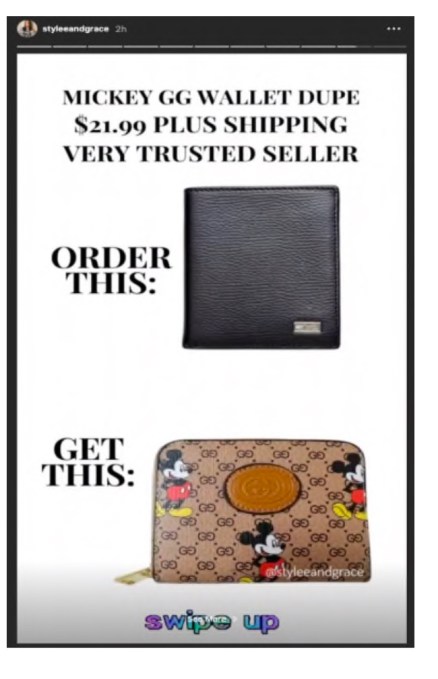
The suit alleges that defendants, Kelly Fitzpatrick and Sabrina Kelly-Krejci, conspired with sellers to run a scheme that involved posting side-by-side photos of a generic, non-branded product which could be found on Amazon, and a luxury counterfeit product. The text on the posting would read “Order this/Get this.”

The “Order this” pointed to a generic product being falsely advertised on Amazon. “Get this,” meanwhile, was referencing the luxury counterfeit products the consumer would receive instead.

Image Credits: Amazon court filing

By only posting generic product photos on Amazon.com directly, the defendants and the sellers they worked with, were aiming to bypass Amazon’s anti-counterfeiting measures while making claims about the counterfeit goods elsewhere across social media and the web. They also promoted the high quality of their luxury counterfeit goods using videos on Instagram, TikTok, and personal websites, and sent users to Amazon and other e-commerce websites, like DHgate, to transact.

Of note in this case is the fact that Fitzpatrick had been a member of Amazon’s Influencer Program while the counterfeiting scheme was underway. From Nov. 23, 2019 through March 6, 2020, she participated in the program under the username Kellyfitz02-20. When Amazon detected her activities, she was banned from the program and it closed her Associates account.

She then attempted to open new Associate accounts and continued to advertise the counterfeit items on social media, where she directed her followers to her own website for purchases, as well as to other e-commerce sites.

Instagram had shut down Fitzpatrick’s prior accounts, but she would create new ones when that occurred.

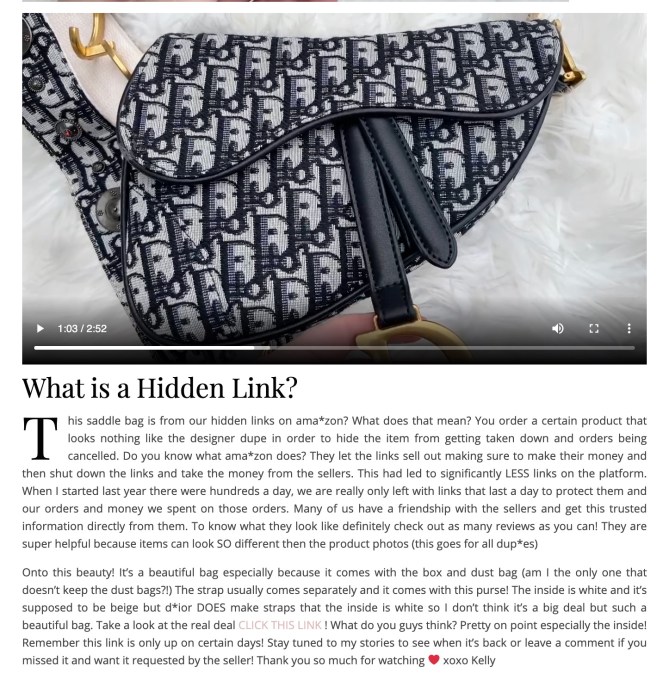
Though Fitzpatrick made her current Instagram account private, her website is still online where it shows her promoting the so-called “hidden links” on Amazon where consumers could buy the counterfeits.

Image Credits: styleeandgrace.com

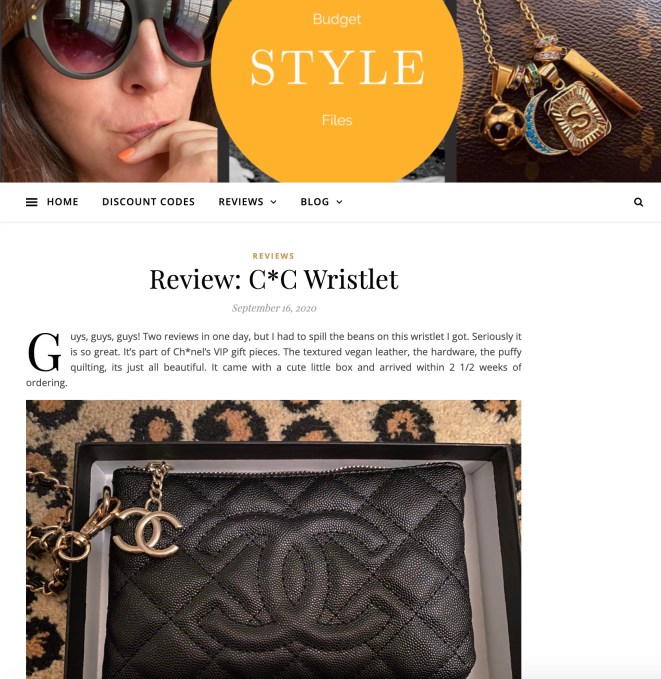
Similarly, Kelly-Krejci used her website to direct users to “hidden links” on Amazon where they could buy counterfeit products, saying in one video, she “know[s] some people feel weird ordering from hidden links but in this case you will get something fabulous.”

Image Credits: budgetstylefiles.com

The lawsuit alleges the defendants ran their schemes from around November 2019 through the filing of the complaint.

Investigators working on Amazon’s behalf were able to confirm the scheme by placing orders through the links and receiving the advertised counterfeit goods. The court filing shows several examples of these items, which included wallets, purses, belts, and sunglasses, which were designer dupes of brands like Gucci and Dior.

Among the other defendants in the case are businesses and sellers in China who helped source the dupes. In some cases, the sellers took steps to hide their identities and whereabouts from Amazon by using fake names and contact information and unregistered businesses, Amazon says..

Amazon has been working over the past several years to take a harder stance on counterfeiting, having acknowledging the practice harms consumer trust in its online store. In 2017, it launched the Amazon Brand Registry, which gives a rights owner tools to proactively locate and report infringing items. The following year, it launch a product serialization service, Transparency, that helps to eliminate counterfeits for enrolled products.

And last year, Amazon launched Project Zero, a self-service counterfeit removal tool for brands to remove counterfeit product listings on Amazon in minutes. Over 10,000 brands are now enrolled.

The retailer has increasingly engaged in lawsuits against counterfeiters as well, to dissuade others from participating in counterfeiting schemes.

The current lawsuit asks the court to ensure the defendants are barred from ever advertising, promoting and selling on Amazon, opening Amazon Vendor, Selling, and Associate accounts, aiding or abetting counterfeiters, and pay damages, attorneys’ fees, and other relief.


from Amazon – TechCrunch https://techcrunch.com/2020/11/12/amazon-sues-online-influencers-engaged-in-a-counterfeit-scheme/

On-demand delivery app Glovo is spinning up a b2b logistics unit for super speedy urban delivery

Spain’s on-demand delivery app, Glovo, is gearing up to be able to deliver a much wider range of products within a 30-minute timeframe by rolling out a b2b logistics play — drawing on a network of city centre warehouses that it plans to massively expand over the next twelve months.

It’s just announced the launch of a new business unit, called Q-Commerce — the ‘Q’ standing for quick — to accelerate development of a b2b service that will see it offer to stock third parties’ products in its warehouses and have the couriers that operate on its on-demand platform make deliveries for other businesses too — offering what it bills as a “turn-key” logistics solution for businesses of all sizes to underpin their own online stories. 

It is already working with retail brands like Unilever, Nestle and L’Oreal and supermarkets including Walmart, Carrefour and Kaufland to stock and sell their goods from its network of so-called ‘dark stores’ — which are currently located in Barcelona, Madrid, Lisbon and Milan — offering users there speedy delivery for selected groceries and other items under its ‘Glovo Market’ brand (currently with the carrot of free 24-hour delivery and no minimum spend). But it’s aiming to ramp up across the board — expanding the reach of its Glovo Market offer to more cities and launching a b2b offer to power others’ online stores — saying it plans to have more than 100 dark stores up and running by the end of 2021.

Commenting in a statement, Daniel Alonso, global director of Q-Commerce at Glovo — and former ecommerce director at Walmart — said: “With shops closing down and lockdowns globally, consumers now want and expect more items than ever to be delivered to their doorstep. With this has brought new demands — it is no longer a case of waiting 24-48 hours for a delivery. Rather, the expectation for this is now a matter of minutes. At Glovo we’re committed to thirty minutes or less with all products available on Q-Commerce. As we continue to expand our enhanced offering, we’re excited to launch Q-Commerce in other parts of Spain and the rest of Europe, Eastern Europe and Africa over the next 12 months.”

Glovo says it wants Q-Commerce to power delivery of a wide range of products — not just meals and food from restaurants and supermarkets but anything sold in toy, music, book, flower, beauty and pharmacy stores.

There are some obvious gaps in that list: Clothes and shoe stores, for example, which are more likely to have their own online shopping infrastructure already. Plus clothes shopping is also more complex — given the propensity for returns when items don’t fit or suit. But it looks like Glovo is going after almost everything else.

It says its Glovo Market service has more than 50,000 active users, at this point — touting the delivery of around two orders every minute. It also says it’s delivered more than 12 million “multi-category” orders globally to date, while in Spain the number of orders for grocery items doubled this year to more than 1 million. Its overall growth rate in 2019 was more than 300% year-on-year, it added.

The Deliveroo and Uber Eats rival has always touted itself as a ‘deliver everything’ app because it offers the option for users to request anything (within bike-able reason) be brought to your door by one of its gigging couriers, even though the majority of the business involves biking fast food around cities.

Meal deliveries were making up three-quarters of its revenues at the start of this year — but Glovo has ambitions to beat Amazon at the urban convenience game of delivering all sorts of stuff really, really fast. And it’s got investors on board with the plan. Last year it raised a $169M Series D and a $166M Series E in quick succession.

It’s further beefed up its balance sheet this (pandemic) year by offloading its LatAm ops — selling them to European rival Delivery Hero for $272M — which means it’s concentrating its market focus on Southern and Eastern Europe (it also has a small footprint in sub-Saharan Africa, in Kenya and Ivory Coast).

Presumably it sees that footprint as a better fit for the ‘get stuff now’ convenience push it’s making with Q-Commerce combined with a network of its own city center warehouses (aka dark stores). Though last year it also said it wanted to work on building a path toward profitability over the next year+ so fierce competition in LatAm may have pushed those markets out of reach.

Glovo says it has more than 9 million monthly active users, at this point — and 55,000 “associated partners” globally; aka the gig workers who do the heavy lifting of making actual deliveries for its platform.

The startup is facing ongoing legal uncertainty in its home market over its classification of ‘glovers’ (as it calls couriers) as ‘self-employed’. Spain’s supreme court recently found a rider to be in a laboural relationship with the platform — and any move to force the business to reclassify the thousands of couriers it relies upon in the country would radically rework its push for profitability, to put it mildly.


from Amazon – TechCrunch https://techcrunch.com/2020/11/12/on-demand-delivery-app-glovo-is-spinning-up-a-b2b-logistics-unit-for-super-speedy-urban-delivery/