Showing posts with label Amazon – TechCrunch Sarah Perez. Show all posts

Thursday, November 12, 2020

Amazon sues online influencers engaged in a counterfeit scheme

Amazon on Thursday announced a lawsuit against over a dozen bad actors, including online influencers and other businesses, who attempted to evade Amazon’s anti-counterfeiting measures by promoting luxury counterfeit products on social media sites, like TikTok and Instagram, as well as on personal websites, then using Amazon seller accounts to fulfill those orders.

The suit alleges that defendants, Kelly Fitzpatrick and Sabrina Kelly-Krejci, conspired with sellers to run a scheme that involved posting side-by-side photos of a generic, non-branded product which could be found on Amazon, and a luxury counterfeit product. The text on the posting would read “Order this/Get this.”

The “Order this” pointed to a generic product being falsely advertised on Amazon. “Get this,” meanwhile, was referencing the luxury counterfeit products the consumer would receive instead.
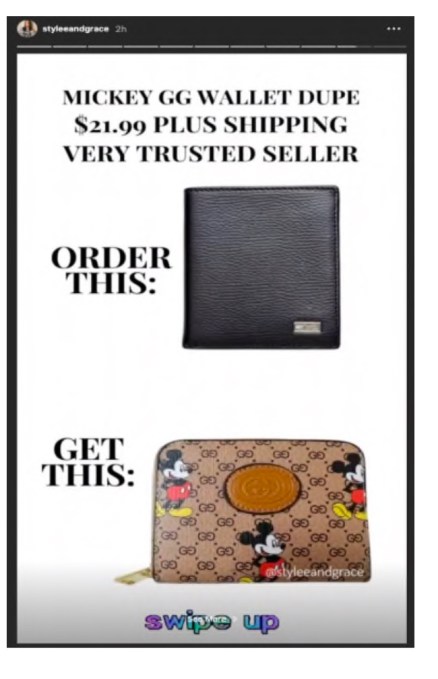
Image Credits: Amazon court filing

By only posting generic product photos on Amazon.com directly, the defendants and the sellers they worked with, were aiming to bypass Amazon’s anti-counterfeiting measures while making claims about the counterfeit goods elsewhere across social media and the web. They also promoted the high quality of their luxury counterfeit goods using videos on Instagram, TikTok, and personal websites, and sent users to Amazon and other e-commerce websites, like DHgate, to transact.

Of note in this case is the fact that Fitzpatrick had been a member of Amazon’s Influencer Program while the counterfeiting scheme was underway. From Nov. 23, 2019 through March 6, 2020, she participated in the program under the username Kellyfitz02-20. When Amazon detected her activities, she was banned from the program and it closed her Associates account.

She then attempted to open new Associate accounts and continued to advertise the counterfeit items on social media, where she directed her followers to her own website for purchases, as well as to other e-commerce sites.

Instagram had shut down Fitzpatrick’s prior accounts, but she would create new ones when that occurred.

Though Fitzpatrick made her current Instagram account private, her website is still online where it shows her promoting the so-called “hidden links” on Amazon where consumers could buy the counterfeits.
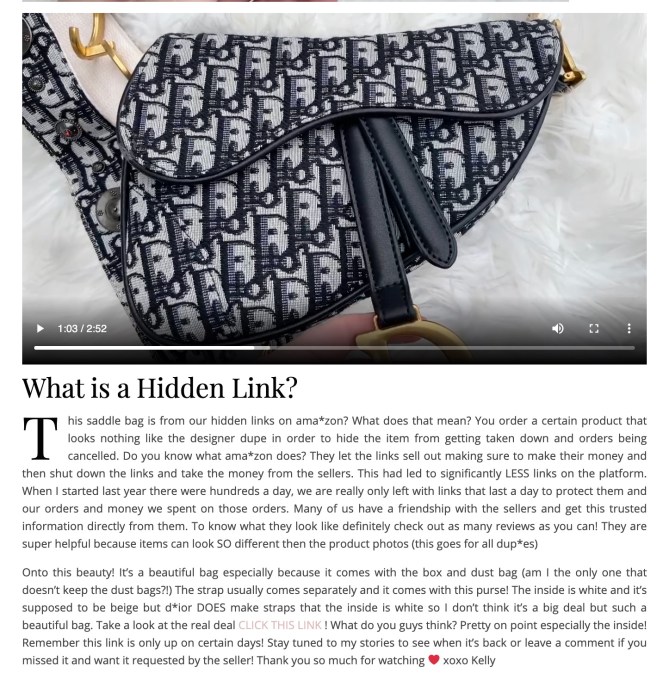
Image Credits: styleeandgrace.com

Similarly, Kelly-Krejci used her website to direct users to “hidden links” on Amazon where they could buy counterfeit products, saying in one video, she “know[s] some people feel weird ordering from hidden links but in this case you will get something fabulous.”
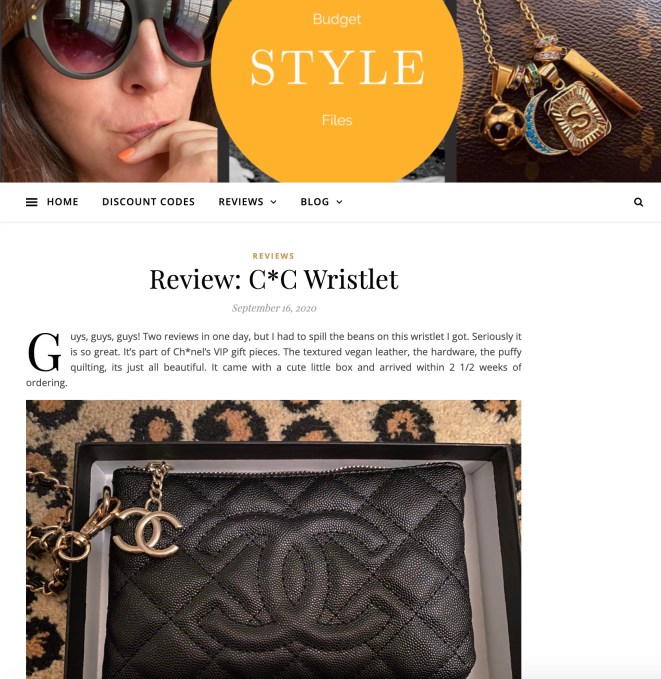
Image Credits: budgetstylefiles.com

The lawsuit alleges the defendants ran their schemes from around November 2019 through the filing of the complaint.

Investigators working on Amazon’s behalf were able to confirm the scheme by placing orders through the links and receiving the advertised counterfeit goods. The court filing shows several examples of these items, which included wallets, purses, belts, and sunglasses, which were designer dupes of brands like Gucci and Dior.

Among the other defendants in the case are businesses and sellers in China who helped source the dupes. In some cases, the sellers took steps to hide their identities and whereabouts from Amazon by using fake names and contact information and unregistered businesses, Amazon says..

Amazon has been working over the past several years to take a harder stance on counterfeiting, having acknowledging the practice harms consumer trust in its online store. In 2017, it launched the Amazon Brand Registry, which gives a rights owner tools to proactively locate and report infringing items. The following year, it launch a product serialization service, Transparency, that helps to eliminate counterfeits for enrolled products.

And last year, Amazon launched Project Zero, a self-service counterfeit removal tool for brands to remove counterfeit product listings on Amazon in minutes. Over 10,000 brands are now enrolled.

The retailer has increasingly engaged in lawsuits against counterfeiters as well, to dissuade others from participating in counterfeiting schemes.

The current lawsuit asks the court to ensure the defendants are barred from ever advertising, promoting and selling on Amazon, opening Amazon Vendor, Selling, and Associate accounts, aiding or abetting counterfeiters, and pay damages, attorneys’ fees, and other relief.


from Amazon – TechCrunch https://techcrunch.com/2020/11/12/amazon-sues-online-influencers-engaged-in-a-counterfeit-scheme/

Wednesday, November 11, 2020

Amazon’s new ‘Care Hub’ lets Alexa owners keep tabs on aging family members

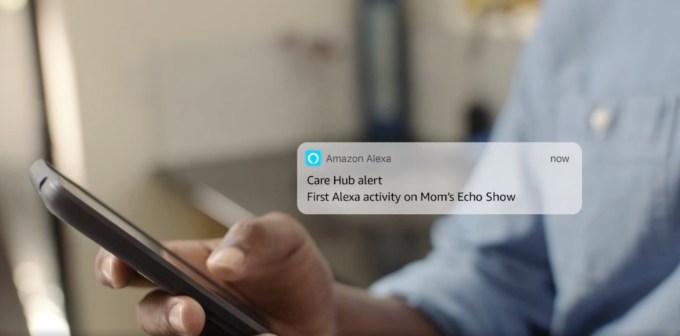
Amazon today announced a set of new features aimed at making its Alexa devices more useful to aging adults. With the launch of “Care Hub,” an added option in the Alexa mobile app, family members can keep an eye on older parents and loved ones, with their permission, in order to receive general information about their activities and to be alerted if the loved one has called out for help.

The idea behind Care Hub, the company explains, is to offer reassurance to family members concerned about an elderly member’s well-being, while also allowing those family members to maintain some independence.

This is not a novel use case for Alexa devices. Already, the devices are being used in senior living centers and other care facilities, by way of third-party providers.

Amazon stresses that while family members will be able to keep an eye on their loved ones’ Alexa use, it will respect their privacy by not offering specific information. For example, while a family member may be able to see that their parent had played music, it won’t say what song was played. Insted, all activity is displayed by category.

In addition, users will be able to configure alerts if there’s no activity or when the first interaction with the device occurs on a daily basis.

And if the loved one calls for help, the family member designated as the emergency contact can drop in on them through the Care Hub or contact emergency services.

Image Credits: Amazon

These new features are double-opt in, meaning that both the family member and their loved one need to first establish a connection between their Alexa accounts through an invitation process. This is begun through the new Care Hub feature in the Alexa app, then confirmed via text message or email.

That may seem like a reasonable amount of privacy protection, but in reality, many older adults either struggle with or tend to avoid technology. Even things seemingly simple — like using a smartphone, email or texting — can sometimes be a challenge.

That means there are scenarios where a family member could set up the Care Hub system by accessing the other person’s accounts without their knowledge or by inventing an email that becomes “the parent’s email” just for this purpose.

Alternately, they could just mislead mom or dad by saying they are helping them set up the new Alexa device, and —  oh, can I borrow your phone to confirm something for the setup? (Or some other such deception.)

A more appropriate option to protect user privacy would be to have Alexa periodically ask the loved one if they were still okay with the Care Hub monitoring option being enabled, and to alert the loved one via the Alexa mobile app that a monitoring option was still turned on.

Of course, there may certainly be older adults who appreciate the ability to be connected to family in this way, especially if they are located at a distance from their family or are feeling isolated due to the coronavirus pandemic and social distancing requirements that’s keeping family members from being able to visit.

Amazon says Care Hub is rolling out in the U.S. The company notes it will learn from customer feedback to expand the feature set over time.


from Amazon – TechCrunch https://techcrunch.com/2020/11/11/amazons-new-care-hub-lets-alexa-owners-keep-tabs-on-aging-family-members/

Monday, November 9, 2020

YouTube copies Spotify’s ‘Daily Mixes’ with its new ‘My Mix’ feature

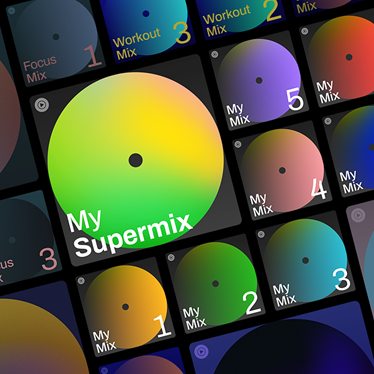
YouTube Music is taking another cue from Spotify with today’s launch of a set of personalized playlists that are essentially YouTube Music’s own take on Spotify’s “Daily Mixes.” Each of these new “My Mix” playlists will feature a different aspect of a user’s tastes and interests, allowing users to dive in to a particular vibe or music genre.

Up to seven of these new “My Mix” playlists will be featured on the Home tab, the company says, and will include a combination of favorite tunes as well as potential new favorites for discovery purposes.

With the launch, YouTube is also rebranding its personalized playlist previously called “Your Mix.” To better clarify its purpose and eliminate possible confusion with the new “My Mix” playlists, this playlist will now be called “My Supermix,” and will combine all of a user’s music tastes into one playlist, like Spotify’s “Discover Weekly.”

YouTube is making other changes to its Home tab and personalized selections, too, it says.

Image Credits: YouTube

Now, the Home tab will feature an activity bar offering easy access to four activity types, including Workout, Focus, Relax and Commute. These will take the user to a dedicated personalized homepage with a variety of playlists suited to the activity in question. The Workout tab, in particular, has been updated to include up to four new personalized mixes that feature music you already like as well as new recommendations. These tabs will also include a “Supermix” of the different playlists.

Personalization has become a key battleground for music streaming services, which aim to use technology to better cater to users by creating unique mixes and delivering more targeted recommendations. YouTube and Apple have both mimicked Spotify’s features on this front, offering their own variations on personalized playlists like Spotify’s flagship playlist, “Discover Weekly,” and others.

YouTube Music, though, has not had as much success in gaining a following, perhaps due to Google’s confusing and overlapping music strategy over the past several years, where it offered two different music apps.

Google has finally begun to correct his, and has started the transition that will shift users off its older service, Google Play Music, and over to YouTube Music. The latter, to date, has struggled with gaining a sizable share in the competitive music market, where Spotify and Apple dominate.

According to a MIDiA report in June, Google is in fifth place with a 6% share, behind Spotify, Apple, Amazon, and Tencent. However, the report suggested that YouTube Music’s appeal to a younger demographic could help Google turn things around, as its share had grown from just 3% in Q1 2018 to Q1 2019.

YouTube says the new changes to its playlists will arrive today.


from Amazon – TechCrunch https://techcrunch.com/2020/11/09/youtube-copies-spotifys-daily-mixes-with-its-new-my-mix-feature/

Wednesday, October 28, 2020

Audible further expands into podcasts

Audible, the Amazon-owned audiobook company, is further expanding into podcasts with the addition of approximately 100,000 of podcasts, totaling 5 million episodes to its service. The shows will be offered for free streaming to Audible members and non-subscribers alike, Audible says.

Included in the new lineup are top podcasts like Pod Save America, You’re Wrong About, This American Life, Conan O’Brien Needs a Friend, and FiveThirtyEight Politics, to name a few.

The company told TechCrunch the additions did not come by way of any recent partnerships or new deals with podcast providers, but are instead a part of Audible’s ongoing efforts to become known as a provide of “premium audio storytelling and entertainment.”

It seems that Audible will use the free programming to entice users to subscribe to its paid service, where they’ll gain access to Audible’s collection of exclusive programs, Audible Originals.

Image Credits: Audible

Audible has actually had its eye on podcasts for some time. Back in 2016, it announced a new service then called “Audible Channels.” that featured bite-sized original audio content from publishers that had included the NYT, WSJ, The Washington Post, and others.

Today, the company has grown its collection of original spoken word content to include documentaries, theater, and sleep programs, and more. It also features a number of exclusive podcasts for members only.

This summer, Audible introduced a new, cheaper subscription plan, Audible Plus, to connect users to its growing collection of originals. The $7.95 per month membership now offers over 11,000 pieces of content from names like Common, Jamie Lee Curtis, Tom Morello, Blake Griffin, André Aciman, Tayari Jones, Jesse Eisenberg, St. Vincent, Kevin Bacon, Kate Mara, Maria Bamford, Alanis Morissette, Harvey Fierstein, and more.

The Plus plan, however, doesn’t include credits to download audiobooks, as on the $14.95 per month Audible Premium Plus plan. (Audible consolidated its Gold and Platinum plans and rebranded it). It’s just focused on other audio content.

With the addition of free, third-party podcasts, Audible has the chance to capture users’ attention in its app, then try to upsell them to paid memberships, including the new Plus plan.

Audible announced its plans for the expanded podcast selection on Tuesday, but the new section itself didn’t launch until today.

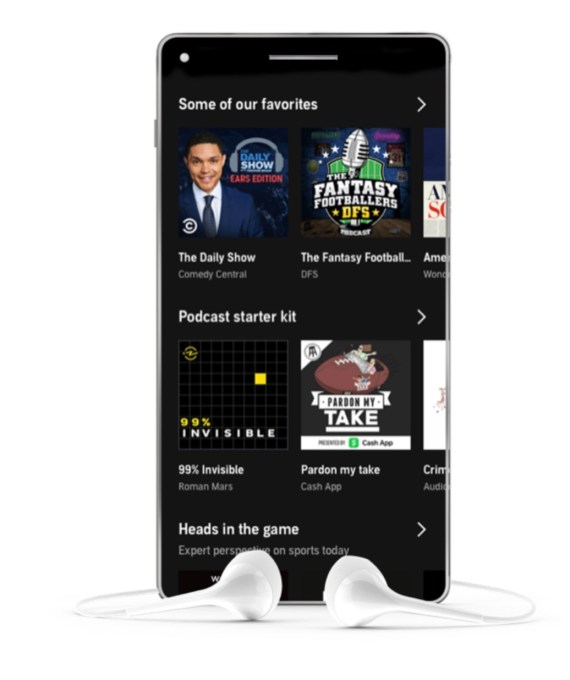
On the refreshed website, Audible arranges the podcasts in horizontal rows as “Top Free” podcasts and “Popular,” the latter which allows it to feature its originals. It also offers thematic grouping, like true crime, comedy, business and management, news, fiction, science and technology, self development and many others.

Image Credits: Audible, screenshot via TechCrunch

Those exclusive to Audible are also labeled with a yellow banner on the image thumbnail, in another push to upgrade.

The new additions can also be found in the Audible mobile app, under the “Podcasts” section, where you can follow shows, rate them, and stream episodes, much like any other podcast client app.

Podcasts are a significant source of investment for streaming services these days, with Spotify having snapped up studios and podcast startups to increase its output of audio programming and original content. Pandora parent SiriusXM, meanwhile, just completed its acquisition of Stitcher, which included its podcast service, ad network and content network Earwolf. Even Apple has begun to more seriously dabble in the format.

Audible says more shows and podcasts will be added in the weeks and months ahead.


from Amazon – TechCrunch https://techcrunch.com/2020/10/28/audible-further-expands-into-podcasts/

Wednesday, October 21, 2020

Amazon’s Whole Foods now offers one-hour pickup to Prime members at all locations

Amazon is now offering Prime members one-hour grocery pickup at all Whole Foods Market locations across the U.S., the company announced this morning. Prime members can use the Amazon app or website to place orders from the Whole Foods Market tab to shop, then select their one-hour pickup window at checkout on orders of $35 or more.

Before heading to the Whole Foods location, customers can use the Amazon app to let staff know they’re on their way. Upon arrival, Amazon says the majority of customers will only have to wait one minute to receive their orders — a daunting commitment that other online retailers can struggle to meet.

The expansion is meant to help Amazon better compete with online grocery rivals, particularly Walmart, Target and Instacart. Walmart, for example, saw its e-commerce operations, partially driven by online grocery, grow 97% in Q2 compared with the industry’s 27% growth. It also attributed the jump to COVID-19 impacts, including the release of government stimulus checks.

Target in August also expanded grocery pickup services nationwide, then reaching nearly 85% of its U.S. locations, ahead of its planned schedule. Online order pickup, including through its Drive Up and delivery services, accounted for the majority of Target’s digital growth in its last quarter, as well, with curbside pickup growing more than 734%.

Meanwhile, one report released this summer said Instacart had claimed over half of the U.S. online grocery market. (Other reports, however, put Walmart ahead of Amazon and all other Instacart-like delivery services.)

Amazon’s grocery strategy, meanwhile, remains somewhat disjointed.

It’s operating two online services — Whole Foods, which can be shopped via Amazon.com, and Amazon Fresh. It also recently launched Whole Foods locations that serve as grocery warehouses, and opened its first Amazon Fresh physical store in August. Earlier this year, it opened an Amazon Go Grocery store, featuring its cashierless technology.

For consumers, the growing number of competing grocery brands from Amazon can be confusing.

The retailer, however, believes the online grocery market is still nascent, and it has time to catch up to rivals.

Amazon today noted than more than 40% of its Whole Foods Market pickup orders every month are from customers trying the service for the first time. It also doesn’t think the surge of online grocery shopping retailers are seeing now during the pandemic will decline anytime soon. Like many industries, the pandemic simply accelerated consumer adoption trends that were already growing.

“According to recent data from Global Data Research, almost 68 percent of consumers say they will continue to use curbside pickup even when the pandemic has subsided,” Amazon said in its announcement.

In addition to pickup, Prime members in over 2,000 cities and towns can also order free, two-hour delivery of over 170,000 items from Amazon Fresh and Whole Foods Market on orders of $35 or more, Amazon also noted.

Amazon says it has 487 Whole Foods locations across the U.S. All will offer pickup, as will new locations as they open.


from Amazon – TechCrunch https://techcrunch.com/2020/10/21/amazons-whole-foods-now-offers-one-hour-pickup-to-prime-members-at-all-locations/

Tuesday, October 20, 2020

Amazon launches a program to pay consumers for their data on non-Amazon purchases

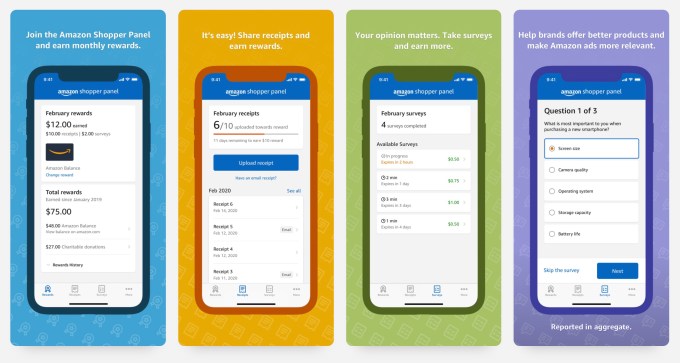
Amazon has launched a new program that directly pays consumers for information about what they’re purchasing outside of Amazon.com and for responding to short surveys. The program, Amazon Shopper Panel, asks users to send in 10 receipts per month for any purchases made at non-Amazon retailers, including grocery stores, department stores, drug stores and entertainment outlets (if open), like movie theaters, theme parks, and restaurants.

Amazon’s own stores, like Whole Foods, Amazon Go, Amazon Four Star and Amazon Books do not qualify.

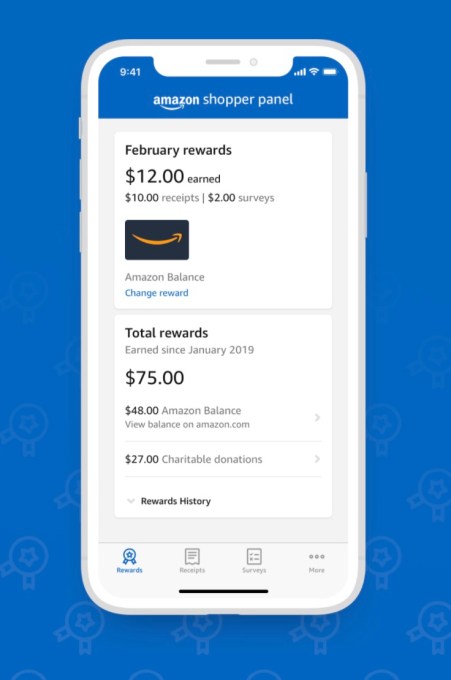
Program participants will take advantage of the newly launched Amazon Shopper Panel mobile app on iOS and Android to take pictures of paper receipts that qualify or they can opt to forward emailed receipts to receipts@panel.amazon.com to earn a $10 reward that can then be applied to their Amazon Balance or used as a charitable donation.

Amazon says users can then earn additional rewards each month for every survey they complete. The optional surveys will ask about brands and products that may interest the participant and how likely they are to purchase a product. Other surveys may ask what the shopper thinks of an ad. These rewards may vary, depending on the survey.

The program is currently opt-in and invite-only, and is also only open to U.S. consumers at this time. Invited participants can now download the newly launched Shopper Panel app and join the panel. Other interested users can use the app to join a waitlist for an invite.

Image Credits: Amazon

Amazon claims it will delete any sensitive information from the receipts users upload, like prescription information. But it doesn’t delete users’ personal information, instead storing it in accordance with its existing Privacy Policy. It will allow users to delete their previously uploaded receipts, if they choose, but it’s not clear that will actually remove collected data from Amazon’s systems.

Consumer research panels are common operations, but in Amazon’s case, it plans to use the data in several different ways.

On the website, Amazon explains it “may use” customer data to improve product selection at Amazon.com and Whole Food Market, as well as to improve the content selection offered through Amazon services, like Prime Video.

Amazon also says the collected data will help advertisers better understand the relationship between their ads and product purchases at an aggregate level and will help Amazon build models about which groups of customers are likely to be interested in certain products.

And Amazon may choose to offer data to brands to help them gain feedback on existing products, the website notes.

Image Credits: Amazon

The program’s launch follows increased scrutiny over Amazon’s anti-competitive business practices in the U.S. and abroad when it comes to using consumers’ purchase data.

Amazon came under fire from U.S. regulators over how it had leveraged third-party merchants’ sales data to benefit its own private label business. When Amazon CEO Jeff Bezos testified before Congress in July, he said the company had a policy against doing this, but couldn’t confirm that policy hadn’t been violated. The retailer may also be facing antitrust charges over the practice in the E.U..

At the same time, Amazon has been increasing its investment in its advertising business, which grew by 44% year-over-year in Q1 to reach $3.91 billion. That was a  faster growth rate than both Google (13%) and Facebook (17%), even if tiny by comparison — Google ads made $28 billion that quarter and Facebook made $17.4 billion, Digiday reported.

As the pandemic has accelerated the shift to e-commerce by 5 years or so, Amazon’s need to better optimize advertising space has also been sped up — and it may rapidly need to ingest more data that what it can collect directly from its own website.

In a message to advertisers about the program’s launch, Amazon positioned its e-commerce business as a small piece of the overall retail market — a point it often makes in hopes of avoiding regulation:

“In this incredibly competitive retail environment, Amazon works with brands of all sizes to help them grow their businesses not just in our store, but also across the myriad of places customers shop. We also work hard to provide our selling partners—and small businesses in particular—with tools, insights, and data to help them be successful in our store. But our store is just one piece of the puzzle. Customers routinely use Amazon to discover and learn about products before purchasing them elsewhere. In fact, Amazon only represents 4% of US retail sales. Brands therefore often look to third-party consumer panel and business intelligence firms like Nielsen and NPD, and many segment-specific data providers, for additional information. Such opt-in consumer panels are well-established and used by many companies to gather consumer feedback and shopping insights. These firms aggregate shopping behaviors across stores to report data like average sales price, total units sold, and revenue on tens of thousands of the most popular products.”

The retailer then explained that the Shopper Panel could help it to support sellers and brands by offering additional insights beyond its own store.

Amazon doesn’t say when the program waitlist will be removed, but says anyone can sign up starting today.


from Amazon – TechCrunch https://techcrunch.com/2020/10/20/amazon-launches-a-program-to-pay-consumers-for-their-data-on-non-amazon-purchases/

Monday, October 12, 2020

Amazon launches an AR app that works with new QR codes on its boxes

Amazon has quietly launched a new augmented reality application that works with QR codes on the company’s shipping boxes to create “interactive, shareable” AR experiences. Called simply “Amazon Augmented Reality,” the retailer describes the app as a “fun way to reuse your Amazon boxes until you’re ready to drop them in the recycling bin.”

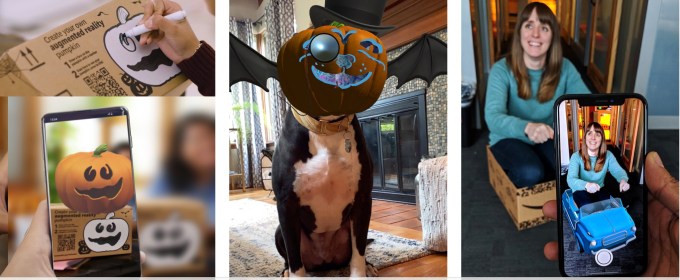
As shown in the App Store’s screenshots of the new app, different Amazon boxes will offer unique activities for the AR experience. For example, one screenshot shows someone drawing the face on a pre-printed white pumpkin to turn it into a jack-o-lantern. When they then scan the QR code, the pumpkin jumps out as an AR object. Another screenshot shows an AR pumpkin and bat wings over top an image of a dog. And one shows the Amazon box turning into a little blue AR car when the QR code is scanned.

In the accompanying App Store video, there are other animated characters, including the Amazon smile logo itself an an AR corgi dog that jumps out playfully when the QR code is scanned.

The company notes in the description that if your iPhone is also capable of TrueDepth technology, the app can also use the device’s camera to track your facial movements to enable features like a “selfie” mode.

The app, which debuted a few days ago on the iOS App Store and Google Play, offers no other functionality if not used alongside an Amazon box that supports the new QR codes. (However, you can test out the experience here if you don’t have a box to use.)

Image Credits: Amazon

At launch, however, the app appears to focus only on the pumpkin AR experience. Once you have designed and scanned your pumpkin into AR, you can then press other buttons to decorate the pumpkin further — by giving it a hat or outfit, changing its light or color, among other things. You can also flip the camera around to display the pumpkin on your selfie image, where it moves along with your face.  You can then press the Camera button in the app to snap a photo of your creation to share on social media.

The new QR code-enabled boxes are only beginning to roll out now, so you may not have received one just yet, we understand. The boxes are also made using less material, as part of Amazon’s ongoing “Less Packaging, More Smiles” campaign.

Amazon has been dabbling in AR for some time, most recently with the launch of a new AR shopping feature that allows users of its main Amazon shopping app to visualized multiple items of furniture or decor in their room at the same time. A few years ago, it had also launched a simpler version of AR shopping with a feature called AR View in its Amazon iOS app, built using ARKit.  It had also once tried out “shoppable stickers” that used AR to place basic stickers of products in your space, instead of realistic representations of the items.

With its latest launch of the AR View feature, however, Amazon had done the work to support Apple’s latest version of ARKit and likely wanted to experiment further with the possibilities. The box-scanning AR app could serve as a way to test consumer demand for more AR products. But Amazon doesn’t appear to be using this app to collect extensive research data. The App Store description notes that all the information processed using the new technology in Amazon’s new AR Player will remain on the device, and is not “stored, processed or shared by Amazon.”

The app is currently available on iOS and Android as a free download.


from Amazon – TechCrunch https://techcrunch.com/2020/10/12/amazon-launches-an-ar-app-that-works-with-new-qr-codes-on-its-boxes/

Thursday, October 8, 2020

Consumers spent a record $28 billion in apps in Q3, aided by pandemic

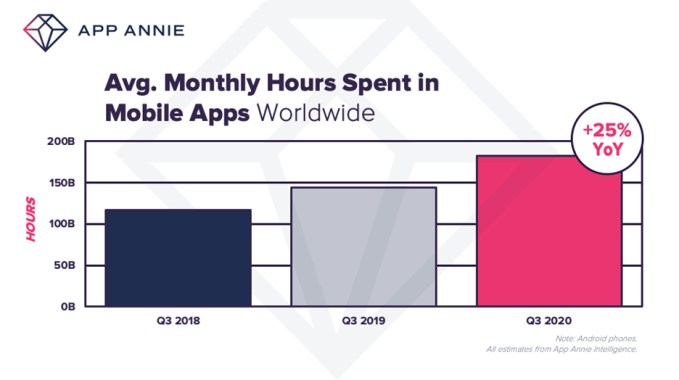
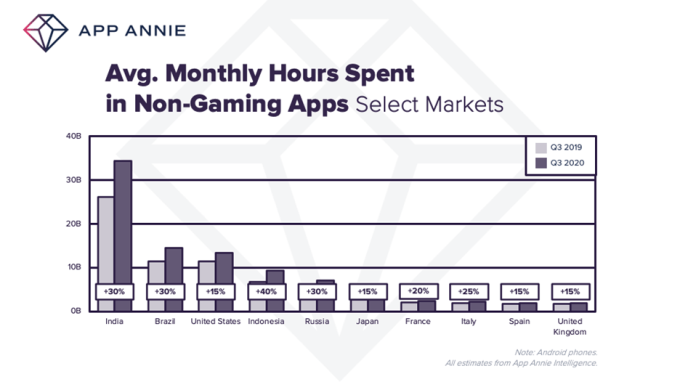
Mobile usage continues to remain high amidst the COVID-19 pandemic, which has prompted social distancing measures and lockdown policies, and has pushed consumers to connect online for work, school and socializing. This, in turn, has helped drive record spending in apps during the quarter, as well as a huge surge in time spent in apps. According to a new report from App Annie, consumers in the third quarter downloaded 33 billion new apps globally and spent a record $28 billion in apps — up 20% year-over-year. They also spent more than 180 billion collective hours each month of July, August and September 2020 using apps, an increase of 25% year-over-year.

The mobile data and analytics firm had earlier suggested that the COVID-19 pandemic would have a long-lasting impact on consumer mobile behavior, as it advanced mobile by at least two to three years ahead of pace. This continued to be true in the third quarter, with all major mobile trends seeing increases.


Image Credits: App Annie


Image Credits: App Annie

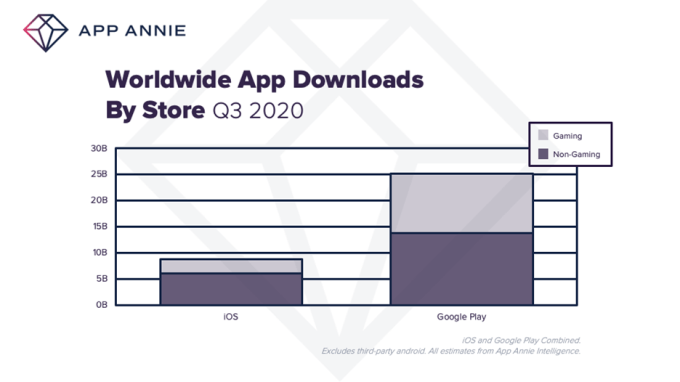
Google Play downloads grew 10% year-over-year, accounting for 25 billion of the total 33 billion new downloads in the quarter, while iOS accounted for nearly 9 billion downloads — up 20% year-over-year. Non-gaming apps on Google Play were 55% of those downloads, while on iOS the figure was a slightly higher 70%.

Image Credits: App Annie

Top markets by downloads included India and Brazil on Google Play, while on iOS, the top two continued to be the U.S. and China. India, Brazil and Mexico drove growth on Google Play, while the growth drivers on iOS were India and South Korea.

Some of the download growth was directly tied to the pandemic.

As students in Mexico returned to remote learning, for example, downloads of Education apps grew 25% and Libraries & Demo apps grew 270%. As U.S. consumers turned to the outdoors to find activities amid lockdowns and business closures, Travel, Navigation and Weather apps all saw strong growth of 50%, 25% and 15%, respectively.

Overall, Games, Tools and Entertainment drove Google Play downloads outside of the top category, Games. And on iOS Games, Photo and Video and Entertainment remained the top categories for five straight quarters.

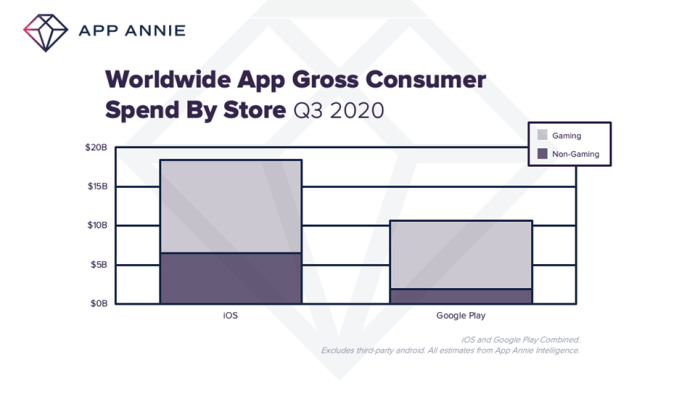
Consumers also spent a record $28 billion in apps in Q3 2020 — the largest quarter to date.

On iOS, spend grew 20% year-over-year to $18 billion, while Google Play saw a 35% year-over-year increase to over $10 billion. Non-gaming apps accounted for 35% of that spend on iOS and 20% on Google Play, largely thanks to subscriptions.

Image Credits: App Annie

Top markets for consumer spend included the U.S. and Japan across both app stores, with the addition of South Korea for Google Play.

The increased consumer spending on apps could also be seen as being tied to the pandemic and its impacts. For example, Games, Social and Entertainment were the largest categories by consumer spend on Google Play. And within the Entertainment category, spend was driven by streaming apps, including Disney+, Twitch, Globo Play and HBO Max — apps that may have benefited from more consumers staying at home for entertainment.

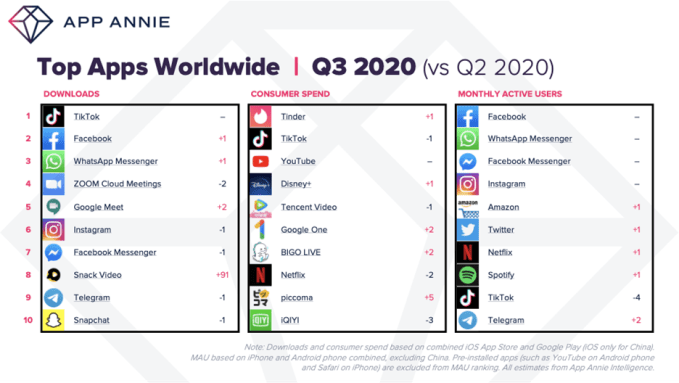
On iOS, Games, Entertainment and Photo and Video were the top three categories by consumer spend. As sports returned to television in the U.S., spending in sports apps grew 55% from the prior quarter. TikTok, meanwhile, became the No. 2 app by consumer spend outside of games, thanks to increases in virtual tipping for streamers. However, the largest quarterly growth in spending, outside of games, was driven by the comics app piccoma, YouTube, Tinder and AbemaTV.

Image Credits: App Annie

Tinder indicated some resiliency in Q3. Despite the pandemic, the app jumped up one position to reach No. 1 by consumer spend. Disney+ also jumped up a spot to reach No. 4.

In terms of monthly active users, however, Facebook still dominated the top charts, claiming the No. 1 through No. 4 positions for Facebook, WhatsApp, Messenger and Instagram, respectively. The next most used apps were Amazon, Twitter, Netflix, Spotify, TikTok and then Telegram. The latter broke into the top 10 for the first time, after jumping up two ranks from Q2.

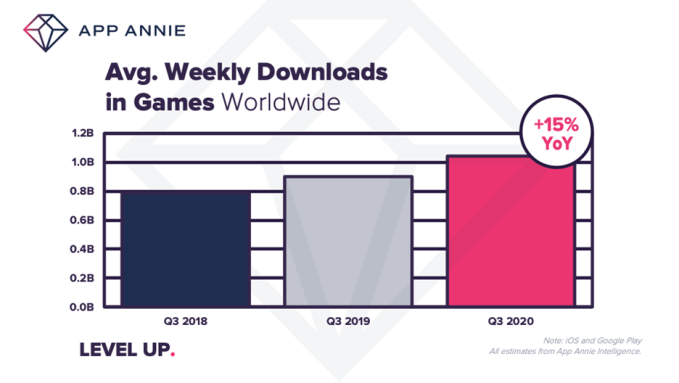
Gaming also continues to get a boost from the pandemic, with weekly downloads hovering around 1 billion for the second straight quarter as consumers on lockdown look for entertainment — up 15% year-over-year.

Image Credits: App Annie

Consumers also spent over $20 billion on games in Q3, the largest quarter ever. By year-end, App Annie forecast mobile gaming will extend its lead over desktop by 2.8x and over console gaming by 3.1x.

Game downloads reached 14 billion in Q3, with downloads up 20% year-over-year on Google Play to around 11 billion. On iOS, consumers downloaded 2.6 billion games. Because of this, games accounted for a higher share of overall downloads on Google Play (45%) compared with iOS (30%).

App Annie’s findings follow app intelligence firm Sensor Tower’s Q3 report, released earlier this month, which saw similar trends. Sensor Tower estimated app revenue grew to over $29 billion in Q3, while it pegged new app downloads higher at 36.5 billion.


from Amazon – TechCrunch https://techcrunch.com/2020/10/08/consumers-spent-record-28-billion-in-apps-in-q3-aided-by-pandemic/

Tuesday, October 6, 2020

Despite pandemic, Amazon Prime Day expected to generate nearly $10B in global sales

A new forecast released today estimates Amazon’s delayed Prime Day sales event will top last year’s by bringing in an estimated nearly $10 billion in worldwide sales when it runs later this month. According to eMarketer, which released its first-ever Prime Day forecast, consumers will continue to spend heavily on e-commerce and seek out deals ahead of the 2020 holiday season, benefitting the major sales event.

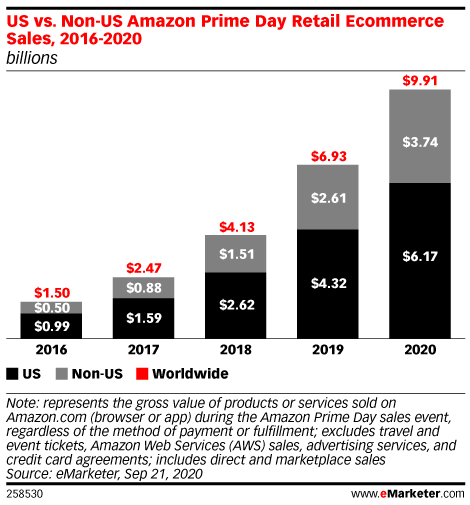
The firm says of the total $9.91 billion in Prime Day 2020 global sales, $6.17 billion will be generated by U.S. consumers.

This is ahead of what Prime Day achieved in years past. In 2019, the sales event delivered $6.93 billion in sales, eMarketer says, with $4.32 billion from the U.S.. Total Prime Day sales in 2016, 2017 and 2018, were at $1.5 billion, $2.47 billion, and $4.13 billion, respectively.

These estimates are fairly in line with those from other firms. For example, Internet Retailer had estimated Prime Day 2019 reached $7.16 billion in global sales, up from $4.19 billion in the year prior. Amazon doesn’t detail Prime Day sales volume, specifically, but last year said it had sold over 175 million items during the event.

Image Credits: eMarketer

Forecasting for this year’s Prime Day, of course, has been much more difficult due to the coronavirus pandemic’s impact on the e-commerce industry. The health crisis has disrupted supply chains, causing delays, while consumer demand can be unpredictable. Some past boosts in e-commerce spending for major retailers was also closely tied to government stimulus checks.

Due the to pandemic, Amazon this year decided to move its annual sales holiday from mid-July to October for most markets. Meanwhile, the retailer ran Prime Day in India in August — later than it had been held in prior years, but ahead of other countries’ Prime Day events planned for 2020. Following the India event, Amazon reported record seller participation, and said it gained at least 1 million new subscribers for its Prime membership program.

Despite the changes to Prime Day, the analysts at eMarketer believe Prime Day’s predictability will help to continue to drive traffic and sales this year.

“Since Prime Day’s 2015 debut, Amazon has expanded the scale and spectacle of the event in a mostly predictable fashion,” said Andrew Lipsman, eMarketer principal analyst. “The generally incremental changes from year to year gave customers and sellers a better sense of what to expect, with Lightning Deals and heavily discounted Echos and Fire TVs taking center stage. Sellers developed a playbook for their promotions and advertising strategy and could plan their inventory accordingly,” he added.

Though Prime Day doesn’t officially begin until October 13, Amazon has already started to run some early deals for Prime subscribers, including a discounted Echo Show 5 ($45 instead of $90), a discounted Echo Auto ($30 off at $19.99), cheaper Echo Dots, as well as discounts on an Amazon TV-powered Insignia 4K TV, Blink Mini devices, and others.

Prime Day has also typically inspired a range of competitive sales, given that Amazon’s event would drive an increase in online shopping that benefitted other e-commerce retailers. As of March, as many as 37% of digital retailers said their Prime Day plans were up in the air because of coronavirus, but 56% said they still expected Prime Day sales would perform well, eMarketer noted.

So far, Target has planned a massive sale, Target Deal Days, to compete with Prime Day, which promises Black Friday-like discounts on hundreds of thousands of items on the same days that Prime Day runs. Walmart, on the other hand, said it would run its event starting earlier, on Sunday Oct. 11 through Oct. 15.


from Amazon – TechCrunch https://techcrunch.com/2020/10/06/despite-pandemic-amazon-prime-day-expected-to-generate-nearly-10b-in-global-sales/

Monday, October 5, 2020

Feds arrest former Amazon employee after company reported him to FBI for fraud

Amazon today disclosed that a former employee has been arrested for committing fraud against the online retailer. The company says it reported Vu Anh Nguyen to the Federal Bureau of Investigation in July 2020 for falsely issuing refunds to himself and his associates for products ordered on Amazon.com. The U.S. Dept. of Justice on Friday brought charges against Nguyen for federal wire fraud and aggravated identity theft, according to court filings.

Nguyen was previously employed with Amazon as a Selling Support Associate based in Tempe, Arizona. In this role, his job involved providing support for Amazon’s third-party sellers and assisting in the creation and management of seller listings using a “Spoofer” account, which allow Amazon employees to view and edit third-party seller accounts.

From these accounts, employees are able to manually authorize refunds for items ordered from third-party sellers, which is how the abuse occurred.

In the criminal complaint, Nguyen is alleged to have committed wire fraud between November 2019 and February 2020 by using his employee access to falsely and fraudulently issue $96,508.13 in refunds to himself and others. These refunds were not requested by legitimate purchasers. During the course of this scheme, Nguyen used or caused the use of interstate wires, the filing states.

The scheme involved approximately 318 unauthorized refunds for orders purchased through eight Amazon accounts belonging to Nguyen and others. These included refunds for high-value items, like computers and electronics, none of which were ever returned to Amazon.

Nguyen also operated two third-party seller accounts, Bullsy and ItemsQuest, where refunds were issued to orders he was shipping to his own home or others to which he had access.

Nguyen also ordered $222.04 worth of items sent to his home as a part of this scheme, the complaint alleges, then fraudulently authorized a concession refund for the items, allowing him to essentially keep the items without paying.

In addition, on August 14, 2019, Nguyen committed identity theft related to the wire fraud activities by using the name and credit card information belonging to a third-party, the FBI says. This involved an order totaling just $47.80 for household items, like a drawer organizer and cabinet liners.

Nguyen had originally been hired by Amazon on March 4, 2019. His employment was terminated on March 24, 2020 after he ignored repeated attempts by Amazon to reach him about the fraudulent activity the retailer had detected.

Separately from the Amazon fraud case, Nguyen was the target of a Dept. of Justice/FBI investigation for a type of securities fraud known as “free-riding,” which had resulted in losses of approximately $695,000 across eight brokerage firms, the complaint notes. On the SEC.gov website’s post about the litigation release, however, those losses are said to have actually totaled more than $1 million.

Amazon, in a press release issued today, notes that it has systems in place to mitigate misuse of its tools and to monitor and detect suspicious behavior. These systems had identified the suspicious refunds, prompting its investigation. Amazon then reported the case to the FBI.

The retailer regularly pursues investigations and lawsuits aimed at tackling fraud across its platform. Recently, this included supporting wire fraud charges against four individuals who committed $19 million in a fraudulent invoicing scheme targeting Amazon’s vendor system. It also this summer launched a counterfeit crimes unit to tackle the growing problem with counterfeit products sold on its marketplace, and helped stop multiple fraudulent affiliate marketing schemes.

While many of the fraud schemes involved external parties, sometimes Amazon’s own employees are involved. In September, the U.S. Dept. of Justice charged six people with bribing Amazon employees in exchange for restoring their banned products or services, an indictment alleges, for example. In the past, Amazon employees have also been arrested for merchandise theft.

Amazon offered a brief statement on the new charges involving Nguyen.

“We thank the Department of Justice and Federal Bureau of Investigation for their swift work to hold this fraudster accountable,” a spokesperson said. “There is no place for misconduct or fraud at Amazon. We hold our employees to a high bar, have systems in place to proactively prevent fraud, continue to monitor activity, and will pursue all measures to protect our store and hold bad actors accountable.”

U.S. v. Vu Anh Nguyen by TechCrunch on Scribd


from Amazon – TechCrunch https://techcrunch.com/2020/10/05/feds-arrest-former-amazon-employee-after-company-reported-him-to-fbi-for-fraud/

Venmo launches its first credit card, offering up to 3% cash back, personalized rewards

Last October, Venmo announced it would launch its first credit card sometime in 2020. Today, the PayPal-owned company is making good on those promises with the debut of the Venmo Credit Card, initially rolling out to select customers. The Visa card offers 3% cash back on eligible purchases, personalized rewards and tools to track and manage finances. However, what makes the card potentially appealing to Venmo’s younger user base is how the card is directly integrated into the Venmo mobile app.

Cardholders will be able to track their spending in real time, organized by category, plus split or share purchases, view their cash back status, make payments and manage their card directly in the Venmo mobile app. They can also opt in to receive real-time alerts when purchases and payments are made, much like other credit card and banking apps allow for today. And they can receive alerts when cash back is applied to their account.

Instead of offering a certain percentage in cash back rewards to all Venmo users by category, for example, or as Apple Card does by vendor (at its top tier), the new Venmo Card rewards system will be personalized.

Users can earn rewards from eight spending categories: Grocery, Bills & Utilities, Health & Beauty, Gas, Entertainment, Dining & Nightlife, Transportation and Travel. Users will earn 3% back on their top spending category, 2% from the second highest category, then 1% on all other purchases, the company says.

That’s a competitive offering compared with other cash back cards, given that the Venmo Card doesn’t include an annual fee. However, the card does charge other typical fees — like for cash advances, late and returned payments and interest. Currently, the APR ranges from 15.25% to 24.24%, based on the account holder’s creditworthiness.

While Venmo doesn’t incentivize touchless purchases, as Apple Card does by paying out a higher cashback percentage for Apple Pay transactions, Venmo’s card does come equipped with an RFID chip for tap to pay transactions at point-of-sale. This is not entirely contactless, but requires less contact than inserting the card into a chip reader, which can often require the user to hold the terminal steady with their other hand so it doesn’t swivel.

The new card also allows users to begin shopping virtually before their card arrives in the mail. And if the card becomes lost or stolen, it can be instantly disabled from within the Venmo app. Through Visa, the card includes Visa Traditional Credit Card benefits, as well as travel and lifestyle perks for Visa Signature cardholders.

Image Credits: Venmo

Given that personalized cards are in demand among millennial users, Venmo Cards are offered in five different colors and come emblazoned with the user’s own Venmo QR code on the front, making each card unique. This allows users to scan a friend’s card with the Venmo app when they want to send a payment or split a purchase.

Venmo already offers a Mastercard-branded debit card for its users — an offering it launched to target is millennial customer base, who tend to avoid credit cards as they’re worried about becoming trapped in the vicious credit-and-debt cycle. However, as many millennials are now finally starting to marry and buy their first homes, they’re coming to realize that establishing credit history matters. But they may still shy away from big banks, preferring alternative credit products, like credit cards that work like debit or perhaps Venmo’s Card, as it’s tied to a money management app they already use and rely on.

Venmo in Q2 said it had more than 60 million active accounts using its payments app — meaning those accounts that had completed a transaction within a 12-month timespan. It declined to say how many have since adopted its debit card to date. The company also reported $37 billion in Venmo payment volume in the most recent quarter. That means Venmo sports a large and active user base that it can upsell the new card to from within its free, peer-to-peer payments app, instead of only relying on external marketing.

As earlier reported, the Venmo Card is issued by Synchrony Bank, which is today known for powering a number of store cards, including those from Amazon, eBay, JCPenney, TJX, Stein Mart, American Eagle, Gap, Old Navy, Rooms to Go, Lowe’s and many others — around 100 cards, in total. The company has financed more than $149 billion in sales and has 75.5 million active accounts, according to its website.

At launch, Venmo is making the new card available to select customers via the Venmo mobile app. It says the card will be available to all in the U.S. in the months ahead.


from Amazon – TechCrunch https://techcrunch.com/2020/10/05/venmo-launches-its-first-credit-card-offering-up-to-3-cash-back-personalized-rewards/

Facebook sues two companies engaged in data scraping operations

Facebook today says it has filed a lawsuit in the U.S. against two companies that had engaged in an international “data scraping” operation. The operation extended across Facebook properties, including both Facebook and Instagram, as well as other large websites and services, including Twitter, Amazon, LinkedIn and YouTube. The companies, which gathered the data of Facebook users for “marketing intelligence” purposes, did so in violation of Facebook’s Terms of Service, says Facebook.

The businesses named in the lawsuit are Israeli-based BrandTotal Ltd. and Unimania Inc., a business incorporated in Delaware.

According to BrandTotal’s website, its company offers a real-time competitive intelligence platform that’s designed to give media, insights and analytics teams visibility into their competition’s social media strategy and paid campaigns. These insights would allow its customers to analyze and shift their budget allocation to target new opportunities, monitor trends and threats from emerging brands, optimize their ads and messaging and more.

Meanwhile, Unimania operated apps claimed to offer users the ability to access social networks in different ways. For example, Unimania offered apps that let you view Facebook via a mobile-web interface or alongside other social networks like Twitter. Another app let you view Instagram Stories anonymously, it claimed.

However, Facebook’s lawsuit is largely focused on two browser extensions offered by the companies: Unimania’s “Ads Feed” and BrandTotal’s “UpVoice.”

The former allowed users to save the ads they saw on Facebook for later reference. But as the extension’s page discloses, doing so would opt users into a panel that informed the advertising decisions of Unimania’s corporate customers. UpVote, on the other hand, rewarded users with gift cards for using top social networking and shopping sites and sharing their opinions about the online campaigns run by big brands.

Facebook says these extensions operated in violation of its protections against scraping and its terms of service. When users installed the extensions and visited Facebook websites, the extensions installed automated programs to scrape their name, user ID, gender, date of birth, relationship status, location information and other information related to their accounts. The data was then sent to a server shared by BrandTotal and Unimania.

Facebook lawsuit vs BrandTotal Ltd. and Unimania Inc. by TechCrunch on Scribd

Data scrapers exist in part to collect as much information as they can through any means possible using automated tools, like bots and scripts. Cambridge Analytica infamously scraped millions of Facebook profiles in the run-up to the 2016 presidential election in order to target undecided voters. Other data scraping operations use bots to monitor concert or event ticket prices in order to undercut competitors. Scraped data can also be used for marketing and advertising, or simply sold on to others.

In the wake of the Cambridge Analytica scandal, Facebook has begun to pursue legal action against various developers that break its terms of service.

Most cases involving data scraping are litigated under the Computer Fraud and Abuse Act, written in the 1980s to prosecute computer hacking cases. Anyone who accesses a computer “without authorization” can face hefty fines or even prison time.

But because the law doesn’t specifically define what “authorized” access is and what isn’t, tech giants have seen mixed results in their efforts to shut down data scrapers.

LinkedIn lost its high-profile case against HiQ Labs in 2019 after an appeals court ruled that the scraper was only collecting data that was publicly available from the internet. Internet rights groups like the Electronic Frontier Foundation lauded the decision, arguing that internet users should not face legal threats “simply for accessing publicly available information in a way that publishers object to.”

Facebook’s latest legal case is slightly different because the company is accusing BrandTotal of scraping Facebook profile data that wasn’t inherently public. Facebook says the accused data scraper used a browser extension installed on users’ computers to gain access to their Facebook profile data.

In March 2019, it took action against two Ukrainian developers who were harvesting data using quiz apps and browser extensions to scrape profile information and people’s friends lists, Facebook says. A court in California recently recommended a judgement in Facebook’s favor in the case. A separate case around scraping filed last year against a marketing partner, Stackla, also came back in Facebook’s favor.

This year, Facebook filed lawsuits against companies and individuals engaged in both scraping and fake engagement services.

Facebook isn’t just cracking down on data scraping businesses to protect user privacy, however. It’s because failing to do so can lead to large fines. Facebook at the beginning of this year was ordered to pay out over half a billion dollars to settle a class action lawsuit that alleged systemic violation of an Illinois privacy law. Last year, it settled with the FTC over privacy lapses and had to pay a $5 billion penalty. As governments work to further regulation of online privacy and data violations, fines like this could add up.

The company says legal action isn’t the only way it’s working to stop data scraping. It has also invested in technical teams and tools to monitor and detect suspicious activity and the use of unauthorized automation for scraping, it says.


from Amazon – TechCrunch https://techcrunch.com/2020/10/01/facebook-sues-two-companies-engaged-in-data-scraping-operations/