Showing posts with label Microsoft – TechCrunch. Show all posts

Friday, November 13, 2020

Which emerging technologies are enterprise companies getting serious about in 2020?

Startups need to live in the future. They create roadmaps, build products and continually upgrade them with an eye on next year — or even a few years out.

Big companies, often the target customers for startups, live in a much more near-term world. They buy technologies that can solve problems they know about today, rather than those they may face a couple bends down the road. In other words, they’re driving a Dodge, and most tech entrepreneurs are driving a DeLorean equipped with a flux-capacitor.

That situation can lead to a huge waste of time for startups that want to sell to enterprise customers: a business development black hole. Startups are talking about technology shifts and customer demands that the executives inside the large company — even if they have “innovation,” “IT,” or “emerging technology” in their titles — just don’t see as an urgent priority yet, or can’t sell to their colleagues.

How do you avoid the aforementioned black hole? Some recent research that my company, Innovation Leader, conducted in collaboration with KPMG LLP, suggests a constructive approach.

Rather than asking large companies about which technologies they were experimenting with, we created four buckets, based on what you might call “commitment level.” (Our survey had 211 respondents, 62% of them in North America and 59% at companies with greater than $1 billion in annual revenue.) We asked survey respondents to assess a list of 16 technologies, from advanced analytics to quantum computing, and put each one into one of these four buckets. We conducted the survey at the tail end of Q3 2020.

Respondents in the first group were “not exploring or investing” — in other words, “we don’t care about this right now.” The top technology there was quantum computing.

Bucket #2 was the second-lowest commitment level: “learning and exploring.” At this stage, a startup gets to educate its prospective corporate customer about an emerging technology — but nabbing a purchase commitment is still quite a few exits down the highway. It can be constructive to begin building relationships when a company is at this stage, but your sales staff shouldn’t start calculating their commissions just yet.

Here are the top five things that fell into the “learning and exploring” cohort, in ranked order:

  1. Blockchain.
  2. Augmented reality/mixed reality.
  3. Virtual reality.
  4. AI/machine learning.
  5. Wearable devices.

Technologies in the third group, “investing or piloting,” may represent the sweet spot for startups. At this stage, the corporate customer has already discovered some internal problem or use case that the technology might address. They may have shaken loose some early funding. They may have departments internally, or test sites externally, where they know they can conduct pilots. Often, they’re assessing what established tech vendors like Microsoft, Oracle and Cisco can provide — and they may find their solutions wanting.

Here’s what our survey respondents put into the “investing or piloting” bucket, in ranked order:

  1. Advanced analytics.
  2. AI/machine learning.
  3. Collaboration tools and software.
  4. Cloud infrastructure and services.
  5. Internet of things/new sensors.

By the time a technology is placed into the fourth category, which we dubbed “in-market or accelerating investment,” it may be too late for a startup to find a foothold. There’s already a clear understanding of at least some of the use cases or problems that need solving, and return-on-investment metrics have been established. But some providers have already been chosen, based on successful pilots and you may need to dislodge someone that the enterprise is already working with. It can happen, but the headwinds are strong.

Here’s what the survey respondents placed into the “in-market or accelerating investment” bucket, in ranked order:


from Microsoft – TechCrunch https://techcrunch.com/2020/11/13/which-emerging-technologies-are-enterprise-companies-getting-serious-about-in-2020/

Nintendo’s Switch dominates US console sales ahead of PlayStation/Xbox launches

Another banner month month for Nintendo hardware sales, per the latest figures from NPD. The firm puts Switch sales (including the standard and Lite models) at 735,000 units in the U.S., making the best October for a Nintendo console since the Wii sold 807,000 units in October 2008.

It’s been a good couple of years for the Switch, which has marked 23 straight months as the best-selling console in the States. In its own reporting, Nintendo adds that the company has sold more than 63 million units worldwide, to date. 2020 has been particularly strong for the company, owing to both pandemic-related stay-at-home orders and the strength of titles like Animal Crossing: New Horizons, which was a downright powerhouse.

Of course, many Microsoft and Sony devotees were no doubt holding off on purchasing new hardware, with the arrival of the Xbox Series X/S and PlayStation 5 a month out. Per NPD, Nintendo offset its competitors’ declines in the meantime. Though an end to Nintendo’s console sales dominance could very well be in the cards for November, even with the Switch bundles the company has on offer for Black Friday.

FIFA 21 was the best-selling game for the month — the first time an entry in the soccer franchise hit the number one spot in the U.S. on launch. The hybrid title, Mario Kart Live: Home Circuit, was Nintendo’s best-selling game at number five overall, though Nintendo managed to claim nine of the top 20 spots for the month.


from Microsoft – TechCrunch https://techcrunch.com/2020/11/13/nintendos-switch-dominates-us-console-sales-ahead-of-playstation-xbox-launches/

Microsoft says hackers backed by Russia and North Korea targeted COVID-19 vaccine makers

Microsoft has revealed that hackers backed by Russia and North Korea have targeted pharmaceutical companies involved in the COVID-19 vaccine development efforts.

The technology giant said Friday that the attacks targeted seven companies in the U.S., Canada, France, India, and South Korea. But while it blocked the “majority” of the attacks, Microsoft acknowledged that some were successful.

Microsoft said it had notified the affected companies, but declined to name them.

“We think these attacks are unconscionable and should be condemned by all civilized society,” said Tom Burt, Microsoft’s customer security and trust chief, in a blog post.

The technology giant blamed the attacks on three distinct hacker groups. The Russian group, which Microsoft calls Strontium but is better known as APT28 or Fancy Bear, used password spraying attacks to target their victims, which often involves recycled or reused passwords. Fancy Bear may be best known for its disinformation and hacking operations in the run-up to the 2016 presidential election, but the group has also been blamed for a string of other high-profile attacks against media outlets and businesses.

The other two groups are backed by the North Korean regime, one of which Microsoft calls Zinc but is better known as the Lazarus Group, which used targeted spearphishing emails disguised as recruiters in an effort to steal passwords from their victims. Lazarus was blamed for the Sony hack in 2016 and the WannaCry ransomware attack in 2017, as well as other malware-driven attacks.

But little is known about the other North Korea-backed hacker group, which Microsoft calls Cerium. Microsoft said the group also used targeted spearphishing emails masquerading as representatives from the World Health Organization, charged with coordinating the effort to combat the COVID-19 pandemic.

A Microsoft spokesperson acknowledged it was the first time the company had referenced Cerium, but the company did not offer more.

This is the latest effort by hackers trying to exploit the COVID-19 pandemic for their own goals. Earlier this year, the FBI and Homeland Security warned that hackers would try to steal coronavirus vaccine research.

Today’s news coincides with the Paris Peace Forum, where Microsoft president Brad Smith will urge governments to do more to combat cyberattacks against the healthcare sector, particularly during the pandemic.

“Microsoft is calling on the world’s leaders to affirm that international law protects health care facilities and to take action to enforce the law,” Burt said. “We believe the law should be enforced not just when attacks originate from government agencies but also when they originate from criminal groups that governments enable to operate — or even facilitate — within their borders.”


from Microsoft – TechCrunch https://techcrunch.com/2020/11/13/microsoft-russia-north-korea-hackers-coronavirus-vaccine/

Thursday, November 12, 2020

Python creator Guido van Rossum joins Microsoft

Guido van Rossum, the creator of the Python programming language, today announced that he has unretired and joined Microsoft’s Developer Division.

Van Rossum, who was last employed by Dropbox, retired last October after six and a half years at the company. Clearly, that retirement wasn’t meant to last. At Microsoft, van Rossum says, he’ll work to “make using Python better for sure (and not just on Windows).”

A Microsoft spokesperson told us that the company also doesn’t have any additional details to share but confirmed that van Rossum has indeed joined Microsoft. “We’re excited to have him as part of the Developer Division. Microsoft is committed to contributing to and growing with the Python community, and Guido’s on-boarding is a reflection of that commitment,” the spokesperson said.

The Dutch programmer started working on what would become Python back in 1989. He continued to actively work on the language during his time at the U.S. National Institute of Standards and Technology in the mid-90s and at various companies afterward, including as Director of PythonLabs at BeOpen and Zope and at Elemental Security. Before going to Dropbox, he worked for Google from 2005 to 2012. There, he developed the internal code review tool Mondrian and worked on App Engine.

Today, Python is among the most popular programming languages and the de facto standard for AI researchers, for example.

Only a few years ago, van Rossum joining Microsoft would’ve been unthinkable, given the company’s infamous approach to open source. That has clearly changed now and today’s Microsoft is one of the most active corporate open-source contributors among its peers — and now the owner of GitHub. It’s not clear what exactly van Rossum will do at Microsoft, but he notes that there’s “too many options to say” and that “there’s lots of open source here.”


from Microsoft – TechCrunch https://techcrunch.com/2020/11/12/python-creator-guido-van-rossum-joins-microsoft/

PUBG announces return to India: New game, $100 million investment

PUBG Mobile will make its return to India in a new avatar, parent company PUBG Corporation said on Thursday. TechCrunch reported last week that the South Korean gaming firm was plotting its return to the world’s second largest internet market two months after its marquee title was banned by the country.

Additionally, the company said it plans to make investment worth $100 million in India, one of the largest markets of PUBG Mobile, to cultivate the local video game, esports, entertainment, and IT industries ecosystems. “Thanks to overwhelming community enthusiasm for PUBG esports in India, the company also plans to make investments by hosting India-exclusive esports events, which will feature the biggest tournaments, the largest prize pools, and the best tournament productions,” it said in a statement, adding that it also plans to hire over 100 employees in the country.

The company did not share exactly when the new game, which it says has been specially created for India, would release.

New Delhi has banned over 200 apps with links to China — including PUBG Mobile and TikTok — in recent months over cybersecurity concerns. To allay concerns of the Indian government, PUBG Mobile has cut ties with Chinese internet giant, Tencent, which is its publisher in many markets, in India. The company last week announced that it had inked a global deal with Microsoft to move all PUBG Mobile data — as well as data from its other properties — to Azure.

In a statement on Thursday, PUBG Corporation said, “privacy and security of Indian player data being a top priority for PUBG Corporation, the company will conduct regular audits and verifications on the storage systems holding Indian users’ personally identifiable information to reinforce security and ensure that their data is safely managed.”

Prior to the ban in early September, PUBG Mobile had amassed over 50 million monthly active users in India, more than any other mobile game in the country. It helped establish an entire ecosystem of esports organisations and even a cottage industry of streamers that made the most of its spectator sport-friendly gameplay, said Rishi Alwani, a long-time analyst of Indian gaming market and publisher of news outlet The Mako Reactor.

PUBG Corporation’s move today could also set a precedence for other impacted apps to chart their returns to the country. One thing that remains unclear for now is whether the Indian government has approved PUBG Corporation’s move.


from Microsoft – TechCrunch https://techcrunch.com/2020/11/12/pubg-mobile-announces-return-to-india-new-game-100-million-investment/

Tuesday, November 10, 2020

Why I left edtech and got into gaming

Now that COVID-19 has accelerated the adoption of digital education tools, edtech has become one of the hottest areas of investment.

As someone who has been in edtech for nearly 20 years, this sounds like the precise moment to capitalize on all the newfound interest. Which is why what I’m about to say might be surprising: I’m leaving edtech for the world of gaming with my new company, Solitaired.

I first got into edtech in high school, when a friend and I founded EasyBib, a website that helped students cite sources for their papers. At the time, we were just students who felt there had to be a better way than formatting tedious citations for research papers by hand. But as we dove into the business further, we realized there was a lot to like about bibliographies and education technology in general.

For one, the education market is large. There are more than 56 million K-16 students in the U.S., and over 1.3 billion globally. Federal, state and local governments spend an aggregate of 5% of GDP on education, and that doesn’t even include what students and parents spend on content and technology.

Secondly, it’s structured. Students generally all go through the same curriculum together. That means most students have the same problem in the same way; if you solve a problem for one group of users, you’ve probably solved it for most users.

The citation problem was just like that. When we sold our company to Chegg, we were already reaching four out of five students that needed bibliographies, or over 30 million students in the U.S. Edtech companies that help students with math, chemistry, homework help, tutoring and other curricular needs can build massive audiences quickly.

Edtech that’s part of the curriculum also has high engagement. EasyBib users stayed on our site for nearly ten minutes per session, creating one citation after another for their bibliographies. For direct-to-consumer edtech companies that are ad and subscription driven, this behavior creates many monetization opportunities.

While we grew fast, our endemic market opportunity was limited. Why? The strengths of edtech can also be its downsides, especially for a startup. On the user growth front, we focused on school relationships, marketing and SEO. But once we reached four out of every five students in the U.S., there wasn’t much more room to grow.

To increase engagement even further, we tried a number of things: encouraging more citation creation, adding research and note-taking features and building a Chrome extension to be more ever-present in the user’s research journey. Those efforts fell short too. Ultimately, the school calendar dictated how often students needed to use us, and we were constrained by the number of research papers teachers assigned.

These challenges can certainly be overcome. But as a startup, we had to decide if we wanted to pursue adjacencies and expansions ourselves. Ultimately, this realization was one of the reasons we decided to sell our company to Chegg, which had a wider user base and product synergies that we couldn’t achieve on our own. As anyone who follows Chegg might know, they’ve been very successful in accelerating the edtech digital transformation.

When we began thinking about our second business, we had these lessons in the back of our mind. That’s when we discovered gaming.


from Microsoft – TechCrunch https://techcrunch.com/2020/11/10/why-i-left-edtech-and-got-into-gaming/

Monday, November 9, 2020

Singapore-based sales productivity platform Nektar raises $2.15 million seed round

Nektar co-founders Abhijeet Vijayvergiya and Aravind Ravi Sulekha

Nektar co-founders Abhijeet Vijayvergiya and Aravind Ravi Sulekha

Singapore-based Nektar.ai, a productivity platform for sales teams, has raised $2.15 million in seed funding. Founded earlier this year, Nektar has been working in stealth mode with five companies, and has plans for an early adopter release before a public launch by the end of 2021. Its seed round was led by Nexus Venture Partners, with participation from Insignia Venture Partners, Arka Venture Labs, Better Capital and Vietnam Investments Group.

Individual investors also contributed to the funding, including Five9 executive vice president Anand Chandrasekaran; Airtel chief executive of enterprise business Ganesh Lakshminarayanan; Vinod Muthukrishnan, the chief growth officer of Cisco’s Contact Center Business Unit; Venkat Tadanki, who sold his former startup Daksh to IBM in 2004; and Capillary Technologies co-founder and CEO Aneesh Reddy.

Founded by CEO Abhijeet Vijayvergiya, former president and Asia-Pacific managing director at Capillary Technologies, and chief technology officer Aravind Ravi Sulekha, Nektar lets sales teams integrate workplace tools, like Slack, Google Meet, Microsoft Team, Microsoft Exchange and WhatsApp, with CRM platforms, including Salesforce, Microsoft Dynamics and Hubspot.

Vijayvergiya told TechCrunch this helps sales teams by reducing time spent on administrative tasks and enabling them to feed data from various software into analytics tools and automated to-do lists. One of Nektar’s features are “playbooks,” or sets of best practices, goals and alerts that sales, customer support and marketing teams can collaborate on and reference.

During stealth mode, Nektar has been working with five companies, and currently has a waitlist of about 20 companies. Most of its early users are primarily late-stage SaaS companies, Vijayvergiya said.

Vijayvergiya said Nektar’s most direct competition are customization tools that are already built into CRM software. Nektar’s advantage is that it it acts as an “AI layer on top of the sales data” and is quicker to use than CRM customization features.

“Most sales tools today work for the organization and make the user work for the tools rather than the tools working for the user,” he added.


from Microsoft – TechCrunch https://techcrunch.com/2020/11/08/singapore-based-sales-productivity-platform-nektar-raises-2-15-million-seed-round/

Friday, November 6, 2020

Europe urges e-commerce platforms to share data in fight against coronavirus scams

European lawmakers are pressing major e-commerce and media platforms to share more data with each other as a tool to fight rogue traders who are targeting consumers with coronavirus scams.

After the pandemic spread to the West, internet platforms were flooded with local ads for PPE of unknown and/or dubious quality and other dubious coronavirus offers — even after some of the firms banned such advertising.

The concern here is not only consumers being ripped off but the real risk of harm if people buy a product that does not offer the protection claimed against exposure to the virus or even get sold a bogus coronavirus “cure” when none in fact exists.

In a statement today, Didier Reynders, the EU commissioner for justice, said: “We know from our earlier experience that fraudsters see this pandemic as an opportunity to trick European consumers. We also know that working with the major online platforms is vital to protect consumers from their illegal practices. Today I encouraged the platforms to join forces and engage in a peer-to-peer exchange to further strengthen their response. We need to be even more agile during the second wave currently hitting Europe.”

The Commission said Reynders met with 11 online platforms today — including Amazon, Alibaba/AliExpress, eBay, Facebook, Google, Microsoft/Bing, Rakuten and (TechCrunch’s parent entity) Verizon Media/Yahoo — to discuss new trends and business practices linked to the pandemic and push the tech companies to do more to head off a new wave of COVID-19 scams.

In March this year EU Member States’ consumer protection authorities adopted a common position on the issue. The Commission and a pan-EU network of consumer protection enforcers has been in regular contact with the 11 platforms since then to push for a coordinated response to the threat posed by coronavirus scams.

The Commission claims the action has resulted in the platforms reporting the removal of “hundreds of millions” of illegal offers and ads. It also says they have confirmed what it describes as “a steady decline” in new coronavirus-related listings, without offering more detailed data.

In Europe, tighter regulations over what e-commerce platforms sell are coming down the pipe.

Next month regional lawmakers are set to unveil a package of legislation that will propose updates to existing e-commerce rules and aim to increase their legal responsibilities, including around illegal content and dangerous products.

In a speech last week, Commission EVP Margrethe Vestager, who heads up the bloc’s digital policy, said the Digital Services Act (DSA) will require platforms to take more responsibility for dealing with illegal content and dangerous products, including by standardizing processes for reporting illegal content and dealing with reports and complaints related to content.

A second legislative package that’s also due next month — the Digital Markets Act — will introduce additional rules for a sub-set of platforms considered to hold a dominant market position. This could include requirements that they make data available to rivals, with the aim of fostering competition in digital markets.

MEPs have also pushed for a “know your business customer” principle to be included in the DSA.

Simultaneously, the Commission has been pressing for social media platforms to open up about what it described in June as a coronavirus “infodemic” — in a bid to crack down on COVID-19-related disinformation.

Today the Commission gave an update on actions taken in the month of September by Facebook, Google, Microsoft, Twitter and TikTok to combat coronavirus disinformation — publishing its third set of monitoring reports. Thierry Breton, commissioner for the internal market, said more needs to be done there too.

“Viral spreading of disinformation related to the pandemic puts our citizens’ health and safety at risk. We need even stronger collaboration with online platforms in the coming weeks to fight disinformation effectively,” he said in a statement. 

The platforms are signatories of the EU’s (non-legally binding) Code of Practice on disinformation.

Legally binding transparency rules for platforms on tackling content such as illegal hate speech look set to be part of the DSA package. Though it remains to be seen how the fuzzier issue of “harmful content” (such as disinformation attached to a public health crisis) will be tackled.

A European Democracy Action Plan to address the disinformation issue is also slated before the end of the year.

In a pointed remark accompanying the Commission’s latest monitoring reports today, Vera Jourová, VP for values and transparency, said: “Platforms must step up their efforts to become more transparent and accountable. We need a better framework to help them do the right thing.”


from Microsoft – TechCrunch https://techcrunch.com/2020/11/06/europe-urges-ecommerce-platforms-to-share-data-in-fight-against-coronavirus-scams/

Review: Sony’s PlayStation 5 is here, but next-generation gaming is still on its way

The new generation of consoles is both a hard and an easy sell. With a big bump to specs and broad backwards compatibility, both the PlayStation 5 and Xbox Series X are certainly the consoles anyone should buy going forward. But with nearly no launch content or must-have features, they also fail to make a compelling case for themselves beyond “the same, but better.” What we’re left with is something more like a new iPhone: You’ll have to upgrade eventually, and it’ll be fine. Just don’t believe the hype for the new consoles… yet.

Disclosure: TechCrunch was provided consoles from both Microsoft and Sony ahead of release, as well as a handful of titles from first and third-party publishers.

In accordance with an elaborate (and ongoing!) series of embargoes for different features and games, impressions have been trickling out about the new platforms for a month now. For a launch that’s already lacking impact, this may have further blunted excitement: Few gamers will get excited when all anyone can write about is the exterior of the console itself, or the first level of the pack-in game. Some features wouldn’t even be available before launch, or are prohibited from coverage until long afterwards, leaving reviewers wondering whether day-one changes would make obsolete any impressions they had. (I’ll update this review when new information comes to light, or link to future coverage.)

But whatever the case, the shackles are finally removed and now we can talk about most (but not all) the new consoles have to offer. Unfortunately it’s… not that much. Despite the companies’ attempts to hype the next generation as a huge leap, there’s simply no evidence of that at launch and probably won’t be for many months.

That doesn’t mean the new platforms are a flop — or even that they aren’t great. But the new generation is a lot like the old one, and compatibility with it is actually the biggest thing the PS5 and Series X have going for them for the opening stretch. Here’s what I can tell you honestly about my time with the PS5.

The hardware: Conversation piece

A PS5 console with a PS4 on top

As you can see, the PS5 is CONSIDERABLY larger than the PS4 Slim. Image Credits: Devin Coldewey / TechCrunch

The PS5 is a strange-looking beast, but I’ll give it this: No one is going to mistake it for any other gaming console. Though they may think it’s an air purifier.

The large, curvy device likely won’t fit with anyone’s decor, so it may be best to just bite the bullet and display it prominently (fortunately it sits comfortably vertically or on a stand horizontally). I look forward to getting custom shields for the side to make this thing a little less prominent.

The console is fairly quiet while playing games, but you’ll probably want it at least a few feet away from you, especially if you’re going to play with a disc, which is much louder than normal operation.

As for performance, it’s really impossible to say. The only “next-gen” (really cross-gen) game I got to play much of was Spider-Man: Miles Morales, and while it looked great (more impressions below), it’s incredibly hard to make any substantive comment on the machine’s computing and rendering chops.

Close up of the Sony logo on the PS5 and tiny characters making a pattern.

Image Credits: Devin Coldewey / TechCrunch

The prospect of gaming in 4K and HDR, and of advanced techniques like ray tracing changing how games look, is an exciting one. But in the first place you need a TV setup that’s capable of taking advantage of these features, and in the second — to be perfectly honest, they’re not all they’re cracked up to be. A high-quality 1080p TV from the last couple years will look very nearly as good despite not supporting Dolby Vision or what have you. (I know because I got a new TV during the review period. They both looked great.)

Load times — a factor of the much-lauded custom SSD in this thing — are similarly hard to evaluate, though certainly going from menu to game in Miles Morales was fast, fast-traveling faster, and the previous game was faster to load than on my regular PS4. This benefit will of course vary from game to game, however — some developers are announcing their performance gains publicly, while others with less impressive ones may just let sleeping dogs lie. Without more titles to get a feel for the console’s performance improvements, right now you’ll have to take Sony’s word on things.

The controller: DualSense makes sense

Close up image of a Sony DualSense controller

Image Credits: Devin Coldewey/TechCrunch

One place where Sony is attempting to advance the ball is in the new DualSense controller.

Not in the shape and color and slick, transparent buttons — those are not so hot. It feels like a DualShock that’s let itself go a bit, and I’m definitely not a fan of the “PS” shaped PlayStation button. This thing feels like a grime magnet.

And not in the built-in speaker and microphone, either; I struggle to think of any application for these that wouldn’t be better served by a headset or avoided altogether.

What’s actually a clear and impressive upgrade is the triggers, which feature incredibly precise mechanical resistance that serves all kinds of gameplay functions and sets the imagination running.

A Playstation 5 and 4 controller next to each other.

Image Credits: Devin Coldewey / TechCrunch

The new triggers are connected to a set of gears that impart actual pressure against your fingers, from a very light tap to, presumably (though I haven’t experienced it), actually pushing your fingers back.

The range is wide and it can impart the pressure anywhere along the trigger’s range, giving interesting effects like (the obvious one in violent games) resistance while you pull a gun’s trigger, which then clicks and releases when it fires. In Miles Morales, the triggers act as a very sensitive rumble, but also give you tactile feedback when you’re swinging, telling you when you’ve made contact and so on.

Honestly, I love it. I want to play games that use it well. I don’t want to play games that don’t have it! Hopefully developers will embrace the variable-resistance triggers, because it genuinely adds something to the experience and, if I’m not mistaken, even has the potential to make games more accessible.

The UI: More is more

The PS4’s interface had the illusion of simplicity, and the PS5 continues that with two steps forward and one step back.

For one thing, separating out the “games” and “media” portions of the machine is a smart move. As OTT apps and streaming services proliferate, they take up more and more space and it makes perfect sense to isolate them.
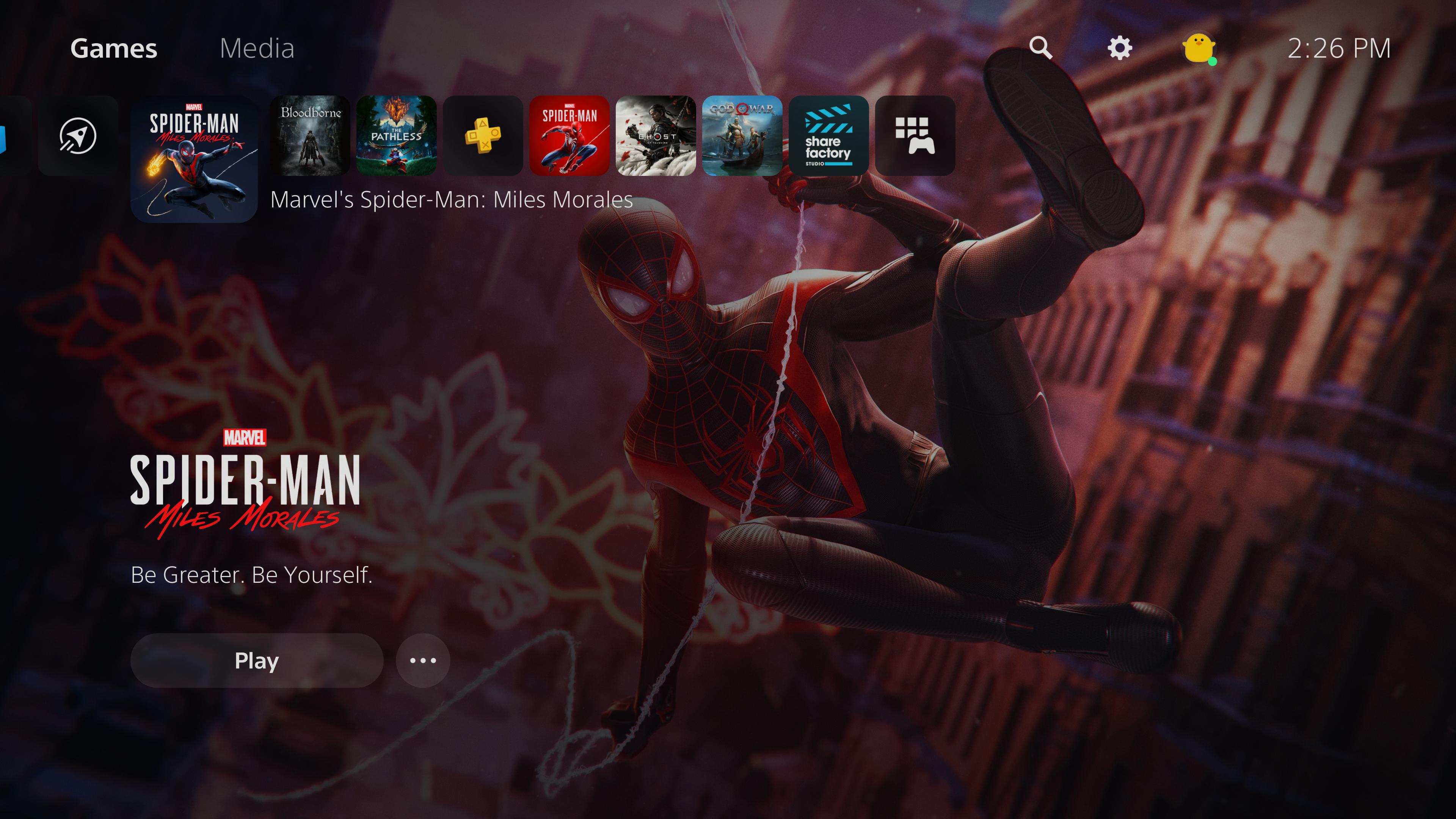
Screenshot of the PS5 menu.

As for the games side, it’s similar to the PS4 in that it’s a horizontal line that you click through, and when a game is highlighted it “takes over” the screen with a background, the latest news, achievements and so on. As before it works perfectly well.

Previously, when you pressed the PlayStation button, you’d return to the main menu and pause whatever you were playing. If you held down the button, it opened an in-game side menu where you could invite friends, turn off the console and other common tasks.

The PS5 reverses that: The long press now returns you to the home screen, while a short press brings up the in-game menu (now a row of tiny icons on the bottom of the screen — not a fan of this change).

The in-game menu now sports an in-depth “card” system that, while cool in theory, seems like one of those things that will not actually be used to great effect. The giant cards show recent screenshots and achievements, friend activity and, if the developer has enabled it, info about your current mission or game progress.

For instance, in Miles Morales, hitting pause told me I was 22% of the way through a side mission to rescue a bodega cat named Spider-Man, with an image of the bodega where I accepted it. Nice, but it’s redundant with the info presented in-game if I pause in the ordinary way. There’s more to it, though — the cards can also be used as “deep links” to game features like multiplayer, quests in progress, quick travel locations, even hints.
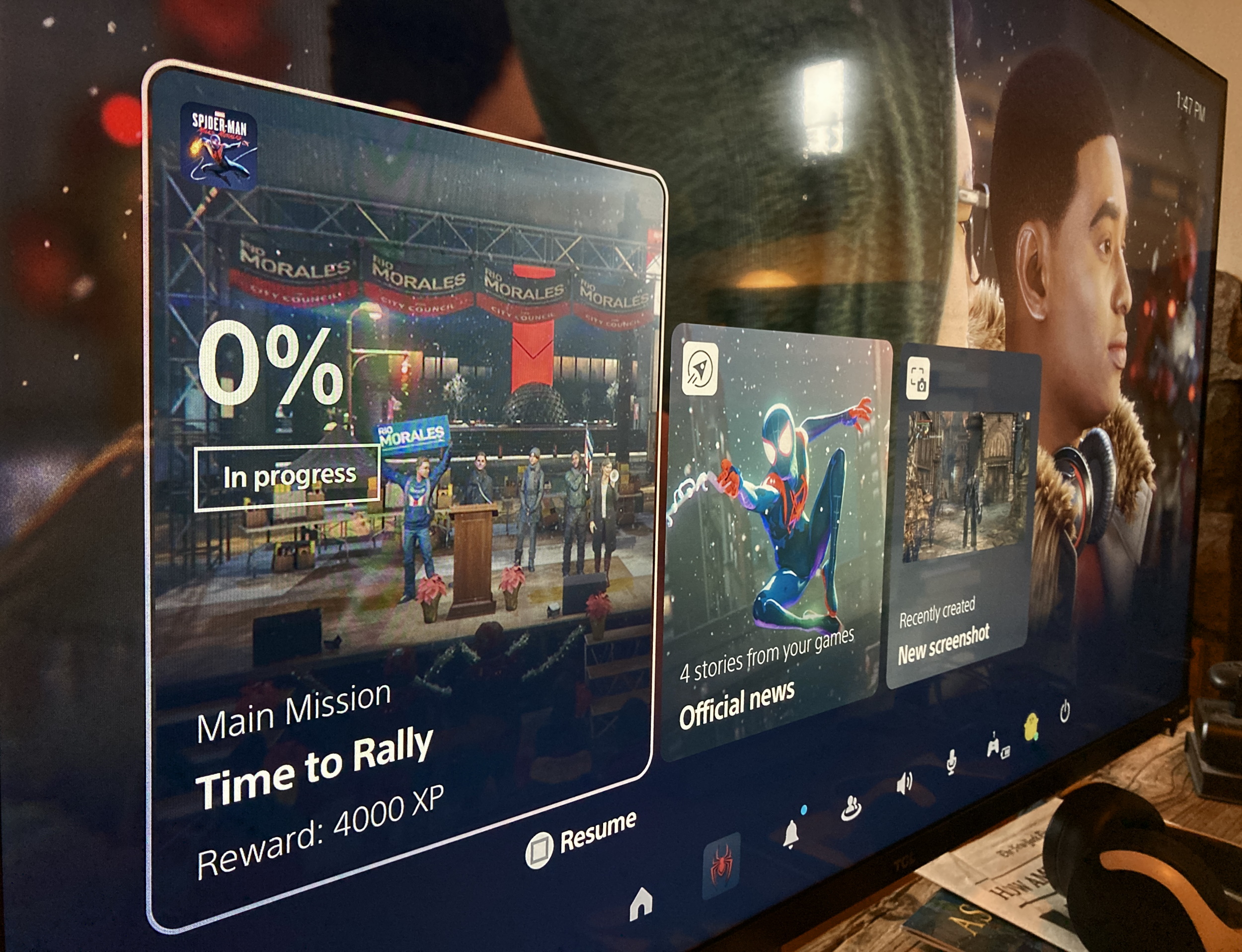
Image Credits: Devin Coldewey / TechCrunch

Sony showed off these advanced possibilities in a video of Sackboy: The Big Adventure, but since that game isn’t yet available I can’t yet speak to how well it works. More importantly, I can’t make any promises on behalf of developers, who may or may not integrate the system well. At the very least it could be nice, but I’m afraid it will be relegated to first-party games (of which Sony promises many), and be optional at that.

It’s hard to call the new UI an improvement over the old one — it’s different, in some ways more busy and in some ways streamlined. Where it may improve things is in reducing friction in things like organizing voice chat and joining friends’ games. But that capability wasn’t ready for launch.

A couple nice things I want to note: Setting up the PS5 to your own preferences is super easy. I downloaded my cloud saves in a minute or two, and there’s a great new settings page for things people often change in games: difficulty, language, inverting the camera and some other things. There are also accessibility options built-in: a screen reader, chat transcription and other goodies I wasn’t able to test but am glad to see.

The games: Well… the PS5 is the best PS4 you can buy

The chief reason for buying a new console is to play the new games on it. When the Switch came out, half the reason anyone bought it was to play the fabulous new Zelda. Sadly, the selection at this launch is laughably thin for both Sony and Microsoft fanboys.

As I noted above, the only game I was provided in time to get any real impressions (that I’m permitted to write about) was Spider-Man: Miles Morales. Having recently completed its predecessor on PS4, I can say that the new game looks and plays better, with shorter load times, improved lighting, more detailed buildings and so on. But the 2018 Spider-Man still looks and plays very well — this is the difference you’d expect in a sequel, not from one generation to the next. (To be clear, the PS5 version does look considerably better, it’s just not the night and day we’ve been led to expect.)

A screenshot of Spider-Man: Miles Morales on PS5As far as a review goes, I’ll just say that if you liked the first, you’ll like the second, and if you didn’t play the original, play it first because it’s great. I also want to hand it to the new game for its commitment to diversity.

But that will also be coming out on the PS4… and Xbox One and Series X… In fact, almost all the big games of the next year will be.

They will, of course, play and look better on the PS5 than the PS4. But it’s a hard sell to tell someone to pay $500 so they can play the next Assassin’s Creed or Horizon: Zero Dawn in 4K HDR rather than 1080p.

Meanwhile, the few games you can only play on PS5 are for niche players. Sackboy looks to be a fun platformer but hardly a blockbuster; Demon’s Souls is my most anticipated title of the season, but a remake of a legendary but little-played and controller-bitingly difficult PS3 game isn’t going to break sales records; and Destruction All-Stars, an online-only racing battle royale game, got delayed until February, which suggests it’s not playing well.

Adding them all up there really isn’t much reason in terms of exclusives to pick the PS5 over the Xbox Series X or, at least for 2021, a PS4 Pro.

The good news is that the PS5 is now without question the best way to play the huge catalog of amazing PS4 games out there. Nearly all of them will look better, play better and load faster. Sony as much as admitted this when they bundled a dozen of the best games from the last generation with the PS5. Honestly, I’m looking forward to finally playing God of War (I know… don’t hassle me!) on this thing more than I am Assassin’s Creed: Valhalla.

[gallery ids="2070471,2070472"]

Unfortunately I can’t speak to whether these PS4 games have much to speak of in terms of real improvements yet. As mentioned above, a lot of that depends on support from the developers. But as a simple test, loading the Central Yharnam area in Bloodborne took about 33 seconds on the PS4, and 16 on the PS5 (as you can see in the shots above, the game looks identical). I didn’t time them, but anecdotally other games showed improvements as well.

The verdict: The must-have console for the 2021 holidays

A PS5 console

Image Credits: Devin Coldewey / TechCrunch

No, that isn’t a typo. The PS5 (and I am joined in this opinion by our review of its rival, the Xbox Series X) simply isn’t a console anyone should rush out and purchase for any reason. Not least of which because it will be near-impossible to get one in the next month or so, making the possibility of unwrapping a PS5 a remote one for eager youths.

The power of the next generation is not much on display in any of the titles I have been able to play, and while a handful of upcoming games may show off its advantages, those games will likely play just as well on the other platforms they’re being released on.

Nor are there any compelling new features that make the PS5 feel truly next-gen, with the possible exception of the variable resistance triggers (the Series X has multi-game suspension at least, and I’d be jealous if there were any games to switch between). For the next 6-8 months, the PS5 will merely be the best way to play the same games everyone else is playing, or has been playing for years, but in 4K. That’s it!

The rush by Sony and Microsoft to get these consoles out by the holidays this year simply didn’t have the support of the publishers and developers that make the games that make consoles worth having. That will change late next year as the actual next-gen titles and meaningful exclusives start to appear. And a year from now the PS5 and Series X will truly be must-haves, because there will be things that are only available for them.

I’m not saying buy your kid a PS4 Pro for Christmas. And I’m not saying the PS5 isn’t a great way to play games. I’m just saying that outside some slight differences that many gamers don’t even have the setup to notice, there’s no reason to run out and buy a PS5 right now. Relax and enjoy the latest, greatest games on your old PS4 in confidence, knowing that you’ll save $50 when a Cyberpunk 2077 bundle goes on sale in the summer.

So don’t feel bad if you can’t lay your hands on a PS5 to keep you entertained this winter — a PS4 will do you just fine for the present while the next generation makes its lazy way toward the consoles it will eventually grace.


from Microsoft – TechCrunch https://techcrunch.com/2020/11/06/review-sonys-playstation-5-is-here-but-next-generation-gaming-is-still-on-its-way/


Amazon to invest $2.8 billion to build its second data center region in India

Amazon will invest about $2.8 billion in Telangana to set up a new AWS Cloud region in the southern state of India, a top Indian politician announced on Friday.

The investment will allow Amazon to launch an AWS Cloud region in Hyderabad city by mid-2022, said K. T. Rama Rao, Minister for Information Technology, Electronics & Communications, Municipal Administration and Urban Development and Industries & Commerce Departments, Government of Telangana.

The new AWS Asia Region will be Amazon’s second infrastructure region in India, Amazon said in a press release. It did not disclose the size of the investment.

“The new AWS Asia Pacific (Hyderabad) Region will enable even more developers, startups, and enterprises as well as government, education, and non-profit organizations to run their applications and serve end users from data centers located in India,” the e-commerce giant said.

But there is a lot in it for Amazon as well. Jayanth Kolla, chief analyst at consultancy firm Convergence Catalyst, told TechCrunch that by having more cloud regions in India, it will be easier for Amazon to comply with the nation’s data localization policy. This compliance will also help Amazon, which currently leads the cloud market in India, attract more customers.

AWS has courted several high-profile businesses as customers in recent years. Some of these include automobile giant Ashok Leyland, life insurance firm Aditya Birla Capital, edtech giant Byju’s, Axis Bank, Bajaj Capital, ClearTax, Dream11, Edelweiss, Freshworks, HDFC Life, Mahindra Electric, Ola, Oyo, Policybazaar, RBL Bank, redBus, Sharda University, Swiggy, Tata Sky, and Zerodha.

Kolla said there is a possibility that in the future several more states in India introduce their own versions of data localization laws. “This is also a big win for the state government of Telangana, home of the high tech city Hyderabad, for attracting this level of investment,” he added.

“Businesses in India are embracing cloud computing to reduce costs, increase agility, and enable rapid innovation to meet the needs of billions of customers in India and abroad,” said Peter DeSantis, Senior Vice President of Global Infrastructure and Customer Support, Amazon Web Services, in a statement. “Together with our AWS Asia Pacific (Mumbai) Region, we’re providing customers with more flexibility and choice, while allowing them to architect their infrastructure for even greater fault tolerance, resiliency, and availability across geographic locations.”

The investment illustrates the opportunities Amazon, which has poured over $6.5 billion in its India operations to date, sees in the world’s second largest internet market.

Amazon, Google, and Microsoft have explored various ways to expand the reach of their cloud services in India. Microsoft inked a long-term deal with telecom giant Jio Platforms last year to offer millions of businesses access to Office 365 and other Microsoft services at a more affordable cost. Earlier this year, Amazon formed a strategic alliance with Airtel, one of the largest telecom operators in India. As part of the deal, Airtel will sell AWS to many of its customers. Microsoft today has three data center regions in India, while Google has two.

At stake is India’s public cloud market, which according to market research group IDC, is expected to be worth $7 billion by 2024.


from Microsoft – TechCrunch https://techcrunch.com/2020/11/06/amazon-to-invest-2-8-billion-to-build-its-second-data-center-region-in-india/

Thursday, November 5, 2020

Review: Microsoft’s Xbox Series X is ahead of its time

Arriving seven years after the Xbox One first launched, the new Microsoft Xbox Series X console lands in a different world and a very different Xbox ecosystem. Microsoft is embracing subscription bundling with its Game Pass service and cloud-streaming with xCloud, nevertheless they are still committed to building huge metal boxes with tremendous power designed to carry new boundary-pushing gaming titles into consumers’ homes.

Right off the bat, I will say that the $499 Series X and $299 Series S were tough systems to review. Launch lineups for brand spanking new consoles always leave a little to be desired, but this generation has been particularly prone to launch title delays and a handful of the launch day Series X titles weren’t even available to reviewers ahead of launch. The former can be pinned on COVID-19 related delays impacting already aggressive timelines, but the latter seemed to be a bit of an unnecessary limit placed on reviewers.

Nevertheless, I’ll look to update this review next week when some more of these titles are able to be played.


This thing has a lot of specs behind it. It’s got lots of cores and lots of teraflops. There aren’t any futuristic/gimmicky features that Microsoft is pushing, there’s no bundled Kinect, there’s no VR headset. The Series X is just a giant black box that plays games better than any Xbox before it.

Quickly, here are the high level differences between the Series X and Series S, I’ll say that this review mostly focuses on the Series X.

Series X
Plays titles in 4K at up to 120fps, with eventual 8K support at up to 60fps* 
1TB storage
4K UHD Blu-ray drive
Very big

*developers decide how hard you can push their titles

Series S
Plays titles at up to 1440p at up to 120fps
512GB storage
No optical drive
Not nearly as big

This previous generation of hardware really shook up the idea of what a console generation actually was. In the past, mid-generation updates to hardware were largely cosmetic — slimmed down packages with the same power — but with the Xbox One S and One X, Xbox delivered mid-generation console upgrades that improved performance, breaking the rules in an aim to steal users away from PlayStation with the promise that they could make the most of their brand new 4K televisions.

A result of that is that this doesn’t immediately feel like a mind-bending upgrade over Microsoft’s previous release, the One X, it’s twice as fast teraflops-wise, but there isn’t a title that really showcases those internals. It feels ahead of its time, and I think consumers that buy the device on day one will have to wait quite a while before they can harness its full capabilities.

While I’m not convinced that users are going to be staring mouth agape at a launch title that blows their mind graphics-wise, I think that all of this power will eventually go a long way to eliminating some huge annoyances that have been accepted as commonplace in the world of console gaming.

The load-time reductions that are largely thanks to the new SSD storage are very substantial and are probably the biggest thing you’ll notice off the bat. Another advantage of barely meeting its potential out-of-the-box is that I barely heard a peep from the Series X when I got into the thick of a game, the console’s fans were whisper quiet. Another big quality-of-life improvement is Quick Resume, which allows users to quickly hop back into a game they were playing a while ago without reloading the entire game and wandering through start menus. This feature is killer, and is one that PlayStation 5 users are missing an equivalent for, at least for the time being.

With all of this in mind, I’d say that the reality is — and this is on paper — there also isn’t a ton separating the Series X and Sony’s PS5 consoles in terms of playability. Both are getting much better internals, SSDs that will drastically reduce loading times, better UIs and newer controllers.

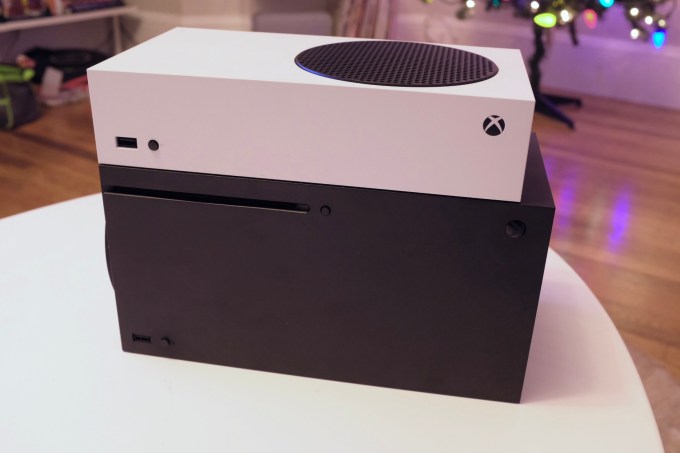
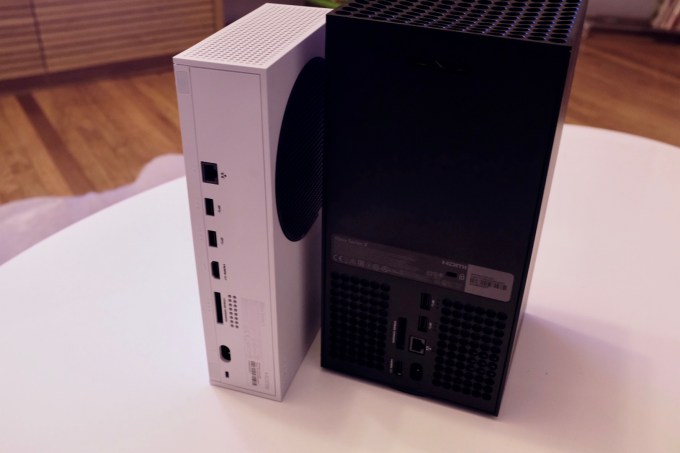
They definitely look different. The Series X itself is quite large (though not quite as hulking as the PS5) and will require plenty of prospective owners to bust out the measuring tape and check if it can even fit horizontally in their media cabinet. It feels more like a well-designed gaming PC than a console. The chassis is very solid and dense, it’s one of the least fragile designs I’ve seen on a console. On the note of hardware, I will also say that while the Series X/S controllers are very similar to the previous-generation, I think that the subtle improvements, especially in regards to the feel and texturing of it, are going to be popular with users.

Most of the people reading this, I’m sure, already have a pretty solid idea whether or not they’re going to buy the Series X and many of those people will buy it simply because it is new and they know that regardless of whether they currently need the power or are able to harness it with their other gear, they are getting access to new titles and future-proofing themselves. That’s certainly not a bad reason.

Others might be on the fence about getting a Series X/S or a PlayStation 5. Much like American politics, I’m not so convinced there are quite as many undecideds here as is believed. People have a good idea of what franchises are PlayStation exclusives and what titles are only going to ship on Xbox. There have been decades to drill down the flavors that both Sony and Microsoft are pushing though Microsoft has been getting more aggressive about studio acquisitions over the past couple years so that list of exclusives is likely going to start getting longer more quickly as they seek to build up a huge library of titles for their Game Pass subscription service.

But, yeah, most of the people on the fence end up going for the system that is going to have the games on it that they really, really want to play. But it’s a little harder to tell that right now because chances are there isn’t a launch title for the PS5 or Series X that you’re dying to play, or at least one that couldn’t also be played on a previous-gen console, albeit in less optimized fashion. The promised Series X holiday showstopper Halo Infinite was delayed until 2021, and the reality is a game that really shows off this hardware probably won’t be coming around until late next year.

Really most people won’t be able to take full advantage of the Series X until next year anyway. There’s an overwhelming chance that your TV or AV receiver are not positioned to maximize what the Series X can offer, namely 8K gaming or high frame rate (120fps) 4K gaming. Hitting the high end requires a technology called HDMI 2.1 which only a select few newer TVs have adopted. It’s likely to be more standard across the board come next year, but for the time being there aren’t many of these TVs or AV receivers that are actually in people’s homes. With HDMI 2.0, which your 4K TV does support, you can play Series X titles at 4K resolution at up to 60fps, closer to what the previous-generation Xbox One X was capable of.

Being super early to a technology as a consumer often leads to tradeoffs, and that’s definitely the case with the Series X/S. While operating at the cutting edge of video standards will benefit the console’s longevity, it does mean that consumers might be in a less optimal spot for a bit if they don’t have the latest AV hardware. What will be more frustrating to day-one buyers is the generally light library of new content. There are some multi-platform hits that will be landing, but it doesn’t seem like there will be a must-play title that makes the most of its power. For consumers that are buying a system so focused on performance, that’s disappointing, but over time, I have few doubts that the Series X/S library will grow robust, the questions for consumers is whether all of the quality-of-life improvements are enough for them to take the plunge in 2020.


from Microsoft – TechCrunch https://techcrunch.com/2020/11/05/review-the-xbox-series-x-is-ahead-of-its-time/

Wednesday, November 4, 2020

Daily Crunch: Social media confronts election misinformation

You may have heard that the United States had a presidential election yesterday, with plenty of implications for the tech world, particularly with social media as one of the battlegrounds in the fight over the results. Meanwhile, major tech-relevant ballot measures, like California’s Proposition 22, also passed. I’ll do my best to cover it all in your Daily Crunch for November 4, 2020.

The big story: Social media confronts election misinformation

Here’s the good news: Election Day in the United States was largely free from disruptive cyberattacks.

The bad news? Well, we don’t have a winner in the presidential election yet — although Joe Biden is up 2% in the popular vote as I write this on Wednesday afternoon, and he’s leading narrowly in key battleground states. The uncertainty has created a big opportunity for misinformation, particularly from President Donald Trump and others involved with his campaign who are trying to cast doubt on the voting and vote-counting process while prematurely claiming victory.

As my colleague Taylor Hatmaker put it, this is a “nightmare misinformation scenario,” with the president and his campaign doing their best to “work the misinformation ecosystem he’s cultivated over the last four years.”

At least Facebook and Twitter are trying to stem the spread in different ways: Twitter has added warning labels to numerous Trump and Trump campaign posts (Trump and his campaign members aren’t the only ones getting warnings labels right now, but to be clear: They’re the ones spreading dangerous misinformation about the results — while the Biden campaign is, to put it simply, not). Facebook also added messages at the top of both Facebook and Instagram noting that votes are still being counted.

The tech giants

Apple, Microsoft and other tech stocks roar as the presidential election narrows to several states — At the close of trading today, the tech-heavy Nasdaq Composite was up 3.8%.

Zynga reports record revenue and strong user growth while still losing $122M — The company predicted further growth in Q4, with revenue up 55% to $570 million.

Startups, funding and venture capital

Intel has acquired Cnvrg.io, a platform to manage, build and automate machine learning — Intel continues to snap up startups to build out its machine learning and AI operations.

Aveine’s Smart Wine Aerator is a huge upgrade for wine lovers, and could create some new ones, too — This gadget from a French startup offers variable, instant aeration, along with a connected app platform.

Hustle Fund, a pre-seed firm, closes $30M for a new fund — Hustle Fund was created by Elizabeth Yin and Eric Bahn, two former 500 Startups partners.

Advice and analysis from Extra Crunch

Will new SEC equity crowdfunding rules encourage more founders to pass the hat? — Companies can now raise $5 million via equity crowdfunding.

As tech stocks rally, bring on the IPOs — The Exchange has heard whispers that the late-November/early-December period could be active for new filings.

(Reminder: Extra Crunch is our membership program, which aims to democratize information about startups. You can sign up here.)

Everything else

CA ballot measure that keeps gig workers as independent contractors is projected to pass — Uber, Lyft, Instacart and DoorDash (the major backers of California’s Proposition 22) are getting their way.

Cannabis legalization measures set to pass in five states — Cannabis legalization was on five state ballots yesterday and ran the table.

Massachusetts voters pass a right-to-repair measure, giving them unprecedented access to their car data — Under the measure, once a person buys a vehicle, they own all of its data.

The Daily Crunch is TechCrunch’s roundup of our biggest and most important stories. If you’d like to get this delivered to your inbox every day at around 3pm Pacific, you can subscribe here.


from Microsoft – TechCrunch https://techcrunch.com/2020/11/04/daily-crunch-social-media-confronts-election-misinformation/

Apple, Microsoft and other tech stocks roar as the Presidential election narrows to several states

On the back of sizable gains posted yesterday, tech stocks are once again rising sharply in pre-market trading today. Futures concerning the tech-heavy Nasdaq Composite index are indicating a 3.4% gain this morning, far above a 1.7% gain that the broader S&P 500 index is currently anticipating.

The market capitalization of some of the world’s most valuable companies have added tens of billions of dollars in value this morning, with Apple rising 3.9% in pre-market trading, and Microsoft gaining an even-richer 4.4%.

Smaller key players in the tech market are also rising, with Salesforce gaining 2.9% ahead of the bell, and Twilio adding 3.3% to its own value.

The price of heavily-traded assets have whipsawed during the last 24 hours, with yield on American government debt falling last night — indicating that investors were bullish on the economy as a whole — before rising again when it became clear that no so-called Blue Wave was forming. The prospect of a divided Congress could stifle future economic stimulus, the possibility of which has been a key narrative driver for market trading in recent months.

Precisely why tech stocks are racing higher this morning is not entirely clear. One obvious possibility is that investors are returning to their summer trade, when they bid shares of software-heavy companies higher in hopes of parking their wealth in the firms with the best chance of posting regular growth during a period of intense economic uncertainty.

If a divided Congress means a drag on more stimulus, why not return to the play that worked before?

For tech, and tech-enabled companies hoping to go public before the year ends, or in early 2021, the rally is welcome news. But, as with everything in this election, things could still change.


from Microsoft – TechCrunch https://techcrunch.com/2020/11/04/tech-stocks-up-election-results/

Tuesday, November 3, 2020

Warren gets $1.4 million to help local cloud infrastructure providers compete against Amazon and other giants

Started as a side project by its founders, Warren is now helping regional cloud infrastructure service providers compete against Amazon, Microsoft, IBM, Google and other tech giants. Based in Tallinn, Estonia, Warren’s self-service distributed cloud platform is gaining traction in Southeast Asia, one of the world’s fastest-growing cloud service markets, and Europe. It recently closed a $1.4 million seed round led by Passion Capital, with plans to expand in South America, where it recently launched in Brazil.

Warren’s seed funding also included participation from Lemonade Stand and angel investors like former Nokia vice president Paul Melin and Marek Kiisa, co-founder of funds Superangel and NordicNinja.

The leading global cloud providers are aggressively expanding their international businesses by growing their marketing teams and data centers around the world (for example, over the past few months, Microsoft has launched a new data center region in Austria, expanded in Brazil and announced it will build a new region in Taiwan as it competes against Amazon Web Services).

But demand for customized service and control over data still prompt many companies, especially smaller ones, to pick local cloud infrastructure providers instead, Warren co-founder and chief executive officer Tarmo Tael told TechCrunch.

“Local providers pay more attention to personal sales and support, in local language, to all clients in general, and more importantly, take the time to focus on SME clients to provide flexibility and address their custom needs,” he said. “Whereas global providers give a personal touch maybe only to a few big clients in the enterprise sectors.” Many local providers also offer lower prices and give a large amount of bandwidth for free, attracting SMEs.

He added that “the data sovereignty aspect that plays an important role in choosing their cloud platform for many of the clients.”

In 2015, Tael and co-founder Henry Vaaderpass began working on the project that eventually became Warren while running a development agency for e-commerce sites. From the beginning, the two wanted to develop a product of their own and tested several ideas out, but weren’t really excited by any of them, he said. At the same time, the agency’s e-commerce clients were running into challenges as their businesses grew.

Tael and Vaaderpass’s clients tended to pick local cloud infrastructure providers because of lower costs and more personalized support. But setting up new e-commerce projects with scalable infrastructure was costly because many local cloud infrastructure providers use different platforms.

“So we started looking for tools to use for managing our e-commerce projects better and more efficiently,” Tael said. “As we didn’t find what we were looking for, we saw this as an opportunity to build our own.”

After creating their first prototype, Tael and Vaaderpass realized that it could be used by other development teams, and decided to seek angel funding from investors, like Kiisa, who have experience working with cloud data centers or infrastructure providers.

Southeast Asia, one of the world’s fastest-growing cloud markets, is an important part of Warren’s business. Warren will continue to expand in Southeast Asia, while focusing on other developing regions with large domestic markets, like South America (starting with Brazil). Tael said the startup is also in discussion with potential partners in other markets, including Russia, Turkey and China.

Warren’s current clients include Estonian cloud provider Pilw.io and Indonesian cloud provider IdCloudHost. Tael said working with Warren means its customers spend less time dealing with technical issues related to infrastructure software, so their teams, including developers, can instead focus on supporting clients and managing other services they sell.

The company’s goal is to give local cloud infrastructure providers the ability to meet increasing demand, and eventually expand internationally, with tools to handle more installations and end users. These include features like automated maintenance and DevOps processes that streamline feature testing and handling different platforms.

Ultimately, Warren wants to connect providers in a network that end users can access through a single API and user interface. It also envisions the network as a community where Warren’s clients can share resources and, eventually, have a marketplace for their apps and services.

In terms of competition, Tael said local cloud infrastructure providers often turn to OpenStack, Virtuozzo, Stratoscale or Mirantis. The advantage these companies currently have over Warren is a wider network, but Warren is busy building out its own. The company will be able to connect several locations to one provider by the first quarter of 2021. After that, Tael said, it will “gradually connect providers to each other, upgrading our user management and billing services to handle all that complexity.”


from Microsoft – TechCrunch https://techcrunch.com/2020/11/01/warren-gets-1-4-million-to-help-local-cloud-infrastructure-providers-compete-against-the-giants/