Tuesday, April 2, 2019

Walmart partners with Google on voice-enabled grocery shopping

Following the latest wave of price cuts at Amazon’s Whole Foods announced Monday evening, Walmart today introduced its own plans to challenge Amazon on grocery shopping through a partnership with Google. The company is rolling out a new voice ordering capability, Walmart Voice Order, which works across Google Assistant-powered platforms, including Google’s smart speakers and displays, smartphones, smartwatches, and more.

The news follows several efforts by Walmart to enter voice-based commerce, despite not offering its own hardware or voice assistant platform, as Amazon does with Echo and Alexa, respectively.

Two years ago, Walmart and Google partnered on voice-based shopping through Google Home devices. Specifically, customers could easily reorder favorites through Google’s shopping service, Google Express. However, Walmart disappeared from Google Express’ marketplace this January, and was more recently said to be testing an online grocery voice application with a small number of VIP customers, ahead of a spring launch.

The technology works similarly to what was developed for the Walmart-Google Express deal. For example, when a customer asks to order an item, the assistant will know to reorder the customer’s preferred item based on their order history. The assistant will also inform the customer what item it’s choosing and the price point.

This feature means the customer doesn’t have to speak the full name of an item when making a request. Instead, they could say just “milk” and the assistant would know they mean the “1 gallon of 1% Great Value organic milk” they ordered the last time.

To get started, Google Assistant users launch the feature as they would any other voice application. They’ll say: “OK Google, talk to Walmart.”

That’s still not as simple as Amazon’s assistant, though. Because of its first-party platform advantage, you can say, “Alexa, order milk” to order from Whole Foods, or “Alexa, add milk to my shopping list” for future orders or general list-making.

Walmart’s voice app is meant to be used to round-up items for a later purchase by adding them to a cart, instead of forcing a checkout upon each new addition. This lets you add an item as you realize you’re out – something that better reflects how customers use voice to shop.

“We know when using voice technology, customers like to add items to their cart one at a time over a few days – not complete their shopping for the week all at once,” noted Walmart’s SVP of Digital Operations, Tom Ward.

Customers’ tendency to shop in bits and pieces was one of the big oversights in the 2018 report that claimed voice shopping was a dud. It didn’t incorporate one of the most popular voice features – list-making – into its findings, and instead only considered voice shopping had occurred when orders were placed immediately. In reality, lists are big driver of later e-commerce purchases but aren’t as easily tracked.

Walmart says the new voice shopping feature will launch to all Google Assistant-powered devices this month, including Google Home, Android and iPhones, smartwatches, and other platforms, including those from third parties like JBL or Lenovo, among others. The rollout will be staged, meaning over the next few weeks more and more customers will get the update.

Voice shopping for grocery pickup will be offered at more than 2,100 Walmart stores and for online delivery at over 800 stores.

The retailer says other platforms besides Google will be added in time, but that isn’t likely to include Alexa, which today holds a 60+ percent market share on smart speakers, according to eMarketer.

However, grocery shopping is a sizable business for Walmart, accounting for more than half its annual sales. Newer technology initiatives, like online grocery, have been successful with its customers as well.

According to a recent report form financial services firm Cowen and Company, Walmart’s curbside pickup could generate $30 billion to $35 billion for the grocery industry annually by 2020 and that today, 11 to 13 percent of its customers use the pickup service.


from Amazon – TechCrunch https://techcrunch.com/2019/04/02/walmart-partners-with-google-on-voice-enabled-grocery-shopping/


Amazon again slashes Whole Foods prices, doubles Prime member weekly deals

Amazon-owned Whole Foods announced a third round of price cuts that will see the grocer discounting hundreds of items, offering an average savings of 20 percent. Produce is an area of specific focus in this wave of price cuts, with lowered prices on seasonal items including greens, tomatoes, tropical fruits, and more. In addition, Amazon will expand its Prime benefits offered to Whole Foods shoppers with a larger selection of weekly deals, the company says.

Lowering prices at Whole Foods was one of the first major changes Amazon introduced following its $13.7 billion acquisition of the grocery chain in 2017. Almost immediately, discounts were put into place ranging from 6 percent on the low-end to as much as nearly 30 percent, in some cases. Last year, Amazon also introduced 10 percent savings for Prime members shopping at Whole Foods across the U.S. – including for its delivery services, where available.

Through previous rounds of price cuts and Prime member deals, Whole Foods says customers have saved “hundreds of millions” of dollars since the chain’s merger with Amazon.

Today, the retailer says it will again lower prices storewide, with a focus on produce. Some of the new savings include large yellow mangoes for $1 each; mixed-medley cherry tomatoes for $3.49 per 12oz, and organic bunched rainbow chard at $1.99 each. The WSJ reports over 500 products have seen price cuts, and are the broadest cuts to date.

In addition, Whole Foods will double the number of exclusive weekly Prime Member deals and discounts.

Over the next few months, Prime members shopping the store will be able to take advantage of over 300 Prime member deals on the season’s most popular items, the company notes. This includes, in April, discounts on things like organic asparagus and strawberries, antibiotics-free chicken, sliced ham, wild-caught halibut, Justin’s brand products, prepared sandwiches and wraps, and more. Every week, up to 20 deals are available to Prime members.

In some cases, these new discounts for Prime shoppers as high as 35 to 40 percent.

Prime members also save the usual 10 percent on hundreds of other items, not discounted through weekly sales.

“When Whole Foods Market joined the Amazon family, we set out to make healthy and organic food more accessible. Over the last year, we’ve been working together tirelessly to pass on savings to customers,” said Jeff Wilke, CEO of Amazon Worldwide Consumer, in a statement about the new cuts. “Every time a customer walks into a Whole Foods Market, they expect and trust industry-leading quality standards across aisles. And now they will experience that same Whole Foods Market quality with even more savings across departments.”

To kick off the new price cuts and encourage foot traffic in-store, customers who try Prime will get $10 off their $20 purchase for signing up for a membership. Membership includes Whole Foods’ weekly deals, free grocery pickup, free grocery delivery on orders over $35, Alexa shopping, and all the other Prime perks on Amazon.com.

The move to cut prices comes at a time when Walmart and Amazon are battling for grocery customers, with the former leveraging its existing brick-and-mortar footprint for free pickups, as well as its reputation as a low price leader. Unlike grocery delivery services such as Instacart or Target’s Shipt, Walmart’s groceries cost the same to pickup or deliver as they are in-store. (Target is now offering the same deal on Shipt, but only for Target items – not those delivered by other stores, which are still marked up.)

Walmart is also countering Amazon Alexa’s shopping features through a deal with Google, which now offers voice-activated shopping through Google Assistant, announced today.

To cater to grocery shoppers, Amazon is leaning more on its Prime membership program to entice customers used to the convenience of near-instant gratification and fast delivery. Whole Foods Market groceries ordered through Prime Now can arrive in 2 hours in over 60 metros, with more cities on the way. And grocery pickup is offered in 30 minutes at some Whole Foods locations.

Whole Foods isn’t Amazon’s only angle on food shopping: Amazon is also reportedly looking into retail space to open its own U.S. grocery chain separate from Whole Foods, and runs a handful of cashierless Amazon Go convenience stores.


from Amazon – TechCrunch https://techcrunch.com/2019/04/02/amazon-again-slashes-whole-foods-prices-doubles-prime-member-weekly-deals/

Microsoft teams up with BMW for the IoT-focused Open Manufacturing Platform

Car companies are making big investments in technology to help ensure that they are not cut out of the next generation of transportation and automotive manufacturing, and today came the latest development in that trend.

The BMW Group and Microsoft announced they would team up in a new effort called the Open Manufacturing Platform, aimed at developing and encouraging more collaborative IoT development in the manufacturing sector, focusing on smart factory solutions and building standards to develop them in areas like machine connectivity and on-premises systems integration.

The two companies have not disclosed how much they intend to invest in the project — we have sent a message to ask. The plan will be to bring in more manufacturers and suppliers — the goal, they say, is to have between four and six others with them, working on 15 use cases by the end of this year — working with open source components, open industrial standards and open data to develop both hardware and software that runs on it.

The two say that future partners do not have to be from within the automotive industry.

The OMP will be built on Microsoft’s industrial IoT platform — part of its Azure cloud business. But this is a natural progression of how Microsoft and BMW were already working together. BMW already has 3,000 machines running on Azure cloud, IoT and AI services in its existing robots and in-factory autonomous transport systems, and it said it will be contributing some of the technology that it had already built — for example around its self-driving systems — into the group as part of the effort.

“Microsoft is joining forces with the BMW Group to transform digital production efficiency across the industry,” Scott Guthrie, executive vice president, Microsoft Cloud + AI Group, said in a presentation in Germany today. “Our commitment to building an open community will create new opportunities for collaboration across the entire manufacturing value chain.”

“Mastering the complex task of producing individualized premium products requires innovative IT and software solutions,” added Oliver Zipse, member of the Board of Management of BMW AG, Production, a statement. “The interconnection of production sites and systems as well as the secure integration of partners and suppliers are particularly important. We have been relying on the cloud since 2016 and are consistently developing new approaches. With the Open Manufacturing Platform as the next step, we want to make our solutions available to other companies and jointly leverage potential in order to secure our strong position in the market in the long term.”

The problem that Microsoft and BMW are going after here is a longstanding one. Much of the computing in the world of IT has been built around open standards, or in any event on very widely-used proprietary platforms that can interface with each other. The same does not go in the world of manufacturing, where proprietary systems are specific to each manufacturer, making them difficult to modify and often impossible to use in conjunction with other proprietary systems.

That ultimately slows down how things have been able to evolve, and will mean that implementing new generations of technology becomes expensive or even in some cases impossible. And given the speed with which things are moving, and the increasing sophistication of the machines that are being built (cars as “hardware”), something had to change.

That is what BMW and Microsoft are addressing. For BMW it will give it a hand in helping shape how standards develop, and for Microsoft it will give it a potential window into expanding its business in this enterprise sector.

The collaborative approach has been a big one for tech companies hoping to find a common way forward in the future of computing. Microsoft may own a lot of proprietary platforms that are not open source, but it’s making efforts to collaborate more in a number of other ways. It works with SAP, Adobe, WPP and others on the Open Data Initiative; with Intel, Google and others it’s working on an open standard for connecting data centers; it’s part of an open standard initiative for software licensing; and it’s part of a new cross-licensing patent database.


from Microsoft – TechCrunch https://techcrunch.com/2019/04/02/microsoft-teams-up-with-bmw-for-the-iot-focused-open-manufacturing-platform/

Google reshuffles its leadership in Asia Pacific

There’s a changing of the guard within Google’s Asia Pacific business. In recent weeks, personnel changes within two of its most important roles show the search giant is entering a new era of management for its fast-growing business across the continent.

Scott Beaumont, a British executive who previously ran Google in China and Korea, stepped into the role of Asia-Pacific president following an announcement made on March 18. Following that, Google revealed today that Rajan Anandan, the executive in charge of Google’s business in India and Southeast Asia, would leave the company. VC firm Sequoia India said that Anandan, who has made a number of angel investments, is joining its ranks to oversee Surge, the early stage accelerator program that it announced in January.

A former consultant with McKinsey in the U.S, Anandan worked for Microsoft and Dell before joining Google in 2011. Under his tenure, the company executed a range of initiatives for India under its ‘Next Billion Users’ initiative which included its Tez payments service (now called Google Pay), public WiFi, local apps and a range of more data-friendly versions of apps like Maps and YouTube. Under Anandan, Google’s revenues surpassed $1 billion annually with reports suggesting that India-based income grew some 30 percent year-on-year last year.

Beaumont, who will assume Anandan’s duties while a replacement is hired, paid tribute in a statement:

We are grateful to Rajan for his huge contribution to Google over the past eight years. His entrepreneurial zeal and leadership has helped grow the overall internet ecosystem in India and Southeast Asia, and we wish him all the best in his new adventures.

Google certainly stands in a more competitive position in India today, but whoever replaces Anandan will need to deliver a strategy in response to Facebook’s phenomenal growth in India — where it is said to be close to $1 billion in annual revenue, with big plans for its hugely popular WhatsApp service — and continue to develop strategies for mobile.

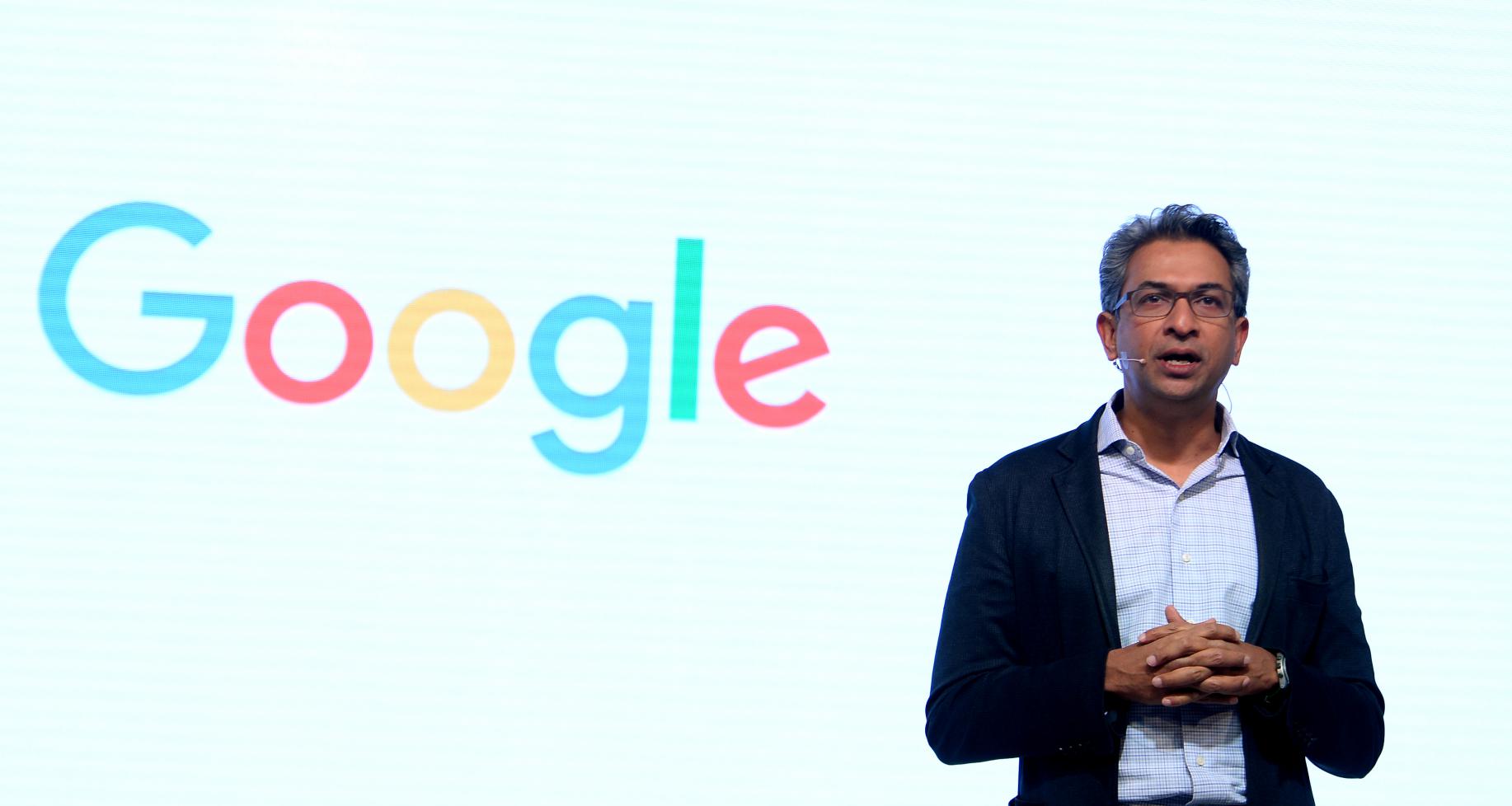
Rajan Anandan, vice president of Google for South East Asia and India, is leaving the search giant to oversee Sequoia’s new early-stage accelerator program (Photo credit: Sajjad Hussain/AFP/Getty Images)

It isn’t clear if Anandan’s departure is related to Beaumont’s recent promotion — you’d imagine that the two were among the main candidates for the top job at Google Asia — but heading to Sequoia is no slack move, particularly given the company’s increased focus on early-stage investing and Surge.

Now some words on Beaumont, who TechCrunch understands from sources is widely-liked within Google. His tenure in China is linked with the development of DragonFly, the secretive project to develop a government-friendly search service in China, but internally his star is rising thanks to Google’s improved business position in China.

DragonFly may (may) have been shuttered, but Beaumont is credited with helping Google build revenue in China through advertising deals, with The Information reporting that China-based revenue surged by more than 60 percent to more than $3 billion last year.

Scott Beaumont, Google’s newly-appointed head of Asia Pacific is widely credited with developing Google’s business in China in recent years, but that also included the controversial work on a proposed censored search service for Mainland China (Photo credit: Sam Yeh/AFP/Getty Images)

Like Twitter and Facebook, that has included dealing with state-back media and other organizations keen to lean on Western internet pillars to reach a global audience but, as an interesting report from The Information earlier this year showed, Google also set up robust on-the-ground systems to let SMEs and companies selling to the global market access Google services through third-party offices and resellers.

On the strategy side, Beaumont struck investments deals with e-commerce giant JD.com and HTC — which involved the acquisition of a smartphone division, in the case of the latter — inked a patent license with Tencent, put cash into some earlier stage startups and selectively launched some products in China.

It remains to be seen how Google’s China strategy will develop now that Beaumont has taken on more responsibility with a broader job and, indeed, what he will bring to Google’s overall strategy in Asia Pacific. The regional accounts for around 15 percent of revenue behind the U.S. and Europe, according to Google parent Alphabet’s latest financials, with 33 percent annual growth second only to Latin America.


from Microsoft – TechCrunch https://techcrunch.com/2019/04/02/google-reshuffles-its-leadership-in-asia-pacific/

Next to the competition

Books sell better in bookstores than they sell in butcher shops. In a bookstore, surrounded by all the competition, a book is in the right place to be seen, compared and ultimately purchased and read.

Trade show booths work when they’re in close proximity to the other options a buyer has. Building your trade show booth across town might insulate you from the other choices, but it does little to help establish where you belong and whether or not you’re a smart choice.

If I was one of the 25 people running for President of the US, I’d organize my own debate tour. I’d invite four or five other candidates to hit the road with me, and I’d do a debate every single night. All six of us would benefit from the competition, leaving the rest behind, ignored because they are alone. No one will stop you, simply begin.

And if I was a wedding photographer, I’d organize a dozen other photographers in town and do a joint brochure and marketing effort. Serving brides in a way that establishes status and increases their confidence.

It’s tempting indeed to shy away from organizing a panel, a conference or a trade show where you can see and be seen right next to those that seek to solve problems for those that are listening. But now that information flows more freely than ever, that’s your fear talking, not an actual strategy for somehow fooling people into believing they don’t have a choice.

[More on debates]


from Seth Godin's Blog on marketing, tribes and respect https://feeds.feedblitz.com/~/600247538/0/sethsblog~Next-to-the-competition/

Monday, April 1, 2019

Microsoft’s Surface Book 2 gets a processor boost

A quiet little update from Microsoft overnight, as the company bumped up a key spec on its 13.5-inch Surface Book 2. The 2017 two-in-one powerhouse is getting a nice little boost to Intel’s 8th gen quad-core i5 chip.

That model run $1,499 and includes 256GB of storage and 8GB of RAM. Bumping up to the 8th gen Core i7 and 512GB of storage, meanwhile, will run you $1,000 more. The 7th gen Core i5 is sticking around, meanwhile, at $200 off.

The news is a confirmation of recent rumors that the company planned to upgrade the device, though things are otherwise staying the same as previous generations. As with the other week’s Apple announcements, the news wasn’t really big enough to warrant its out big announcement. 

Notably, the company also has an event coming up in New York in a couple of weeks, though that’s expected to focus on the Surface Hub 2, which was announced last fall.


from Microsoft – TechCrunch https://techcrunch.com/2019/04/01/microsofts-surface-book-2-gets-a-processor-boost/

This has gone too far

The press release from Comcast, perhaps America’s most hated monopoly, begins as expected. “In order to serve all of our customers better, we’re delighted to announce several new features…”

But it goes quickly downhill from there. Under the guise of increasing net access during a time when Net Neutrality is sorely missed, spokesperson Kevin Marting says, “We’ll be offering a new basic plan, one that costs 15% less than our current offerings. The only difference in service is that due to the cost of moving text around, these users won’t get vowels in their emails or blog posts.”

He goes on to point out that reading without vowels is an ancient tradition, back to the Sumerians and ancient Hebrew. And that it’s more convenient, because, after all, convenience is what we all care about.

I was part of the team that developed the original codec for the internet, particularly the way aascii characters would be treated. Because there are 26 letters (more in various international alphabets) we had to divide the corpus of letters into two batches, reserving a high bit for some of the most used letters. This high bit is necessary, but it also requires twice as much bandwidth to transfer.

Of course, the videos transmitted by Netflix and YouTube use far more space than any text file ever would, but Comcast, seeing the post-literate future, decided to take a short-term selfish route and eliminate the letters that are the most difficult to move around.

This is about the relentless munching around the edges that big companies engage in. They need to boost their earnings, and instead of focusing on better, they obsess about more.

Once again, ordinary people are seeing choice stripped away by selfish functionaries and power-hungry bureaucrats.

In the case of this blog, because we’re connected to the net via Comcast’s DSL (the only service that’s available in my building) it means that after next week, all future posts on the blog will only contain consonants (and semicolons).

Enough already.

The internet works because it’s open. It creates generous connection across time and distance, and it works best when it’s accessible to all.

Just because a company can legally do something doesn’t mean that they should.

Here, go ahead a try it. A chapter from Ths S Mrktng, with the vowels removed:

Mrktng hs chngd, bt r ndrstndng f wht w’r sppsd t d nxt hsn’t kpt p. Whn n dbt, w slfshly sht. Whn n  crnr, w ply smll bll, stlng frm r cmpttn nstd f brdnng th mrkt. Whn prssd, w ssm tht vryn s jst lk s, bt nnfrmd.

Mstly, w rmmbr grwng p n  mss mrkt wrld, whr TV nd th Tp 40 hts dfn s. s mrktrs, w sk t rpt th ld‑fshnd trcks tht dn’t wrk nymr.

Th cmpss pnts twrd trst

vry thr hndrd thsnd yrs r s, th nrth pl nd th sth pl swtch plcs. Th mgntc flds f th rth flp.

n r cltr, t hppns mr ftn thn tht.

nd n th wrld f cltr chng, t jst hppnd. Th tr nrth, th mthd tht wrks bst, hs flppd. nstd f slfsh mss, ffctv mrktng nw rls n mpthy nd srvc.

Count me out.

[PS here’s a plugin for Facebook that automatically removes all vowels when browsing in Chrome. I’m not sure it will work all the time, but at least it works today, which means very little. Wtch th dt. Hpp prl frst.]


from Seth Godin's Blog on marketing, tribes and respect https://feeds.feedblitz.com/~/600199194/0/sethsblog~This-has-gone-too-far/