Thursday, August 2, 2018

Amazon Rapids, the chat fiction for kids, is now free

Amazon Rapids, the chat fiction that encourages kids to read by presenting stories in the form of text message conversations, is now going free. Previously, Amazon had been charging $2.99 per month for a subscription that allows unlimited access to its story collection, which now numbers in the hundreds.

First launched in November 2016, Amazon Rapids was meant to capitalize on kids’ interest in chat fiction apps like Hooked, Yarn, Tap and others, which tend to cater to a slightly older teenage crowd. Amazon Rapids, meanwhile, was the schoolager-appropriate version, without the swearing, alcohol, sex and yeah, even incest references you’ll find in the Hooked app, for example. (Yuck. Delete.)

Instead, Amazon Rapids’ stories are aimed at kids ages 5 to 12 and generally just silly and fun. They’re not meant to addict kids through the use of cliffhangers and timeouts, nor are they scary.

Some of the app’s stories also serve as crossovers that helped promote Amazon’s kids’ TV shows, like “Danger & Eggs,” and “Niko and the Sword of Light.” These were authored by the shows’ writers, allowing them to extend the show’s universe in a natural way.

In addition, the app included educational features like a built-in glossary and a read-along mode to help younger readers.

However, the app wasn’t heavily marketed by Amazon, and many parents don’t even know it exists, it seems.

According to data from Sensor Tower, Amazon Rapids has been installed only around 120,000+ times to date, three quarters of which are on iOS. (Subscription revenue goes through Amazon, not the app stores, so the firm doesn’t have a figure for that.)

Amazon Rapids is ranked pretty low on the App Store, at No. 1105 for iPhone downloads in the Education category, and No. 1001 on iPad. The highest it ever reached was No. 65 on iPad.

Oddly, it chose not to compete in the “Books” category, where the other chat fiction apps reside, as do the other non-traditional “book” apps, like Wattpad’s crowd-sourced fiction app, Audible’s audiobooks app, various comics apps, and others.

Amazon now says that the hundreds of stories in Rapids will be free going forward. Families can also listen to some of these stories through the Storytime Alexa skill, launched last summer, which includes stories from Amazon Rapids, along with others.

Given Amazon Rapids’ small user base, it’s clear that Amazon no longer believes it makes sense to try to sell subscriptions, and likely now sees its database of stories as more of a value-add for Alexa owners.

That said, it’s unclear what this means for Rapids’ future development and story catalog, which may not continue to grow. (We’ve asked Amazon if it plans to keep adding content to Rapids, and will update if the company responds.)


from Amazon – TechCrunch https://techcrunch.com/2018/08/02/amazon-rapids-the-chat-fiction-for-kids-is-now-free/

Amazon Prime Video is coming to Comcast’s cable boxes

Comcast and Amazon today announced a new partnership that will see Amazon’s Prime Video service integrated into Comcast’s Xfinity TV set-top boxes. This is the first time that Prime Video content would be added to a cable operator’s platform in the U.S.. It’s also a particularly interesting choice on Comcast’s part,  given that Amazon is directly competing with pay TV providers through its Prime Video Channels a la carte TV subscriptions. And these will be available to Comcast’s customers via the Xfinity X1 set-top box as a result of this deal.

Today, Amazon offers over 160 premium Prime Video channels, including HBO, Showtime, Starz, Cinemax and others that have been previously sold as add-ons to cable TV subscriptions. Being able to access to these channels over-the-top – without a traditional TV subscription – is one of several factors that have convinced some consumers to cut the cord with cable TV entirely.

In other words, Comcast is really embracing the enemy here.

Of course, Prime Video Channels aren’t all that Prime Video offers. Members can also stream from Amazon’s library of TV shows and movies that come with a Prime subscription, as well as watch Amazon’s original programming, including shows like “Goliath,” “Sneaky Pete,” “Mozart in the Jungle,” “Man in the High Castle,” “Tom Clancy’s Jack Ryan,” “The Marvelous Mrs. Maisel,” and soon, the recently rescued “The Expanse,” among others.

Plus, Prime Video features live events at times, and offers series and movies for rent or purchase.

“Amazon Prime Video’s growing list of originals, movies, shows, documentaries, and kids’ programming will be an excellent complement to the overall X1 viewing experience,” said Dana Strong, Comcast’s President of Consumer Services, in a statement. “We want to give customers easy access to all their favorite content in one place. X1 continues to be a platform that can curate live TV, On Demand movies and shows, and streaming internet video and music titles into one, easy-to-use, seamless experience.”

This isn’t the first streaming service Comcast has worked with. The company has been offering access to Netflix through its X1 interface since 2016, and this April expanded its relationship with Netflix by bundling it into Comcast subscriptions. It also provides access to Google’s YouTube.

Despite Comcast’s willingness to work with the very services that are causing cable TV companies to lose customers, some reports claim these moves are akin to shoving a finger in the hole of a dam – the flood (of cord cutters, that is) is still coming. In fact eMarketer recently noted that the number of U.S. cord cutters will reach 33 million this year, which is faster than expected.

And it specifically said that partnerships between traditional TV providers and over-the-top services – like the one between Comcast and Netflix – hasn’t seemed to have had any impact on the pace of cord cutting.

“These partnerships are still in the early stages, so we don’t foresee them having a significant impact reducing churn this year,” said eMarketer senior forecasting analyst Christopher Bendtsen, at the time of the July report. “With more pay TV and [over-the-top] partnerships expected in the future, combined with other strategies, providers could eventually slow—but not stop—the losses,” he noted.

Comcast didn’t announce an exact launch date for the Prime Video integration, only saying that it would be available to X1 customers “later this year.”


from Amazon – TechCrunch https://techcrunch.com/2018/08/02/amazon-prime-video-is-coming-to-comcasts-cable-boxes/

UK report highlights changing gadget habits — and our need for an online fix

A look back at the past decade of consumer technology use in the UK has shone a light on changing gadget habits, underlining how Brits have gone from being smartphone dabblers back in 2008 when a top-of-the-range smartphone cost ~£500 to true addicts in today’s £1k+ premium smartphone era.

The report also highlights what seems to be, at times, a conflicted relationship between Brits and the Internet.

While nine in ten people in the UK have home access to the Internet, here in 2018, some web users report feeling being online is a time-sink or a constraint on their freedom.

But even more said they feel lost or bored without it.

Over the past decade the Internet looks to have consolidated its grip on the spacetime that boredom occupied for the less connected generations that came before.

The overview comes via regulator Ofcom’s 2018 Communications Market report. The full report commenting on key market developments in the country’s communications sector is a meaty, stat and chart-filled read.

The regulator has also produced a 30-slide interactive version this year.

Commenting on the report findings in a statement, Ian Macrae, Ofcom’s director of market intelligence, said: “Over the last decade, people’s lives have been transformed by the rise of the smartphone, together with better access to the Internet and new services. Whether it’s working flexibly, keeping up with current affairs or shopping online, we can do more on the move than ever before.

“But while people appreciate their smartphone as their constant companion, some are finding themselves feeling overloaded when online, or frustrated when they’re not.”

We’ve pulled out some highlights from the report below…

  • Less than a fifth (17%) of UK citizens owned a smartphone a decade ago; the figure now stands at 78% — and a full 95% of 16-24 year-olds. So, yeah, kids don’t get called digital natives for nothin’
  • People in the UK check their smartphones, on average, every 12 minutes of the waking day. (‘Digital wellbeing’ tools clearly have their work cut out to kick against this grain… )
  • Ofcom found that two in five adults (40%) first look at their phone within five minutes of waking up (rising to 65% of the under 35s). While around a third (37%) of adults check their phones five minutes before lights out (again rising to 60% of under-35s). Shame it didn’t also ask how well people are sleeping
  • Contrary to a decade ago, most UK citizens say they need and expect a constant Internet connection wherever they go. Two thirds of adults (64%) say it’s an essential part of their life. One in five adults (19%) say they spend more than 40 hours a week online, up from 5% just over ten years ago
  • Three quarters (74%) of people say being online keeps them close to friends and family. Two fifths (41%) say it enables them to work more flexibly

Smartphone screen addicts, much?

  • Seventy-two per cent of adults say their smartphone is their most important device for accessing the Internet; 71% say they never turn off their phone; and 78% say they could not live without it
  • Ofcom found the amount of time Brits spend making phone calls from mobiles has fallen for the first time — using a mobile for phone calls is only considered important by 75% of smartphone users vs 92% who consider web browsing on a smartphone to be important (and indeed the proportion of people accessing the Internet on their mobile has increased from 20% almost a decade ago to 72% in 2018)
  • The average amount of time spent online on a smartphone is 2 hours 28 minutes per day. This rises to 3 hours 14 minutes among 18-24s

Social and emotional friction, plus the generation gap…

  • On the irritation front, three quarters of people (76%) find it annoying when someone is listening to music, watching videos or playing games loudly on public transport; while an impressive 81% object to people using their phone during meal times
  • TV is another matter though. The majority (53%) of adults say they are usually on their phone while watching TV with others. There’s a generation gap related to social acceptance of this though: With a majority (62%) of people over the age of 55 thinking it’s unacceptable — dropping to just two in ten (21%) among those aged 18-34
  • Ofcom also found that significant numbers of people saying the online experience has negative effects. Fifteen per cent agree it makes them feel they are always at work, and more than half (54%) admit that connected devices interrupt face-to-face conversations with friends and family — which does offer a useful counterpoint to social media giant’s shiny marketing claims that their platforms ‘connect people’ (the truth is more they both connect & disconnect). While more than two in five (43%) also admit to spending too much time online
  • Around a third of people say they feel either cut off (34%) or lost (29%) without the Internet, and if they can’t get online, 17% say they find it stressful. Half of all UK adults (50%) say their life would be boring if they could not access the Internet 
  • On the flip side, a smaller proportion of UK citizens view a lack of Internet access in a positive light. One in ten says they feel more productive offline (interestingly this rises to 15% for 18-34 year-olds); while 10% say they find it liberating; and 16% feel less distracted

The impact of (multifaceted and increasingly powerful and capable) smartphones can also be seen on some other types of gadgets. Though TV screens continue to compel Brits (possibly because they feel it’s okay to keep using their smartphones while sitting in front of a bigger screen… )

  • Ofcom says ownership of tablets (58% of UK households) and games consoles (44% of UK adults) has plateaued in the last three years
  • Desktop PC ownership has declined majorly over the past decade — from a large majority (69%) of households with access in 2008 to less than a third (28%) in 2018
  • As of 2017, smart TVs were in 42% of households — up from just 5% in 2012
  • Smart speakers weren’t around in 2008 but they’ve now carved out a space in 13% of UK households
  • One in five households (20%) report having some wearable tech (smart watches, fitness trackers). So smart speakers look to be fast catching up with fitness bands

BBC mightier than Amazon

  • BBC website visitor numbers overtook those of Amazon in the UK in 2018. Ofcom found the BBC had the third-highest number of users after Google and Facebook
  • Ofcom also found that six in ten people have used next-day delivery for online purchases, but only three in ten have used same-day delivery in 2018. So most Brits are, seemingly, content to wait until tomorrow for ecommerce purchases — rather than demanding their stuff right now

What else are UK citizens getting up to online? More of a spread of stuff than ever, it would appear…

  • Less general browsing/surfing than last year, though it’s still the most popular reported use for Internet activity (69% saying they’ve done this in the past week vs 80% who reported the same in 2017)
  • Sending and receiving email is also still a big deal — but also on the slide (66% reporting doing this in the past week vs 76% in 2017)
  • Social media use is another popular but slightly less so use-case than last year (50% in 2017 down to 45% in 2018). (Though Twitter bucks the trend with a percentage point usage bump (13% -> 14%) though it’s far less popular overall)
  • Instant messaging frequency also dropped a bit (46% -> 41%)
  • As did TV/video viewing online (40% -> 36%), including for watching short video clips (31% to 28%)
  • Online shopping has also dropped a bit in frequency (48% -> 44%)
  • But accessing news has remained constant (36%)
  • Finding health information has seen marginal slight growth (22% -> 23%); ditto has finding/downloading information for work/college (32% -> 33%); using local council/government services (21% -> 23%); and playing games online/interactively (17% -> 18%)
  • Streaming audio services have got a bit more popular (podcasts, we must presume), with 15% reporting using them in the past week in 2017 up to 19% in 2018. Listening to the radio online is also up (13% -> 15%)
  • However uploading/adding content to the Internet has got a bit less popular, though (17% to 15%)

One more thing: Women in the UK are bigger Internet fans than men.

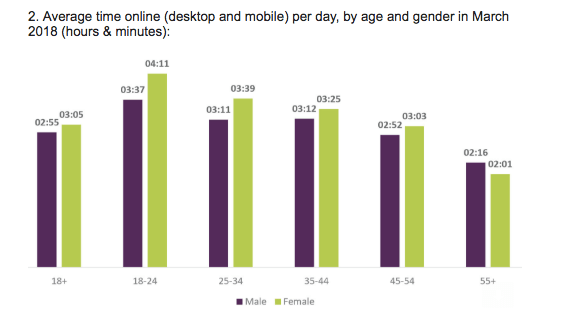
Perhaps contrary to some people’s expectations, women in the UK spend more time online on average than men across almost all age groups, with the sole exception being the over 55s (where the time difference is pretty marginal)…


from Amazon – TechCrunch https://techcrunch.com/2018/08/02/uk-report-highlights-changing-gadget-habits-and-our-need-for-an-online-fix/

Microsoft Surface Go review

The Surface Go is an odd thing. Not because of the device itself, so much as how Microsoft ultimately arrived at it. The tablet was reverse-engineered, the low-end addition to the premium Surface line.

What the company ultimately arrived at was the closest thing it’s offered to an iPad/iPad Pro competitor, to date. For its part, however, Microsoft is positioning the product as a portable, low-cost alternative to its other Surface devices.

It’s a bit of branding confusion, to be sure, but that’s never stopped Microsoft before. That’s basically the Surface line in a nutshell. The company has the resources and infrastructure to throw stuff against the wall to see what sticks — and for the most part, that’s worked well with the Surface line, which has effectively transformed from proof of concept into the Windows flagship line.

In a lot of ways, the Surface Go is a strange sort of in-between device. The form factor is essentially that of the Surface Pro, shrunk down to 10 inches, with rounded corners. The smaller footprint comes with some sacrifices, of course, including the dual-core Intel Pentium Gold 4415Y, which is a notable downgrade from the Intel Core m3/i5/i7 found on the Surface Pro. The battery, rated at nine hours, is smaller than the one you’ll find on the iPad Pro.
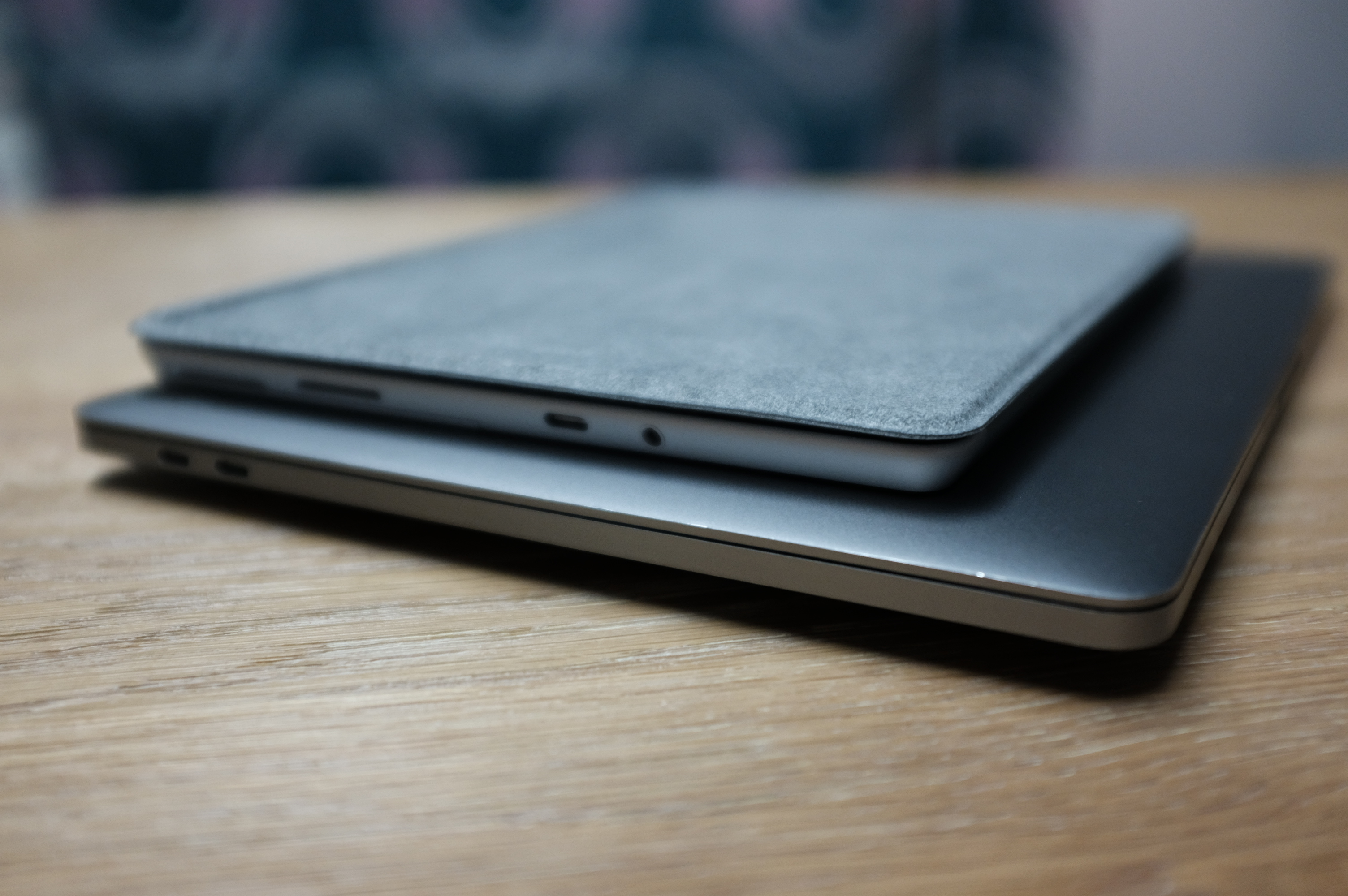
The port situation more closely mirrors what you’ll find on a tablet, versus a full-fledge computer, with a single USB-C, a headphone jack and the proprietary Surface Connect port. That latter bit seems like an odd choice, given the limited real estate here (not to mention the fact that you can charge via USB-C), but Microsoft’s clearly as interested in keeping existing Surface owners on board here as it is converting new ones. Part of that means making sure the system is backward-compatible with old accessories, for the multiple Surface-owning power users out there.

The keyboard is an additional $99 on top of the $400 asking price. Pretty standard with this sort of device, really. It’s a sort of Sophie’s Choice for manufacturers when building these kinds of convertibles — go the full swiveling keyboard, à la the Pixelbook, or add it as an accessory.

The latter decision is better for those devices primarily intended to be used in slate mode, but ultimately keyboard cases just aren’t going to provide the same manner of typing experience as a devoted keyboard. The Surface line has long offered one of the best keyboard cases around, but it’s just not a proper replacement if you plan on using the product primarily as a word processing device. That said, it still beats the hell out of attempting to file a story using a touchscreen.
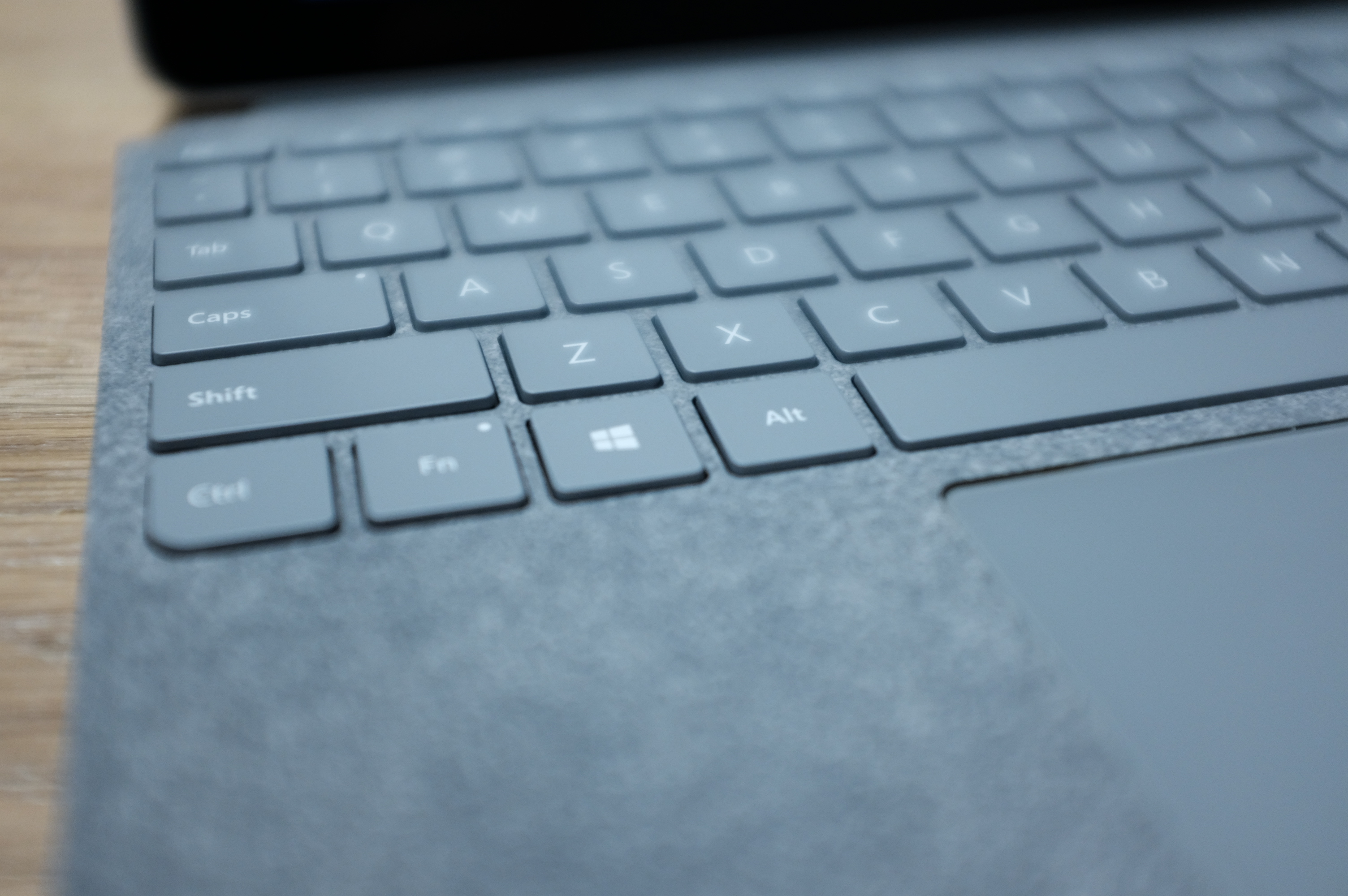
I’ve been using it a bit in meetings and still finding it tough to get used to it. The keys are soft and necessarily lack the sort of tactile impact I’m used to on my full-time laptop. There’s also the inarguable point that these kinds of devices really remove the “lap” part from the laptop equation.

Microsoft has press shots of happy users sitting cross-legged, with the device and keyboard nestled warmly in their lap. During my initial briefing, I asked a rep whether he thought that was a reasonable use case. He gingerly attempted to recreate the pose — which is to say, it’s possible, but not particularly convenient.

You end up tensing your muscles so the whole thing doesn’t split apart. This is one category where Samsung’s Galaxy Tab S4 has the competition beat. Seems it would be easy enough to build a keyboard case that sticks together after a good jostle — but then, I’ve never attempted to make one myself.
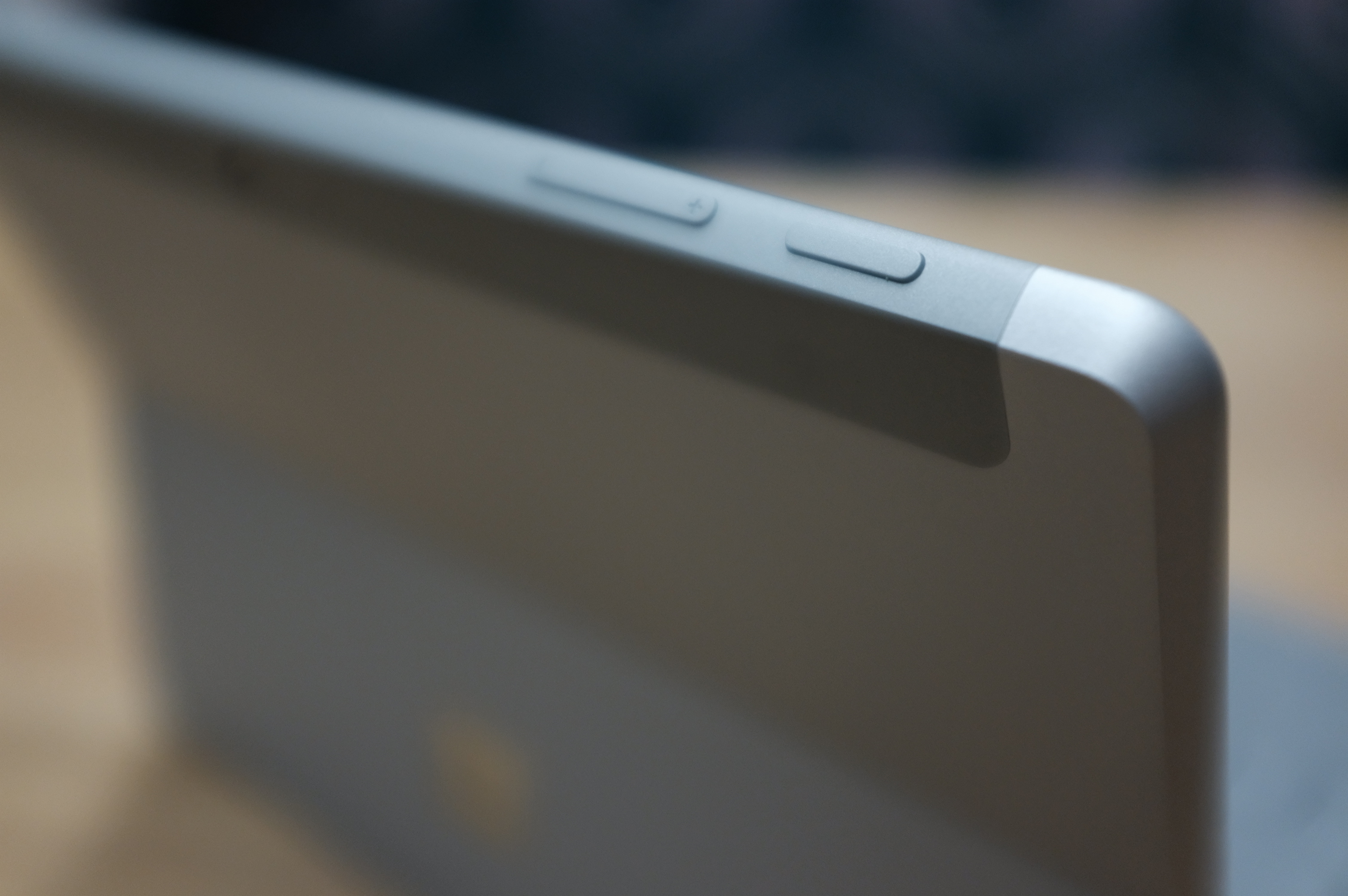
The lovely fabric covers that have been a hallmark of the service line are here on the 10-inch model. That, coupled with multiple matching peripherals, means the Go can pass as a pretty decent fashion accessory to slip in and out of a hand bag. The device itself is a bit on the chunky side, however, which has also been something of a hallmark with the Surface line.

Windows 10 S is back, as well. The locked-down operating system has certainly found its share of critics, but Windows RT it’s not. There are a bunch of implications for using the hobbled version of Microsoft’s operating system, but chief among them is the barring of apps not downloaded from the Windows app store. That puts the device at a decided disadvantage against the iPad, which apparently boasts around 1.3 million apps optimized specifically for the tablet form factor.

The tweaks are in place for security purposes, so the systems with lower specs can handle the workload — the latter certainly makes sense here.

More than anything, however, the inclusion betrays Microsoft’s broader intentions with the device. The 10 S has two distinct targets: students and older, less-savvy users who don’t want to be bogged down with the nuances and demands of a fully open operating system.
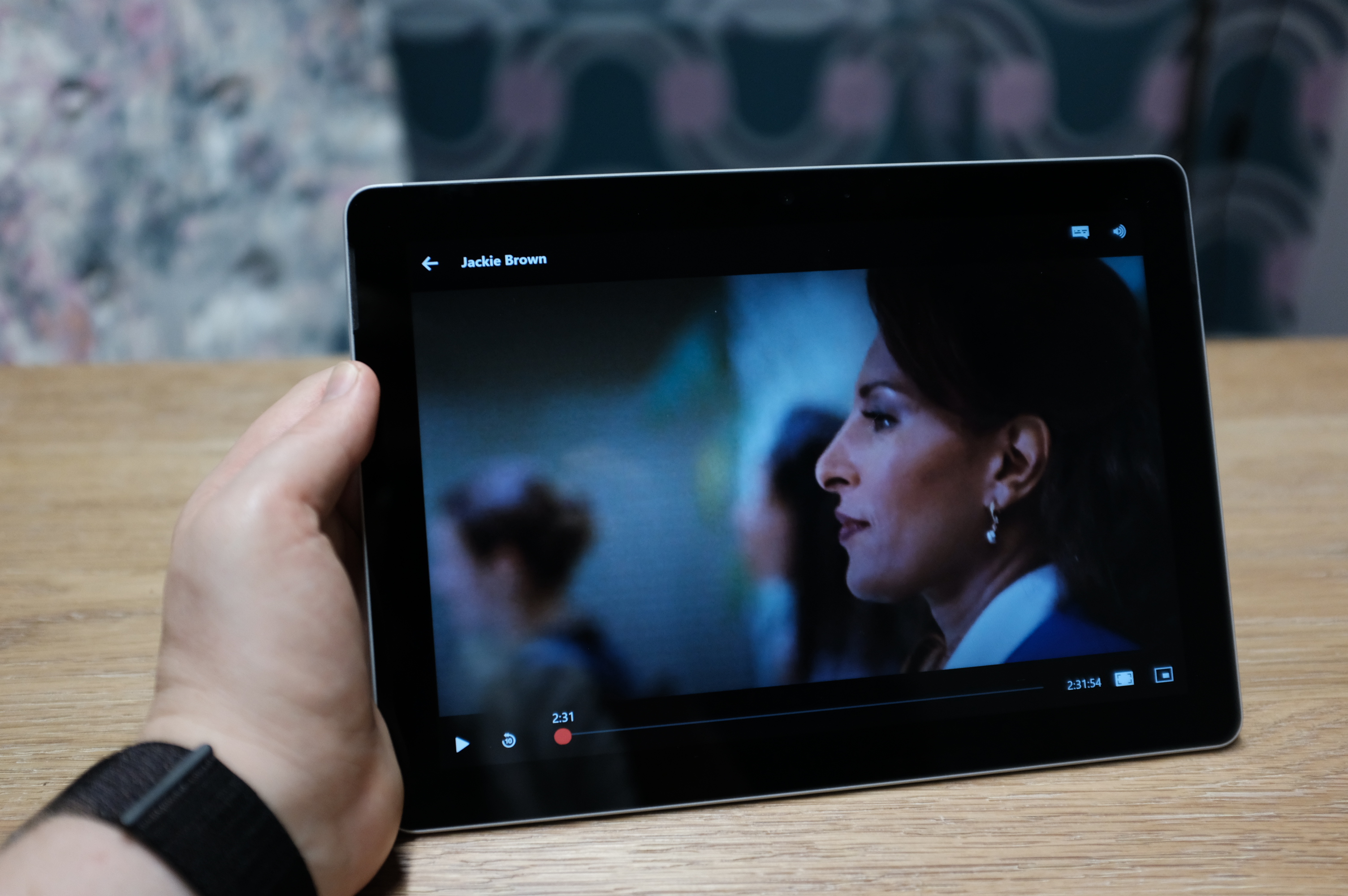
The first category is the tell here. Microsoft has been struggling to find the right way back into education in this post-Chromebook world. Like so much of what the company does, it’s taken an everything-and-the-kitchen-sink approach that includes everything from the $1,000 Surface Laptop to a new category of $189 third-party devices. There’s a lot to be said for that approach. After all, no two schools/students/teachers are alike. When you’ve got the scope and resources of a Microsoft, why the heck not just make something for as broad a user base as possible?

In the realm of education, the Surface Go represents a kind of middle-ground. It’s somewhere between a Chromebook and full-fledged tablet. Like the vast majority of convertibles, it doesn’t get the balance exactly right. But, then, no device is going to be everything to everyone. The price point will certainly make it too costly for a lot of classrooms, however.

For those schools who prefer to go with the Windows camp, due to its more mainstream usage beyond the classroom, it will ultimately be difficult to justify the premium when you can go out and pick up a Windows 10 S laptop for $189. After all, the main selling point of convertible functionality is the ability switch to tablet mode for entertainment purposes. Kids these days have enough distractions already, right?

What Windows does afford users that you won’t get on the iPad, however, is the ability to switch over into desktop mode. Apple’s mobile-only tablet approach is a pretty big roadblock toward becoming a full-fledge laptop replacement. That’s precisely why Samsung is going all-in on DeX desktop mode with the Tab S4.

Windows can do both, which is why these sorts of convertible devices are the sweet spot for Microsoft’s operating system. The company has also brought some nice additions over the years, like Windows Hello face login and a number of features for Pen input. Microsoft’s magnetic pen snaps onto the side of the device magnetically, which is good news for those of us who regularly misplace peripherals.

Of course, Microsoft’s always had some of the strongest productivity offerings around. Given the relative limitations here, however, I don’t think I’d want to rely on the Surface Go (or any other tablet-first convertible, for that matter) as my primary work device. As a supplemental portable device for the meetings when you don’t want to lug a bigger laptop around, on the other hand, it could certainly make some sense.
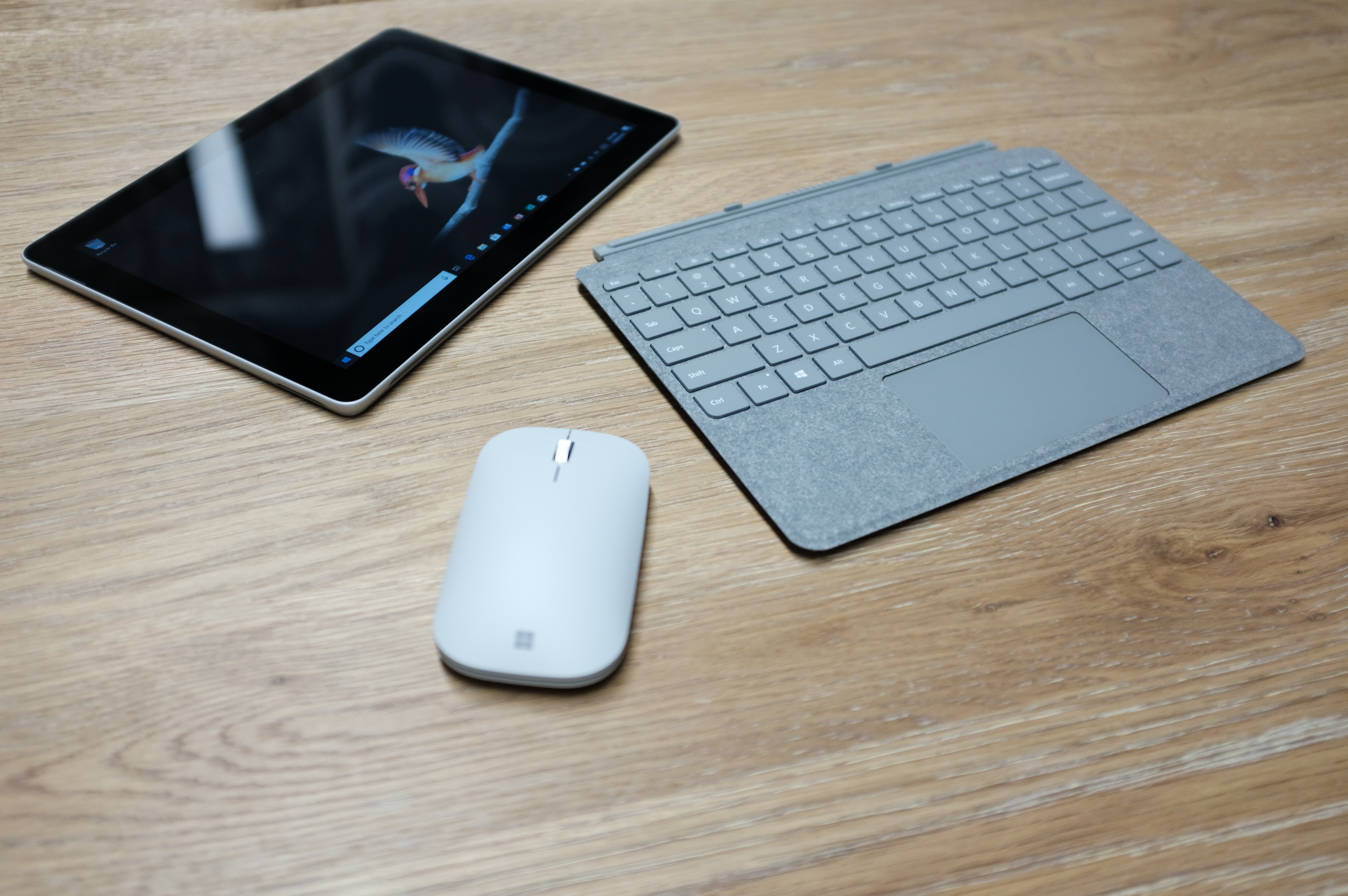
It’s easy to see why Microsoft made the Go. Convertibles are a rare bright spot in an otherwise stagnating tablet category. That’s part of what’s made the Surface line something of a surprise hit for the company. It’s hardware cache that the company hopes will finally propel Microsoft into more mainstream tablet success.

And the Surface Go isn’t a bad little device, at the end of the day. At $400, it’s on the pricier side for a tablet, and certain sacrifices have been made for the sake of keeping the price down versus the souped up Surface Pro. And unlike other Surface devices, the Go is less about pioneering a category for Windows 10 than it is simply adding a lower-cost, portable alternative to the mix. As such, the product hits the market with a fair bit of competition. Acer and Lenovo have a couple, for starters, most of which fall below the Go’s asking price.

For Windows devotees looking for something smaller and portable with nice fashion sense, the Go is worth a look. It’s also worth having a look around at the competition. A better deal shouldn’t be too tough to find.


from Microsoft – TechCrunch https://techcrunch.com/2018/08/02/microsoft-surface-go-review/
What gets maximized?

When an organization succeeds, the owners decide what to maximize. Some of the choices:

  • Salaries for the bosses
  • Distributions to the shareholders
  • Stock price
  • Salaries for everyone else
  • Positive impact on customers
  • Positive impact on the culture

So, if you’re the local cable company, you can decide to invest extra profits in customer service or lower rates, even if those choices don’t maximize long or short profitability. If you’re a public company, you might try to hype the stock price with a buyback. Or, if you’re a company with a mission, you might re-invest in that mission.

The myth is that the only purpose of a company is to maximize profits. That’s a fiction, and a dangerous one. Organizations exist to make things better for people, not the other way around.

One reason that social entrepreneurship is a useful concept is that it announces the priorities from the start. Be profitable enough to grow, but put most of that profit to work serving your customers and their neighbors.

You don’t have to have a fancy label to build an organization that you’re proud of. You simply need to decide what you’re trying to accomplish, and then go do that.


[Also! the new episode of Akimbo is out now, and a new podcast called Everything is Alive is the next thing you might want to listen to after that. I’ve listened to two episodes and they’re extraordinary acts of originality and genius.]


from Seth Godin's Blog on marketing, tribes and respect http://feeds.feedblitz.com/~/562096293/0/sethsblog~What-gets-maximized/

Wednesday, August 1, 2018

Grocer Kroger launches new delivery service

The Kroger Co. announced today the launch of its new e-commerce grocery delivery service, Kroger Ship, which will allow customers to shop online for their favorite Kroger brands and get deliveries as quick as the next day in certain areas.

Not to be confused with the grocer’s Kroger Delivery service, which partners with Instacart to home-deliver groceries to customers from local store locations within two hours, Kroger Ship will help shoppers stock-up on necessary non-perishables like toilet paper and peanut butter.

To start, the delivery service will launch in four cities across the Midwest and South: Cincinnati, Houston, Louisville and Nashville. That’s just a small selection of the grocery company’s 2,800 store fleet and 35-state reach. During the first phase of Kroger Ship’s implementation, customers will be able to choose from a “curated selection” of 4,500 Our Brands products, as well as a selection of 50,000 household essentials.

All Kroger Ship deliveries will be fulfilled through the company’s two fulfillment centers — located in Nevada and North Carolina — and will work in partnership with FedEx and USPS to ship deliveries, according to information provided to TechCrunch in an email by Kroger’s head of Corporate Communications and Media Relations. The company also has plans to break ground this fall on a new fulfillment center in Kentucky, with more centers possible in the future as Kroger Ship grows.

During its launch, Kroger Ship will offer free deliveries for all purchases, as well as 15 percent off customers’ first orders with a one-time promotional code. Post launch, orders over $35 will ship for free ($4.99 shipping otherwise) and the service will offer exclusive promotional deals and codes to Ship users.

While Kroger has a pretty firm foothold when it comes to brick-and-mortar groceries (in 2016, the National Retail Federation named it the third largest retailer in the world behind Walmart and Costco), Kroger is joining a crowded online grocery delivery space.

In addition to competition Kroger Delivery already faces from same-day delivery, corporate partnerships like Target and Shipt, Walmart and Postmates and Prime Now fulfillment of Whole Foods deliveries through Amazon, Kroger’s Ship service faces competition from wholesalers like Costco and its two-day nationwide non-perishable delivery service. In its own attempt at buddy-ing with a similar wholesaler, Boxed, Kroger’s $400 million acquisition offer was denied this March.


from Amazon – TechCrunch https://techcrunch.com/2018/08/01/grocer-kroger-launches-new-delivery-service/

The motor

Here’s a simple hierarchy:

The self-driving car

Cruise control

Manual driving

Hitchhiking

Bicycling

Walking

The arc? As you move down the list, it gets harder and harder to coast. It moves from “set it once and forget it” to “one step at at time.”

The growth of audiobooks is outpacing reading. Why? Because audiobooks come with their own motor. Even readers are pointing out that they’ve forgotten how to read. But of course, that’s not true–we can still read a word, or even a sentence, it’s pushing ourselves through a chapter that’s difficult.

The internet is the greatest self-teaching resource ever developed. But few take advantage of it, because it doesn’t come with a motor. No tests, no certificates, no cruise control.

The decline of our personal momentum might be the great untold story of our time. That electronic media, incoming, ‘breaking’, please reply, didn’t you see that, react right now, click here… this has a cost. And the cost is our internal drive to initiate instead of to just react.

Someone’s driving. It’s either you, going where you choose, or someone else, pushing you.


from Seth Godin's Blog on marketing, tribes and respect http://feeds.feedblitz.com/~/561908058/0/sethsblog~The-motor/