When your small business is struggling, the thought of raising money feels like a life preserver.
That possible infusion of cash is a beacon of hope, the thing you can work on tirelessly. It's the one thing that appears as though it will make everything better.
Careful. It's often a detour, a distraction that won't pan out at the very same time it takes your eye off the real issues.
The problem starts with this: Few people will tell you to stop trying to raise money. They'll encourage you to polish your business plan, make more pitches, add more rigor, dream bigger.
Add to this that it's essentially impossible to build a 1000x company, but those are the ones that get all the hype and the ones that investors crave. So you're comparing yourself to something that's quite elusive.
And finally, as you get deeper and deeper into the quest, there are individuals and institutions that will happily take advantage of you, requiring you to personally guarantee debt, to give up control, to turn your dream project into something you never envisioned.
The reason for this money trap is that so many small-business owners confuse raising money for expenses with raising money to build an asset. This is worth understanding.
If you can say, "I will spend this money on X, and X will make Y happen, and Y will pay off handsomely," then a professional investor ought to be open to hearing that story.
But the things to spend money on are a significant real estate presence, machines, patents, a permanent, expensive brand. The entrepreneur who spends this money does it with enthusiasm, because she's buying things that are going to grow in value, fast.
This is the painting contractor who realizes that a high-powered industrial paint booth will make him the only guy in town who can do a certain kind of job. Or the fast food impresario who asserts that opening ten restaurants in one town in one year will give her the footprint to be more efficient and profitable.
But that's not the way most small business folks are wired.
We're wired to delight our customers, charge for what we do, and then spend some of that money to do it again.
If that sounds like you, pretend that it's not even possible to raise money from investors. Take the option off the table (where it isn't, really).
Instead, spend that energy and that passion and that focus to raise money from your customers. To delight more customers often enough that they happily pay you for what you can do for them. And then repeat. And again.
It's not a life preserver. Not at all. It's a stepwise path, a ramp from here to there, a process with no guru, no miracle, no signing bonus. It's merely the work.
The thing you signed up for in the first place.

from Seth Godin's Blog on marketing, tribes and respect http://feeds.feedblitz.com/~/171949666/0/sethsblog~The-struggle-to-raise-money.html
 After a relatively short beta, Microsoft today announced that the Excel API — a way for developers to programmatically use Excel for Office 365 for doing calculations, building dashboards and more — is now generally available. Microsoft first announced the API last November and then detailed its plans for turning Office 365 into more of a platform for developers at it Build… Read More
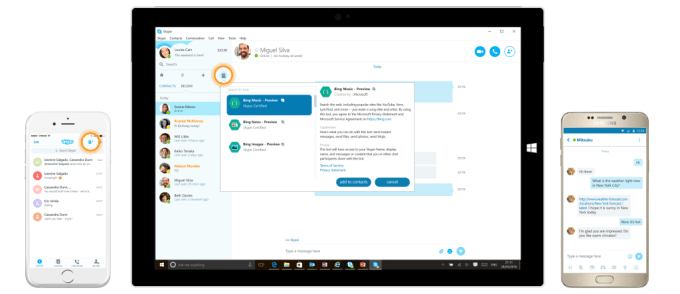 Following yesterday’s launch of a new version of the Skype Windows 10 application, Microsoft today announced an expanded collection of its “Skype bots,” the automated chat assistants that it introduced earlier this year in a limited preview. The new bots include those that can help you find travel, locate event tickets, pull in information from other applications and…


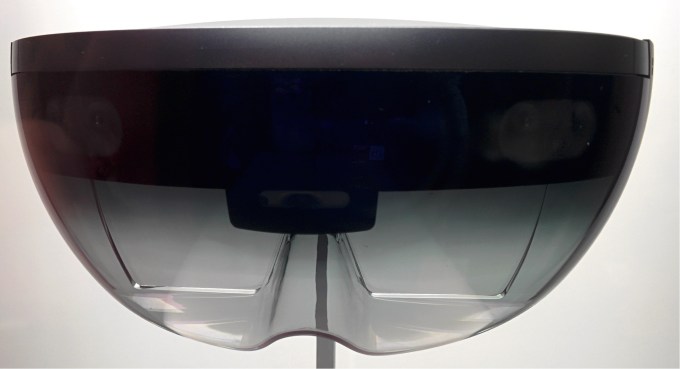 You can now buy Microsoft’s HoloLens Development Edition, the company’s futuristic augmented reality helmet, without having to go through an application process. Until now, Microsoft only made HoloLenses available to developers who put in an application. Now, if you have $3,000 to spare and you are in the U.S. or Canada, you can simply buy up to five units directly from Microsoft.…
 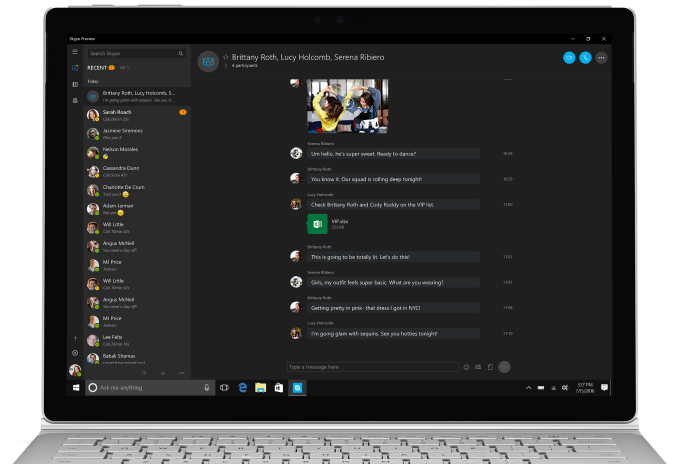 Along with today’s rollout of the Windows 10 Anniversary Update, Microsoft is also debuting a new version of its Skype Windows application, which the company says has been redesigned from the ground-up. In addition the new app’s look, Skype is also now integrated with Windows 10, which means it can work more seamlessly with the operating system. For example, you’ll be able…