Showing posts with label Amazon – TechCrunch Ned Desmond. Show all posts

Wednesday, October 28, 2020

Apple’s Jeff Bigham, disability rights lawyer Haben Girma, author Sara Hendren and more to join Sight Tech Global

The other day we announced the first ten sessions for Sight Tech Global, a virtual event Dec. 2-3 that is convening the world’s top technologists to discuss how AI-based technologies are revolutionizing the future of accessibility. Today, we’re pleased to announce three additional sessions. Registration is free and and open now.

Designing for everyone: Accessibility innovation at Apple

Apple has long embraced accessibility as a bedrock design principle. Not only has Apple created some of the most popular consumer products in history, these same products are also some of the most powerful assistive devices ever. Apple’s Sarah Herrlinger and Jeffrey Bigham will discuss the latest accessibility technology from Apple and how the company fosters a culture of innovation, empowerment and inclusion.

Sarah Herrlinger, senior director of Global Accessibility Policy & Initiatives, Apple
Jeffrey Bigham, research lead, AI/ML accessibility Research, Apple
Moderator: Matthew Panzarino, editor-in-chief, TechCrunch

Inventing the accessible future, by collaboration or by court

When technologists design exciting new innovations, those designs rarely include blind people. Advocates urge us to employ a variety of strategies, from education to litigation, to ensure accessibility is baked into all future tech. Harvard Law’s first deaf-blind graduate Haben Girma, disability rights attorney Lainey Feingold and International Digital Publishing Forum president George Kerscher will discuss strategies for creating a future fully accessible to blind people, including those who are Black, Indigenous and people of color.

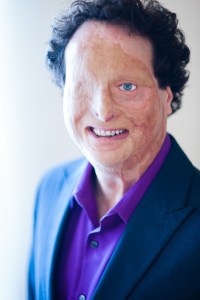
Haben Girma, disability rights lawyer, speaker, and author of Haben: The Deafblind Woman Who Conquered Harvard Law
Lainey Feingold, disability rights lawyer and author of Structured Negotiations: A Winning Alternative to Lawsuits
George Kerscher, chief innovations officer for the DAISY Consortium, senior advisor for Benetech’s Global Education and Literacy Group and president of the International Digital Publishing Forum (IDPF)
Moderator: Megan Rose Dickey, senior reporter, TechCrunch

What can a body do? How we meet the built world

Technologists like to imagine how their work affects people, but that’s no substitute for truly knowing the real impact on lives, or better yet, understanding what people, especially people with disabilities, really want from their surroundings and community. In her recent book, What Can a Body Do? professor and designer Sara Hendren’s “aim … isn’t to throw cold water on innovation; it’s to recenter the people, behind the tools, who must work with their surroundings, their adaptations at least as miraculous as the technology that helps them.” (Katy Waldman, in her New Yorker review)

Sara Hendren, associate professor, Olin College
Moderator: Will Butler, vice president, Be My Eyes

Keep an eye out for more sessions and breakouts in early November. In the meantime, registration is open. Get your pass today!

Sight Tech Global is eager to hear from potential sponsors. We’re grateful to current sponsors Amazon, Ford, Google, Humanware, Microsoft, Mojo Vision, Salesforce, Waymo and Wells Fargo. All sponsorship revenues go to the nonprofit Vista Center for the Blind and Visually Impaired, which has been serving the Silicon Valley area for 75 years.


from Amazon – TechCrunch https://techcrunch.com/2020/10/28/apples-jeff-bigham-disability-rights-lawyer-haben-girma-author-sara-hendren-and-more-to-join-sight-tech-global/

Wednesday, October 7, 2020

Here’s the curtain raise on the Sight Tech Global agenda

The goal of Sight Tech Global, a virtual, global event on December 2-3, 2020, is to gather the world’s top experts who are applying advanced technologies, notably AI, to the future of accessibility and assistive tech for people who are blind or visually impaired.

Today we’re excited to roll out most of the agenda. There are another half-dozen sessions and breakouts still to come, notably sessions on AI bias and civil rights. What we’ve discovered over the many weeks of research and conversation is a consistent, strong interest on the part of researchers, technologists and product and design thinkers to convene and talk over the future — its promises, challenges and even threats.

We’re delighted to have top-level talent from virtually every leading technology company, many research universities and some startups ready for fireside chats and small panel discussions with expert moderators. Some sessions will take questions from our audience as well.

When the event dates are closer, we will add dates and times to each of these sessions as well as announce additional speakers. Register today to get a free pass and please browse the first edition of the Sight Tech Global agenda below.

Seeing AI: Where does Microsoft’s blockbuster app go from here?

With ever more powerful computer and data resources available in the cloud, Microsoft’s Seeing AI mobile app is destined to become a steadily better ally for anyone with vision challenges. Co-founder Saqib Shaikh leads the engineering team that’s charting the app’s cloud-enabled future.

Saqib Shaikh, co-founder of Seeing AI, Microsoft
Moderator: Devin Coldewey, TechCrunch

The future according to OrCam

As AI-based computer vision, voice recognition and natural language processing race ahead, the engineering challenge is to design devices that can perceive the physical world and communicate that information in a timely manner. Amnon Shashua’s OrCam MyEye is the most sophisticated effort yet to merge those technologies in a seamless experience on a dedicated device.

Amnon Shashua, co-founder of OrCam and Mobileye
Moderator: Matthew Panzarino, TechCrunch

Accessibility from the wheels up: The Waymo self-driving taxi

If people who are blind or visually impaired find Uber and Lyft liberating, imagine how they will feel summoning a self-driving ride from an app on their mobile phones. But wait, how exactly will they locate the cars and what happens when they climb in? Presenter Clem Wright is responsible for the self-driving taxi’s accessibility, and he will be joined by leadership from two organizations closely involved in that effort: The Lighthouse for the Blind SF and the Foundation for Blind Children.

Clem Wright, Accessibility product manager, Waymo
/> Marc Ashton, CEO, Foundation for Blind Children
Bryan Bashin, CEO, Lighthouse for the Blind
Moderator: Kirsten Korosec, TechCrunch

Our AI future is already here

Whether it’s Alexa, Tesla or Facebook, AI is already deeply embedded in our daily lives. Few understand that better than Dr. Kai-Fu Lee, a scientist who developed the first speaker-independent, continuous speech recognition system as a Ph.D. student at Carnegie Mellon, led Google in China and held senior roles at Microsoft and Apple. Today, Dr. Lee runs Sinovation Ventures, a $2 billion fund based in China, is president of the Sinovation’s Artificial Intelligence Institute and has 50 million followers on social media.

Dr. Kai-Fu Lee, chairman and CEO, Sinovation Ventures
/> Moderator: Ned Desmond, Sight Tech Global

The future of AT devices and the companies that make them

Dedicated devices versus accessible platforms? Victor Reader Stream versus iPhones and Alexa? How will AT companies take advantage of a world with cloud data and edge computational power, AI algorithms and more demanding customers than ever? Humanware, eSight and APH are already looking far into that future.

Gilles Pepin, CEO, Humanware
Greg Stilson, head of Global Innovation, APH
Charles Lim, CTO, eSight
Moderator: Betsy Beaumon, CEO, Benetech

If the Jetsons had screen readers, would they be using keyboard commands?

The screen reader is arguably the most consequential digital technology ever for people who are blind or visually impaired. At the same time, screen readers depend on a dizzying array of keyboard commands, and — when it comes to reading websites in a browser — they struggle with the ugly reality of poor website accessibility. New technologies may lead the way to better outcomes.

Glen Gordon, Software fellow, Vispero; architect, JAWS
James Teh, Accessibility engineer, Mozilla; co-founder, NVDA
Léonie Watson, director, TetraLogical
Moderator: Matt King, Accessibility technical program manager, Facebook

Alexa, what is your future?

When Alexa launched six years ago, no one imagined that the voice assistant would reach into millions of daily lives and become a huge convenience for people who are blind or visually impaired. This fall, Alexa introduced personalization and conversational capabilities that are a step-change toward more human-like home companionship. Amazon’s Josh Miele and Anne Toth will discuss the impact on accessibility as Alexa becomes more capable.

Anne Toth, director, Alexa Trust at Amazon
Josh Miele, principal accessibility researcher, Lab126 at Amazon
/> Moderator: Devin Coldewey, TechCrunch

Augmented reality and perception: What’s the best way to get the message across?

It’s one thing for an AI-based system to “know” when it’s time to turn left, who came through the door or how far away the couch is: It’s quite another to convey that information in a timely fashion with minimal distraction. Researchers are making use of haptics, visual augmented reality (AR), sound and language to figure out the right solutions.

Amos Miller, Product strategist, Microsoft AI and Research
Ashley Tuan, VP Medical Devices, Mojo Vision
Sile O’Modhrain, associate professor, Performing Arts Technology, University of Michigan
Moderator: Nick Giudice, professor of Spatial Informatics, University of Maine

Wayfinding: Finding the mark

Map apps on mobile phones are miraculous tools accessible via voice output, but mainstream apps don’t announce the detailed location information (which people who are blind or visually impaired really want), especially inside buildings and in public transportation settings. Efforts in the U.S. and U.K. are improving accessible navigation.

Tim Murdoch, founder and CEO, Waymap
Nick Giudice, professor of Spatial Informatics, University of Maine
Moderator: Mike May, chief evangelist, GoodMaps

Computer vision, AI and accessibility: What’s missing from this picture?

For an AI to interpret the visual world on behalf of people who are blind or visually impaired, the AI needs to know what it’s looking at, and no less important, that it’s looking at the right thing. Mainstream computer vision databases don’t do that well — yet.

Danna Gurari, assistant professor and director of the Image and Video Computing Group, University of Texas
Patrick Clary, product manager, AI and accessibility, Google
/> Moderator: Roberto Manduchi, professor CS and Engineering, UC Santa Cruz

Keep an out for more sessions and breakouts later this month. In the meantime, registration is open. Get your pass today!

Sight Tech Global is eager to hear from potential sponsors. We’re grateful to current sponsors Amazon, Ford, Google, Microsoft, Mojo Vision, Waymo, Wells Fargo and Humanware. All sponsorship revenues go to the nonprofit Vista Center for the Blind and Visually Impaired, which has been serving the Silicon Valley area for 75 years.

Special thanks to the Sight Tech Global advisors — Tech Matters Jim Fruchterman, UC Santa Cruz’s Roberto Manduchi, Verizon Media’s Larry Goldberg, Facebook’s Matt King and Be My Eyes’ Will Butler — who are playing an invaluable role on this project.


from Amazon – TechCrunch https://techcrunch.com/2020/10/07/heres-the-curtain-raise-on-the-sight-tech-global-agenda/

Tuesday, October 6, 2020

Amazon’s Josh Miele and Anne Toth talk Alexa and the future of accessibility at Sight Tech Global

When Alexa launched six years ago, no one imagined that by today there would be hundreds of millions of Alexa-enabled devices or that Alexa would become part of so many lives. For people who are blind or visually impaired, voice assistants are a huge convenience, whether you are calling a loved one, cooking a meal, checking a sports score, or asking for the weather or time. This fall, Alexa introduced personalization and conversational capabilities that are steps toward a more human-like, digital factotum.

It’s exciting to announce that Amazon’s Josh Miele, Principal Accessibility Researcher at Amazon’s Lab126, and Anne Toth, Director of Amazon’s Alexa Trust, will be speaking at Sight Tech Global, a virtual, global event that addresses how rapid advances in technology, many of them AI-based, will influence the development of accessibility and assistive technology for people who are blind or visually impaired.

The show, a project for the Vista Center for the Blind and Visually Impaired in Silicon Valley, launched on TechCrunch. The virtual event is Dec. 2-3 and free to the public. Registration is open

Josh Miele, Amazon

Josh Miele (Photo: Barbara Butkus)

“Before Alexa,” says Miele, who is a blind scientist with numerous inventions to his credit and a Ph.D. from UCBerkeley in psychoacoustics, “people newly experiencing vision loss would need to learn how to use a computer or phone with a screen reader in order to shop online or download audio books. With Alexa, using only voice commands, people with visual and motor disabilities can also make phone calls, get recipes, play music, schedule reminders, set timers, and more.”

“The experience is made possible,” says Miele, “by Alexa’s confluence of voice recognition, natural language processing and deep learning—a powerful indicator of what is possible, but clearly there are still gaps to close.”

Anne Toth was a pioneering accessibility advocate at Yahoo, where in 2003 she commissioned the first usability studies to determine how Yahoo’s services worked with assistive technology, such as screen readers.

“To be brief,” she says, “they didn’t. The user stories and videos from that first study fundamentally changed how we thought about this issue and marked the moment I moved from being curious to being an advocate.” As a leader on the Alexa Trust team at Amazon, Toth is focused on accessibility, privacy and deepening customer trust in Alexa-enabled devices. 

Anne Toth, Amazon

Anne Toth

“Alexa-enabled devices,” says Toth, “have the benefit of being born in an era when these issues are no longer seen as offering secondary benefits to our customers. When our devices become more accessible, they become better for everyone. There is no upper threshold for what that means.” 

At Sight Tech Global on December 2-3, attendees will hear from Toth and Miele about upcoming Alexa feature advances and the underlying technologies. Get your free pass now.

Sight Tech Global welcomes sponsors. We are grateful to our current sponsors, who include Verizon Media, Google, Waymo, Microsoft,  Amazon, Ford, Mojo Vision, Humanware and Wells Fargo.

The event is organized by volunteers and all proceeds benefit The Vista Center for the Blind and Visually Impaired in Silicon Valley.


from Amazon – TechCrunch https://techcrunch.com/2020/10/06/amazons-josh-miele-and-ann-toth-talk-alexa-and-the-future-of-accessibility-at-sight-tech-global/

Tuesday, January 28, 2020

Five reasons you (really) don’t want to miss TechCrunch’s AI and Robotics show on March 3

TechCrunch’s fourth Robotics and AI show is coming up on March 3 at UC Berkeley’s Zellerbach Hall. If past experience is any guide, the show is sure to draw a big crowd (cheap student rates here!) but there’s still time to grab a pass. If you’re wondering why you want to take a day out to catch a full day of interviews and audience Q&A with the world’s top robotics and AI experts, read on.  

It’s the software / AI,  stupid. So said (in so many words) the legendary surgical robotics founder Dr. Frederic Moll at Disrupt SF last year. And this year’s agenda captures that reality from many angles. UC Berkeley’s Stuart Russell will discuss his provocative book on AI – Human Compatible, and the deeply important topic of AI ‘explainability’ will be front and center with SRI’s Karen Myers, Fiddler Labs’ Krishna Gade and UC Berkeley’s Trevor Darrell. Then there is the business of developing and sustaining robots, whether at startups, which is where Freedom Robotics’ Joshua Wilson comes in, or at large enterprises, with Vicarious’ D. Scott Phoenix

Robotics founders have more fun. That’s why we have a panel of the three top founders in agricultural robotics as well as another three on construction robotics and two on human assistive robotics, plus a pitch competition featuring five additional founders, each carefully chosen from a large pool of applicants. We’ll also bring a few of those founders back for a separate audience Q&A. Meet tomorrow’s big names in robotics today!

Big companies do robots too. No one knows that better Amazon’s top roboticist, Tye Brady, who already presides over 100,000 warehouse robots. The editors are eager to hear what’s next in Amazon’s ambitious automation plans. Toyota’s robotics’ focus is mobility,  and Toyota Research Institute’s TRI-AD CEO James Kuffner and TRI VP of Robotics Max Bajracharya will discuss projects they plan to roll out at the Tokyo Olympics.  And if that’s not enough, Maxar Technologies’ Lucy Condakchian will show off Maxar’s robotic arm that will travel to Mars aboard the fifth Mars Rover mission later this year. 

Robotics VCs are chill (once you get to know them). We will have three check writers on stage for the big talk about where they see the best investments emerging –  Eric Migicovsky (Y Combinator), Kelly Chen (DCVC) and Dror Berman (Innovation Endeavors) plus two separate audience Q&A sessions, one with notable robotics / AI VCs, Rob Coneybeer (Shasta) and  Aaron Jacobson (NEA) and a second with corporate VCs Quinn Li (Qualcomm) and
Kass Dawson (Softbank).

Network, recruit, repeat. Last year there were 1500 attendees at this show, and they were the cream of the robotics world – founders, investors, technologists, executives and engineering students. Expect nothing less this year. TechCrunch’s CrunchMatch mobile app makes meeting folks super easy, plus the event is in UC Berkeley’s Zellerbach Hall – a sunny happy place that naturally spins up great conversations. Don’t miss out.

Our Early Bird Ticket sale ends this Friday – book your tickets today and save $150 before prices increase. Students can book a super-discounted ticket for just $50 right here.


from Amazon – TechCrunch https://techcrunch.com/2020/01/28/five-reasons-you-really-dont-want-to-miss-techcrunchs-ai-and-robotics-show-on-march-3/

Tuesday, May 16, 2017

Amazon’s Tye Brady and ABB’s Sami Ayita to Speak at TC Sessions: Robotics July 17 at MIT

 We first developed the idea for TC Sessions: Robotics because we wanted to bridge the gap between startups and investment in the robotics world — namely research, academia, government and industry.  On July 17 at MIT’s Kresge auditorium in Cambridge, MA, those worlds will come together like never before for an event that we’re pleased to host alongside MIT’s… Read More

from Amazon – TechCrunch https://techcrunch.com/2017/05/16/amazons-tye-brady-and-abbs-sami-ayita-to-speak-at-tc-sessions-robotics-july-17-at-mit/?ncid=rss