Showing posts with label Amazon – TechCrunch Eric Peckham. Show all posts

Monday, January 20, 2020

Fable Studio founder Edward Saatchi on designing virtual beings

In films, TV shows and books — and even in video games where characters are designed to respond to user behavior — we don’t perceive characters as beings with whom we can establish two-way relationships. But that’s poised to change, at least in some use cases.

Interactive characters — fictional, virtual personas capable of personalized interactions — are defining new territory in entertainment. In my guide to the concept of “virtual beings,” I outlined two categories of these characters:

  • virtual influencers: fictional characters with real-world social media accounts who build and engage with a mass following of fans.
  • virtual companions: AIs oriented toward one-to-one relationships, much like the tech depicted in the films “Her” and “Ex Machina.” They are personalized enough to engage us in entertaining discussions and respond to our behavior (in the physical world or within games) like a human would.

Part 3 of 3: designing virtual companions

In this discussion, Fable CEO Edward Saatchi addresses the technical and artistic dynamics of virtual companions: AIs created to establish one-to-one relationships with consumers. After mobile, Saatchi says he believes such virtual beings will act as the next paradigm for human-computer interaction.


from Amazon – TechCrunch https://techcrunch.com/2020/01/20/fable-studio-founder-edward-saatchi-on-designing-virtual-beings/

Monday, November 4, 2019

How Europe overtook the U.S. in championing free markets

The deregulation of major U.S. industries like telecom and energy in the 1970s and 80s sparked competition that lowered consumer prices and drove product innovation between competitors. Europe, on the other hand, lagged behind with more expensive internet, phone plans, airline tickets, and more until around 2000 when a major reversal of this trend began. Strikingly, when the EU strengthened deregulation and antitrust efforts to open its markets to more competition, it was the U.S. that reversed course.

According to a new book by French economist Thomas Philippon, Americans’ view of their country as the world’s beacon of free market competition and Europe as an over-regulated region of lethargic corporate giants is out of date, and may be inhibiting our ability to recognize growing corporatism at home. Philippon, a professor of finance at NYU Stern who earned a Ph.D. in Economics from MIT, was named one of the top 25 economists under age 45 by the International Monetary Fund.

“If you have nothing interesting or relevant to say, you can always take a jab at European bureaucrats. It’s the political equivalent of complaining about the weather…”

Based on Organization for Economic Cooperation and Development (OECD) data, the U.S. now has more regulations for opening a new business than every EU country except Greece and Poland — a complete reversal since 1998, when only the UK had fewer rules than the U.S. Per capita GDP growth in the EU outpaced that of the U.S. over 1999-2017. On a purchasing power parity basis, Americans have experienced a 7% increase in prices (relative to EU residents) for the same goods, due specifically to increased profit margins of companies with reduced competition.

The reason for this divergence? According to Philippon, corporate incumbents in the U.S. gained outsized political influence and have used it to a) smother potential antitrust reviews and b) implement regulations that inhibit startups from competing against them. As a result, the U.S. regulatory system prioritizes the interests of incumbents at the expense of free market competition, he says.

Philippon makes his case in “The Great Reversal: How America Gave Up on Free Markets,” released this past Tuesday by Harvard University Press. The book builds an argument from extensive data and pre-empts likely critiques by investigating numerous potential confounding variables or differences in research methodology. It is a compelling read for those interested in the dynamics of the overall innovation economy or the political debate over antitrust and Big Tech.

Incumbents over startups

Philippon, who was na states upfront that he isn’t claiming Europe is a bigger startup hub. In fact, he writes that “the U.S. has better universities and a stronger ecosystem for innovation from venture capital to technological expertise.” 

What he does do is ring the alarm about a systemic shift in market consolidation in the U.S. that results in a small number of large incumbents charging high prices, an economy-wide prioritization of share buybacks over investments in innovation and government policy that inhibits competition from new entrants.

An important take-away for readers: there’s a concerning trend toward more barriers to successful entrepreneurship, higher prices for countless goods and services that startups use, an overall decrease of corporate investment in new technologies and fewer potential startup acquirers.

There are half as many publicly-traded companies in the U.S. as there were in 1997, and turnover within rankings of the top five companies per industry has declined sharply since the late 1990s as well.

Market concentration isn’t due to superstars

“The Great Reversal” considers that increased market concentration could be the result of “superstar” firms whose increased productivity is a win-win for shareholders and consumers alike. This has indeed occurred during the 1990s but the correlation between increased concentration and increased productivity ended around 2000 (with the exception of the retail sector).

Corporate after-tax profits as a percent of U.S. GDP were stationary for decades at 6-7% but increased to 10% in the last two decades, highlighting increased “rent-seeking” that shouldn’t occur if the leaders in most industries were facing the same amount of domestic competition or increased international competition. 

From the 1960s through the 1990s, American companies poured an average of 20 cents from each dollar of operating profit into investments (R&D, capital expenditures, etc.). Since 2000, that’s fallen to 10 cents per dollar. With reduced competition, large companies are focusing less on advancing their product offerings and more on extracting profits for shareholders out of existing business operations.

Big tech isn’t exempt

Major tech companies — specifically Alphabet (Google), Amazon, Facebook, Apple, and Microsoft — are the focus of multiple chapters of analysis by Philippon, who rejects the notion that these companies are somehow unprecedented relative to the leading companies of prior decades from an antitrust standpoint. They account for a smaller portion of U.S. GDP and stock market value, and they have similar profit margins. Network effects and accelerating economies of scales are not new concepts in economics — existing antitrust regulations are capable of dealing with these companies.


from Amazon – TechCrunch https://techcrunch.com/2019/11/02/how-europe-overtook-the-u-s-in-championing-free-markets/

Friday, November 1, 2019

Lightspeed’s Jeremy Liew is on the hunt for always-on media startups

Perhaps best known for a career-making seed investment in Snapchat, Lightspeed partner Jeremy Liew is a leading investor across media and entertainment, making bets on startups like Cheddar, Giphy, HQ, SpecialGuest, Mic, Beme, Playdom, Duta and Flixster.

I spoke to him earlier this week about how he assesses the market for media startups, which led into a discussion about “always-on” forms of entertainment that add stimulation to a person’s environment, instead of commanding their full focus.

Here’s the transcript of our conversation, edited for length and clarity:

Eric Peckham: Do you have a consistent framework for evaluating potential investments?

Jeremy Liew: Our perspective is that consumer technology is now more about the consumer side than the technology side. It’s really more about pop culture than new innovations in technology. 

When we are assessing a consumer investment we ask ourselves, “does this have the potential to become part of pop culture?” One way to think about it is whether people who don’t use the product will still become familiar with what it is. Like how you can understand a reference to “Game of Thrones” even if you don’t watch it. 

Another key question is, whether there is a scalable, repeatable way for the product to reach its audience. That can be advertising, it can be word of mouth, it could be through social channels.

We also asked ourselves, “is this product going to build a new habit?” and we assess whether the entrepreneur has a unique insight into both why this is happening and why it’s happening now.

Your colleague Alex Taussig told me you have an overarching “future of TV” thesis that’s guided a number of your investments. Tell me about that thesis and how it filters opportunities in the media & entertainment space for you.

I think you can split what used to be called TV into two core use cases: “TV as entertainment” and “TV as company.”

“TV as entertainment” is most of what Netflix, Amazon, Apple, HBO, and similar companies have been focused on. It is high-production quality entertainment you have to pay attention to. Think shows like “Game of Thrones,” “Succession,” “Orange is the New Black.”

Then there’s another classic category of TV — “TV as company,” which is stuff that’s on while you’re doing something else. You’ve got the morning show on while you’re getting the kids ready for school or you’re getting ready to go to work. That’s how you get the five hours of TV viewing per day that Americans average.

TV as entertainment has to be so good that you choose to watch it over doing anything else; TV as company you just have to not choose to turn it off.

The vast amount of attention to the move to video — with subscription video on-demand (SVOD) and so forth — has been on TV as entertainment. There are hit shows that will attract people to Netflix, or to HBO Go, to Disney+. But what causes them to stay as a subscriber after they binge-watched all the way through the stuff that brought them in the first place?

That tends to be the TV as company content. If you actually look at hours watched in television, no one is tuning in to catch the latest episode of “Shark Week” — it is just what’s on. Think about the TV Guide grid: every genre, every channel will likely have a mobile native equivalent.

Some of these already exist. ESPN — it’s a channel where men watch the best competitors in the world play the sports they used to play when they were in high school and then they talk about it with their friends. Twitch is a place where men, mostly, watch the best competitors in the world play the games they used to play when they were younger and talk about it with their friends.


from Amazon – TechCrunch https://techcrunch.com/2019/11/01/lightspeeds-jeremy-liew-on-media-startups/

Friday, October 25, 2019

Here’s where top gaming VCs are looking for startup opportunities

With cross-platform experiences like Fortnite and PUBG, in-game socializing environments, and subscription-based cloud gaming services from Playstation, Google, Amazon, and others, the gaming industry is entering a new era beyond mobile.

These days, the industry is at the center of social media and entertainment trends; gaming is expected to earn $152 billion in global revenue this year, up 9.6% year over year. 

Given my recent writing on Unity, the most-used game engine, and ongoing research into interactive media trends, I wanted to find out how top gaming-focused VCs are assessing the market right now. I asked ten of them to share which trends they are most excited about when it comes to finding investment opportunities:

  • David Gardner, Partner at London Venture Partners
  • Henric Suuronen, Partner at Play Ventures
  • Samuli Syvähuoko, Partner at Sisu Game Ventures
  • Jay Chi, Partner at Makers Fund
  • Peter Levin, Managing Director at Griffin Gaming Partners
  • Gigi Levy-Weiss, Partner at NFX
  • Ethan Kurzweil, Partner at Bessemer Venture Partners
  • Jonathan Lai, Partner at Andreessen Horowitz
  • Blake Robbins, Partner at Ludlow Ventures
  • Jon Goldman, General Partner at GC Tracker & Board Partner at Greycroft Partners

Amid the mix of predictions, there were several common threads, such as optimism about the rise of games as broader social platforms, opportunities to invest directly in new studios, and skepticism about near-term investments in augmented or virtual reality and blockchain.

Here are their responses.

David Gardner, Partner at London Venture Partners

“PC Games are back. Great place to start new IP to then migrate a success to multiple platforms. There is more innovation in business models and more open distribution on PC to facilitate audience growth without the punishment of mobile CPIs.

VR & AR remain out. We stood away from VR in the beginning and extend that to AR while the user experience for games remains a disappointment. Let’s hope those new Apple glasses do the trick!

Crypto remain a theological war zone, but honestly everything on offer has been available in the cloud world, but the real consumer benefit isn’t showing up.

We love games that are expanding audience demographics and are sensitive to less hardcore audiences.  For example, women players are estimated to account for 1 billion gamers.”

Henric Suuronen, Partner at Play Ventures

“At Play Ventures, we believe we have just entered the golden era of mobile gaming. Who would have believed 10 years ago that Nintendo and games like Fortnite and Call of Duty would all be on mobile. Mobile is not just a games platform anymore, it is THE games platform of choice for casual and core players alike. Consequently, in the next 2-3 years we will invest in 30-40 mobile games studios across the globe.”

Samuli Syvähuoko, Partner at Sisu Game Ventures

“We at Sisu Game Ventures have been investing in many sectors since 2015 including free-to-play mobile games (especially big here in Finland), VR, AR, PC, console, instant messenger, hypercasual, audio and most recently cloud-native games as well. In addition to game studios, around a third of our investments are into games related tech/infrastructure. 

We’ve so far not dipped our toes into blockchain or eSports and our appetite for doing more investments in VR and AR is nil. To me, the most interesting mega trends lie with the promise of cloud gaming when utilized to its full potential. Another term that encapsulates my excitement is games-as-a-social-hobby. Put this and the extreme accessibility of the cloud together and you’ll have a game with revolutionary potential.”

Jay Chi, Partner at Makers Fund

“We are looking closely at ‘Gaming as Media’ related content and platforms — the emergence of new interactive experience centered on ‘viewers as participants.’ Gaming as social media falls under this thesis. We are also looking for MMO and Metaverse enablers given increased demand for specialized, scalable and affordable technologies that empower lean startup teams to create and operate large-scale worlds and novel gameplays. 

We also see potential for new start-ups to emerge in hypercasual games with midcore/social meta — no one has truly cracked this genre yet.”


from Amazon – TechCrunch https://techcrunch.com/2019/10/25/heres-where-top-gaming-vcs-are-looking-for-startup-opportunities/

Friday, October 4, 2019

As Sinai Ventures returns first fund, partner Jordan Fudge talks new LA focus

At age 27, Jordan Fudge is quietly making a splash in the VC world.

Fudge is the managing partner of Sinai Ventures, a multi-stage VC fund that manages $100 million and has more than 80 portfolio companies including Ro, Drivetime, Kapwing, and Luminary. His 2017 investment in Pinterest — a secondary shares deal from his prior firm that was rolled into Sinai when he spun out — will have returned the value of Sinai’s Fund I by itself once the lockup on shares expires next week.

Fudge and co-founder Eric Reiner, a Northwestern University classmate, hired staff in New York and San Francisco when Sinai launched in early 2018. Today, they’re centralizing the team in Los Angeles for its next fund, a bet on the rising momentum of the local startup ecosystem and their vision to be the city’s leading Series A and B firm.

Fudge and Reiner have intentionally stayed off the radar thus far, wanting to prove themselves first through a track record of investments.

Kwaku EDITS V2

Jordan Fudge. Image via Sinai Ventures

A part-time film financier who also serves on the board of LGBT advocacy non-profit GLAAD, Fudge describes himself as an atypical VC firm founder, an edge he’s using to carve out his niche in a crowded VC landscape.

I spoke with Fudge to learn more about his strategy at Sinai and what led to him founding the firm. Here’s the transcript (edited for length and clarity):

Eric Peckham: Tell me the origin story here. How did Sinai Ventures get seeded?

Jordan Fudge: I was working for Eagle Advisors, a multi-billion dollar family office for one of the founders of SAP, focused on the tech sector across public markets, crypto, and eventually VC deals. Two years in, I pitched them on spinning out to focus on VC and they seeded Sinai with the private investments like Compass and Pinterest I had done already, plus a fresh fund to invest out of on my own. It was $100 million combined.


from Amazon – TechCrunch https://techcrunch.com/2019/10/04/as-sinai-ventures-returns-first-fund-partner-jordan-fudge-talks-new-la-focus/

Tuesday, July 30, 2019

Wall St analyst Laura Martin on the fate of Netflix, breaking up Google, EU regulation, and a decade of more money for Hollywood

The rise of streaming video platforms like Netflix and Amazon Prime has upended traditional power balances in Hollywood and is reorganizing the way we consume films and TV series as consumers.

Following her talk at the recent Banff World Media Festival in Canada, I interviewed Laura Martin, the senior analyst covering entertainment and internet stocks at leading investment bank Needham & Company, to sort out how the pieces are moving in this chess game between content creators, streaming services, consumers, and government regulators.

We discuss why Netflix is still at risk of a downfall, the effect of EU content quotas, why Martin thinks regulators should break up Google, and why video streaming and game streaming are likely to merge into the same subscription products.

Here is the transcript of our discussion, edited for length and clarity:


Eric Peckham: There’s an optimistic case that the rise of online video streaming is a win for both consumers and content creators because it creates a vast landscape of content platforms. Onstage in Banff, you argued that the number of content platforms (and thus the number of content buyers) will in fact shrink. Why do you see it going that direction?

Laura Martin: There are 4,000 video apps on the Roku platform today (and similarly on Samsung and on Amazon Fire). What you’ll see is a consolidation in the industry as we get big players like the Walt Disney Company, AT&T, and Apple coming into the DTC business with big, deep pockets. Although we have more buyers of content today, it’s driving prices up.

It is likely that the big players are just battling out between themselves, putting smaller players out of business. Over a 10-year time frame, I expect just three or four winners, and that will bring more discipline back into the financial aspects of the business.

Peckham: What will separate the winners from the losers here?


from Amazon – TechCrunch https://techcrunch.com/2019/07/30/laura-martin-interview/

Monday, July 29, 2019

A guide to Virtual Beings and how they impact our world

Money from big tech companies and top VC firms is flowing into the nascent “virtual beings” space. Mixing the opportunities presented by conversational AI, generative adversarial networks, photorealistic graphics, and creative development of fictional characters, “virtual beings” envisions a near-future where characters (with personalities) that look and/or sound exactly like humans are part of our day-to-day interactions.

Last week in San Francisco, entrepreneurs, researchers, and investors convened for the first Virtual Beings Summit, where organizer and Fable Studio CEO Edward Saatchi announced a grant program. Corporates like Amazon, Apple, Google, and Microsoft are pouring resources into conversational AI technology, chip-maker Nvidia and game engines Unreal and Unity are advancing real-time ray tracing for photorealistic graphics, and in my survey of media VCs one of the most common interests was “virtual influencers”.

The term “virtual beings” gets used as a catch-all categorization of activities that overlap here. There are really three separate fields getting conflated though:

  1. Virtual Companions
  2. Humanoid Character Creation
  3. Virtual Influencers

These can overlap — there are humanoid virtual influencers for example — but they represent separate challenges, separate business opportunities, and separate societal concerns. Here’s a look at these fields, including examples from the Virtual Beings Summit, and how they collectively comprise this concept of virtual beings:

Virtual companions

Virtual companions are conversational AI that build a unique 1-to-1 relationship with us, whether to provide friendship or utility. A virtual companion has personality, gauges the personality of the user, retains memory of prior conversations, and uses all that to converse with humans like a fellow human would. They seem to exist as their own being even if we rationally understand they are not.

Virtual companions can exist across 4 formats:

  1. Physical presence (Robotics)
  2. Interactive visual media (social media, gaming, AR/VR)
  3. Text-based messaging
  4. Interactive voice

While pop culture depictions of this include Her and Ex Machina, nascent real-world examples are virtual friend bots like Hugging Face and Replika as well as voice assistants like Amazon’s Alexa and Apple’s Siri. The products currently on the market aren’t yet sophisticated conversationalists or adept at engaging with us as emotional creatures but they may not be far off from that.


from Amazon – TechCrunch https://techcrunch.com/2019/07/29/a-guide-to-virtual-beings/

Friday, June 21, 2019

Northzone’s Paul Murphy goes deep on the next era of gaming

As the gaming market continues to boom, billions of dollars are being invested in new games and new streaming platforms vying to own a piece of the action. Most of the value is accruing to the large incumbents in a space, however, and the entrance of Google and other big tech companies makes it difficult to identify where there are compelling opportunities for entrepreneurs to build new empires.

TechCrunch media analyst Eric Peckham recently sat down with Paul Murphy, Partner at European venture firm Northzone, to discuss Paul’s view of the market and where he is focusing his dollars. Below is the transcript of the conversation (edited for length and clarity):


Eric Peckham: You co-founded the hit mobile game Dots before moving to London and joining Northzone last year. Are you still bullish on investment opportunities in mobile gaming or do you think the market has changed?

Paul Murphy: I’m bullish on mobile gaming–the market is bigger than it has ever been. There’s a whole generation of people that have been trained to play games on mobile phones. So those are things that are very positive.

The challenge is you don’t really have a rising tide moment anymore. The winners have won. And so it’s very, very difficult for someone to enter with new content and build a business that’s as big as Supercell or King, regardless of how good their content is. So while the prize for winning in mobile gaming content big, the likelihood is smaller.

Where I’m spending most of my time is not on content, it’s on components within mobile gaming. We’re looking at infrastructure: different platforms that enable mobile gaming, like Bunch which we invested in.

Their product allows you to do live video and audio on top of mobile games. So we don’t have to take any content risk. We’re betting that this great product will fit into a large inventory ecosystem.

Peckham: New mobile game studios that are launching all seem to fall under the sphere of influence of these bigger companies. They get a strategic investment from Supercell or another company. To your point, it’s tough for a small startup to compete entirely on its own.

Murphy: It’s possible in mobile gaming still but it’s really, really hard now. At the same time, what you’ve seen is the odds of winning are lower. It is hard to reach the same scale when it costs you $5.00 to acquire a user today, whereas when Candy Crush launched, it was $0.05 per user. So it’s almost impossible to achieve King-like scale today.

Therefore, you’re looking at similar content risk with reduced upside, which makes that equation less attractive for venture capital. But it might be perfectly fine for an established company because they don’t need to do the marketing, they have the audience already.

The big gaming companies all struggle with the challenge of how to create the next hit IP. They have this machine that can bring any great game to market efficiently, with a large audience they can cross promote from and capital they can invest to build a big brand quickly. For them, the biggest challenge is getting the best content.

So it’s natural to me that the pendulum has swung towards strategic investors in mobile gaming content. Epic has a fund that they set up with Improbable, Supercell is making direct investments, Tencent has been making investments for years. Even from a content perspective, you’re probably going to see Apple, Google, and Amazon making more content investments in mobile gaming.

Image via Getty Images / aurielaki

Peckham: Does this same market dynamic apply to PC games and console games? Do you see a certain area within gaming where there’s still opportunity for independent startups to create the game itself and find success at a venture scale?

Murphy: The reason we made our investment in Klang Games, which is building an MMO called Seed that people will primarily play through PC, is that while there is content risk–you’re never going to get rid of the possibility that the IP doesn’t fly–if it works, it will be massive…an Earth-shattering level of success. If their vision comes to life, it will be very, very big.

So that one has all the risks that you’d have in any other game studio but the upside is exponentially larger, so the bet makes sense to us. And it so happens that it’s going to be on PC first, where there’s certainly a lot of competition but it’s not as saturated and the monetization methods are healthier than in mobile gaming. In PC, you don’t have to do free-to-play tactics that interfere with the gameplay.


from Amazon – TechCrunch https://techcrunch.com/2019/06/21/northzones-paul-murphy-on-gaming/

Wednesday, May 29, 2019

Delane Parnell’s plan to conquer amateur esports

Most of the buzz about esports focuses on high-profile professional teams and audiences watching live streams of those professionals.

What gets ignored is the entire base of amateurs wanting to compete in esports below the professional tier. This is like talking about the NBA and the value of its sponsorships and broadcast rights as if that is the entirety of the basketball market in the US.

Los Angeles-based PlayVS (pronounced “play versus”) wants to become the dominant platform for amateur esports, starting at the high school level. The company raised $46 million last year—its first year operating—with the vision that owning the infrastructure for competitions and expanding it to encompass other social elements of gaming can make it the largest gaming company in the world.

I recently sat down with Founder & CEO Delane Parnell to talk about his company’s formation and growth strategy. Below is the transcript of our conversation (edited for length and clarity):

Founding PlayVS

Eric P: You have a fascinating background as a serial entrepreneur while you were a teenager.

Delane P.: I grew up on the west side of Detroit and started working at the cell phone store of a family friend when I was 13. When I turned 16 or so, I joined two guys in opening our own Metro PCS franchise. And then two additional franchises. And I was on the founding team of a car rental company called Executive Rental Car.

Eric P: And this segued into tech startups after meeting Jon Triest from Ludlow Ventures?

Delane P: He got me a ticket to the Launch conference in SF, and that experience inspired me to start a Fireside Chat series in Detroit that brought in people like Brian Wong from Kiip and Alexis Ohanian from Reddit to speak. Starting at 21, I worked at a venture capital firm called IncWell based in Birmingham, Michigan then joined a startup called Rocket Fiber.

We were focused on internet infrastructure – this is 2015-ish – and I was appointed to lead our strategy in esports. So I met with many of the publishers, ancillary startups, tournament organizers, and OG players and team owners. Through the process, I became passionate about esports and ended up leaving Rocket Fiber to start a Call of Duty team that I quickly sold to TSM.

Eric P: What then drove you to found PlayVS? Did it seem like an obvious opportunity or did it take you a while to figure it out?

Delane P.: What esports means is playing video games competitively bound to governance and a competitive ruleset. As a player, what that experience means is you play on a team, in a position, with a coach, in a season that culminates in some sort of championship.


from Amazon – TechCrunch https://techcrunch.com/2019/05/29/delane-parnells-plan-to-conquer-amateur-esports/

Tuesday, February 12, 2019

The definitive Patreon reading guide

At nearly six years old, Patreon has gone from startup to king of membership. Now an established leader in an industry that’s been flipped on its head, Patreon’s path has been anything but predictable — peppered with its share of milestones, mishaps, pivots, champions, and critics — and offers invaluable insights for founders, investors, creatives, or those looking to make sense of the new media landscape.

Since we’ve probably read almost every word written on Patreon as part for our “under-the-hood” exploration in this EC-1, we’ve compiled a supplemental list of resources and readings we believe are particularly helpful for learning the Patreon story.

Reading time for this article is about 8 minutes. Feature illustration by Bryce Durbin / TechCrunch.

I. Background: The Story of Patreon

Pedals Music Video (Announcement Video) & Behind the Scenes Video | May 2013 | In May of 2013, Co-founder and CEO Jack Conte first announced the creation of Patreon alongside the release of a stunning music video that had smoke machines, light shows, and robots on beat machines. Conte also added a neat behind-the-scenes video showing just how much groundwork and hustle went into the production.

Jack Conte’s Patreon Explanation | May 2013 | In a separate video, Conte went into a bit more depth on the original site’s purpose, vision, and functionality.

Pomplamoose’s Jack Conte Creates A Subscription-Based Funding Site For Artists and Patreon Is a Recurring Tip Jar for Fans Who Love Everything You Make | May 2013 | TechCrunch’s and AllThingsD’s coverage of Patreon’s launch. In context, revisiting the pieces offers an interesting look back at the initial excitement around Patreon’s offering and the pervasiveness of the problem it was tackling.

Jack Conte Presentation @ XOXO Festival | September 2013 | At the XOXO Festival, a festival and conference for independent internet-based creators, Conte explains how his own experience as a YouTube artist led to the creation of Patreon.

1,000 True Fans | March 2008 | Wired founding editor Kevin Kelly’s widely read 1,000 True Fans essay is essentially the philosophical underpinning of Patreon. The principal idea here is that one can be a successful creator if they are able to consistently monetize even a small, dedicated fan base. Kelly walks through independent artist economics to explain how just one thousand true fans who will consistently support or purchase a creator’s work can be enough to make a comfortable living.

Digital Medici: How This Musician-Turned-Entrepreneur Plans To Save Creators From Advertising | February 2018 | In a 2018 profile, Kathleen Chaykowski contextualizes Conte’s motivation and aspirations for Patreon, outlining his path from childhood music fanatic to struggling artist to founder.

Inside Patreon, The Economic Engine of Internet Culture | August 2017 | Verge senior reporter Adi Robertson outlines in-depth how the Patreon model has changed from the creator perspective overtime, including creator anecdotes, success stories and concerns.


from Amazon – TechCrunch https://techcrunch.com/2019/02/12/patreon-reading-guide/

Sunday, September 30, 2018

The war over music copyrights

VC firms haven’t been the only ones raising hundreds of millions of dollars to invest in a booming market. After 15+ years of being the last industry anyone wanted to invest in, the music industry is coming back, and money is flooding in to buy up the rights to popular songs.

As paid streaming subscriptions get mainstream adoption, the big music streaming services – namely Spotify, Apple Music, and Tencent Music, but also Pandora, Amazon Music, YouTube Music, Deezer, and others – have entered their prime. There are now over 51 million paid subscription accounts among music streaming services in the US. The music industry grew 8% last year globally to $17.3 billion, driven by a 41% increase in streaming revenue and 45% increase in paid streaming revenue.

The surge in music streaming means a surge in income for those who own the copyrights to songs, and the growth of entertainment in emerging markets, growing use in digital videos, and potential use of music in new content formats like VR only expand this further. Unsurprisingly, private equity firms, family offices, corporates, and pension funds want a piece of the action.

There are two general types of copyrights for a song: the publishing rights and the master rights. The musical composition of a song – the lyrics, melodies, etc. – comes from songwriters who own the publishing right (though generally they sign a publishing deal and their publisher gets ownership of it in addition to half the royalties). Meanwhile, the version of a song being performed comes from the recording artist who owns the master right (though usually they sign a record deal and the record label gets ownership of the masters and most of the royalties).

Popular songs are valuable to own because of all the royalties they collect: whenever the song is played on a streaming service, downloaded from iTunes, or covered on YouTube (a mechanical license), played over radio or in a grocery store (a performance license), played as soundtrack over a movie or TV show (a sync license), and for other uses. More royalty income from a song goes to the master owner since they took on more financial risk marketing it, but publishers collect royalties from some channels that master owners don’t (like radio play, for instance).

For a songwriter behind popular songs, these royalties form a predictable revenue stream that can amount to tens of thousands, hundreds of thousands, or even millions of dollars per year. Of course, most songs that are written or recorded don’t make any money: creating a track that breaks out in a crowded industry is hard. This scarcity – there are only so many thousands of popular musicians and a limited number of legendary artists whose music stays relevant for decades – means copyrights for successful musicians command a premium when they or their publisher decide to sell them.

Investing in streaming economics

In 2017, revenue from streaming services accounted for 38% of worldwide music industry revenue, finally overtaking revenue from traditional album sales and song downloads. Subscription streaming services hit a pivot point in gaining mainstream adoption, but they still have far to go. Goldman Sachs media sector analyst Lisa Yang predicted that by 2030, the global music industry will reach $41 billion in market size as the global streaming market multiplies in size to $34 billion (nearly all of it from paid subscriptions).
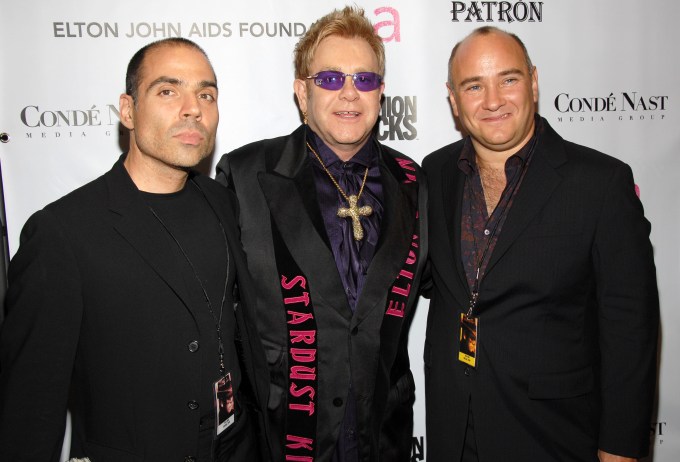
Merck Mercuriadis is seen on the left. (Photo by KMazur/WireImage for Conde Nast media group)

Earlier this week, I spoke with Merck Mercuriadis who has managed icons like Elton John, Guns N’ Roses, and Beyoncé and raised £200 million ($260 million) on the London Stock Exchange in June for an investment vehicle (Hipgnosis Songs) to acquire the catalogues of top songwriters. His plan is to raise and invest £1 billion over the next three to five years, arguing that the shift to passive consumers paying for music will take the industry to heights it has never seen before.

Indeed, streaming music is a paradigm shift from the past. With all the world’s music available in one interface for free (with ads) or for an affordable subscription (without ads), consumers no longer have to actively choose which specific songs to buy (or even which to download illegally).

With it all in front of them and all included in the price, people are listening to a broader range of music: they’re exploring more genres, discovering more musicians who aren’t stars on traditional radio, and going back to music from past decades. Consumers who weren’t previously buying a lot of music are now subscribing for $120 per year and spreading it across more artists.

Retail businesses are doing the same: through streaming offerings like Soundtrack Your Brand (which spun out of Spotify), they’re using commercial licenses – which are more expensive – to stream a broader array of music in stores rather than putting on the radio or playing the same few CDs.

Much of the music industry’s market growth is happening in China, India, Latin America, and emerging markets like Nigeria where subscription apps are replacing widespread music piracy or non-consumption. Tencent Music Entertainment, whose three streaming services have roughly 75% market share in China (a music market that expanded by 34% last year), is preparing for an IPO that could give it roughly the same $29 billion valuation Spotify received in its IPO in April. Meanwhile, music industry revenue from Latin America grew 18% last year.

Western music is infused in pop culture worldwide, so as these countries enter the streaming era they are monetizing hundreds of millions of additional listeners, through ad revenue at a minimum but increasingly through paid subscriptions as well.

At the talent management, publishing, and production firm Primary Wave, founder Larry Mestel is seeing emerging markets drive more revenue to his clients (like Smokey Robinson, Alice Cooper, Melissa Etheridge, and the estate of Bob Marley) as new fan bases engage with their music online. He raised a new $300 million fund (backed by Blackrock and other institutions) in 2016 to acquire rights in music catalogues amid a market he says has improved substantially due to growth opportunities stemming from the streaming model.

It’s not just streaming music platforms that are driving growth either. Streaming video has exploded, whether it’s from short YouTube videos or the growing number of shows on platforms like Hulu and Amazon Prime Video, and with that comes growing sync licensing of songs for their soundtracks; global sync licensing revenue was up 10% year-over-year in 2017 alone. Over the last year, Facebook signed licenses with every large publisher to cover use of song clips by its users in Instagram Stories and Facebook videos as well.

The inflating valuations of songs catalogues

Catalogues are commonly valued based on the “net publisher’s share,” which is the average amount of annual royalty money left over after paying out any percentages owed to others (like a partial stake in the royalties still held by the artist).

When Round Hill Music acquired Carlin for $245 million in January to gain ownership in the catalogues of Elvis Presley, James Brown, AC/DC, and others, it paid a 16x multiple on net publisher share, which is high but not uncommon in the current market when trading catalogues of legendary artists. Just three years ago, multiples anchored in the 10-12 range (or less for newer or smaller artists whose music has not yet shown the same longevity).

Avid Larizadeh Duggan left her role as a general partner at GV to become Chief Strategy & Business Officer of Kobalt

Kobalt, which raised $205 million from VC firms like GV and Balderton Capital to become a technology-centric publisher and label services powerhouse, has also become an active player in the space. Aside from its core operating business (where it stands out from traditional publishers and labels for not taking control of clients’ copyrights), it has raised two funds ($600M for the most recent one) to help institutional investors like the Railpen pension fund in the UK gain exposure to music copyrights as an asset class. In December, their fund acquired the catalogue of publisher SONGS Music Publishing for a reported $160M in a sale process against 13 other bidders looking to buy ownership in songs by Lorde, The Weeknd, and other young pop and hip-hop artists.

Too high a price?

The natural question to ask when there’s a rapid surge of money (and a corresponding surge in prices) in an asset class is whether there’s a bubble. After all, last year’s industry revenues were still only 68% of those in 1999 and the rate of growth will inevitably slow once streaming has captured the early majority of consumers.

But the fundamentals driving this capital are in line with a secular shift – it’s evident that music streaming still has a lot of room to grow in a few short years, especially as a large portion of the human population is just coming online (and doing so over mobile first). Plus as new content formats like augmented and virtual reality come to fruition, new categories of music sync licensing will inevitably accompany them for their soundtracks.

Each catalogue is its own case, of course. As Shamrock Capital managing director Jason Sklar emphasized to me, the rising tide isn’t lifting all boats equally. The streaming revolution appears to be disproportionately benefiting hip-hop, rap, and pop given the youth skew of streaming service users and the digital-native social media engagement of the artists in those genres.

Beyond the purchase price, the critical variable for evaluating a deal in this market is also the operational value a potential buyer can provide to the catalogue: their ability to actively promote songs from the past by pitching them to new TV shows, ad campaigns, and any number of other projects that will keep them culturally relevant. This is where strategic investors have an advantage over purely financial investors in publishing rights, especially when it comes to the longer tail of middle-tier artist’s whose music doesn’t naturally get the inbound demand that the Beatles or Prince catalogues do.

With strong long-term market growth and a wide range of possible niches and strategies, music copyrights are an asset class where we’ll see a number of major new players develop.


from Amazon – TechCrunch https://techcrunch.com/2018/09/30/the-war-over-music-copyrights/