Showing posts with label Amazon – TechCrunch Arman Tabatabai. Show all posts

Monday, August 26, 2019

How to use Amazon and advertising to build a D2C startup

Entrepreneurship in consumer packaged goods (CPG) is being democratized. Every step of the value channel has been compressed and made more affordable (and thereby accessible).

At VMG Ignite, we have worked with dozens of direct-to-consumer startups trying to both find product-market fit and achieve scale through Amazon and online advertising.

This article focuses on customer acquisition, particularly Amazon and online advertising, for the direct-to-consumer (D2C) CPG venture. Selling on Amazon, specifically third-party (3P), has become an increasingly important component of the D2C playbook. About 46% of product searches start on Amazon, which makes it a compelling source of sales even for early-stage ventures.

Table of contents

How to find product-market fit 

People say that ideas are a dime a dozen. They aren’t valuable. But finding product-market fit? Now, that’s hard. The gap between an unexecuted idea and proven product-market fit can seem vast. Yet it’s a critical first step because, ultimately, marketing amplifies your product and value proposition.

If they aren’t compelling, marketing will fail. If they’re compelling, even mediocre marketing can often be successful. So start with a great product that people love.

How do you create a great product, you ask? A/B test your product configuration like you A/B test your landing page, copy, and design. Your product is a variable, not a constant. Build, ship, get feedback. Build, ship, get feedback. Turn detractors into your customer panel for testing.

Early-stage D2C companies typically get their first customers through three channels:

  1. Begging your friends and family to buy and promote your product.
  2. List it on Amazon as a 3P seller. Figure out the platform and start selling!
  3. Advertise on Facebook. Start with a daily budget of 10x your price point to get started and start tinkering with creative, audiences, and settings to minimize cost per order.

The companies that succeed are often the ones that iterate the fastest. In his book Creative Confidence, IDEO founder David Kelley and his co-author (and brother) Tom relay a story of a pottery class that was split into two groups.

The first group was told they would each be graded on the single best piece of pottery they each produced. The second group was told they would each be graded based on the sheer volume of pottery they produced.

Naturally, the first group labored to craft the perfect piece while the second group churned through pottery with reckless abandon. Perhaps not so intuitive, at the end of the class, all the best pottery came from the second group! Iteration was a more effective driver of quality than intentionality.

Don’t know how to manage Amazon or Facebook? Here are some best practices:

How to get started with Amazon


from Amazon – TechCrunch https://techcrunch.com/2019/08/26/how-to-use-amazon-and-advertising-to-build-a-d2c-startup/

Thursday, July 18, 2019

How US national security agencies hold the internet hostage

Team Telecom, a shadowy US national security unit tasked with protecting America’s telecommunications systems, is delaying plans by Google, Facebook and other tech companies for the next generation of international fiber optic cables.

Team Telecom is comprised of representatives from the departments of Defense, Homeland Security, and Justice (including the FBI), who assess foreign investments in American telecom infrastructure, with a focus on cybersecurity and surveillance vulnerabilities.

Team Telecom works at a notoriously sluggish pace, taking over seven years to decide that letting China Mobile operate in the US would “raise substantial and serious national security and law enforcement risks,” for instance. And while Team Telecom is working, applications are stalled at the FCC.

The on-going delays to submarine cable projects, which can cost nearly half a billion dollars each, come with significant financial impacts. They also cede advantage to connectivity projects that have not attracted Team Telecom’s attention – such as the nascent internet satellite mega-constellations from SpaceX, OneWeb and Amazon.

Team Telecom’s investigations have long been a source of tension within Silicon Valley. Google’s subsidiary GU Holdings Inc has been building a network of international submarine fiber-optic cables for over a decade. Every cable that lands on US soil is subject to Team Telecom review, and each one has faced delays and restrictions.


from Amazon – TechCrunch https://techcrunch.com/2019/07/18/how-us-national-security-agencies-hold-the-internet-hostage/

Thursday, July 11, 2019

Unraveling immigration politics and Silicon Valley ethics with Jaclyn Friedman

Immigration may not seem to be a tech issue. But for Americans with some personal or family experience with the idea of separated families and/or concentration camps, it can be hard to see what is currently going on in our names thanks to the U.S. Immigration and Customs Enforcement agency (better known as “ICE”) as anything less than the single most urgent moral or ethical issue in this country today.

This begs a disclaimer: I have Eastern European Jewish family roots in what became the Holocaust. I have a Cuban Jewish mother who came to this country by herself as a young girl refugee and was separated from her family for multiple years due to U.S. immigration policy.

I am a father myself. This piece is personal for me, in other words. If you want to know whether I can be objective here, I would have to admit that seeing repeated images of thousands of children, as young as 4 months old, facing inhumane and abusive conditions in my government’s name and supported by my tax dollars, has been quite possibly the most morally disturbing experience of my life.

Still, given that I write specifically about the ethics of technology here at TechCrunch, is this topic “a fit” for this column? Well, “fortunately,” if not for me or any of us personally, then at least regarding my desire to write up ICE for this column: the Silicon Valley tech industry has a long and deep history of entanglement with undocumented immigrants to this country. And in fact, “thanks” to tech companies such as Palantir, Wayfair, and Amazon Web Services and their present-day collaboration with ICE and its concentration camps, tech and immigration ethics is very much a live topic for today.

It’s also a disturbing and depressing topic. Which is why I’m hoping to offer some hope, by concentrating not only on camps and detentions, but more on a series of innovative and impactful recent protests, in which tech companies played leading roles — both as objects of criticism in some cases and as helpful resources for the critics in others.

First, let’s focus on Palantir. As Manish Singh wrote in TechCrunch in May, “Immigration and Customs Enforcement documents, obtained by advocacy organization Mijente through Freedom of Information Act litigation, note that agents of ICE’s Enforcement and Removal Operations used Palantir’s software to build profiles of immigrant children and their family members for the prosecution and arrest of any undocumented person they encountered in their investigation.”

In other words, along with beds from multibillion-dollar furniture unicorn Wayfair, and web hosting from Amazon, the Peter Theil-funded Palo Alto software power is making this country’s showdown over immigration actively about the tech world, and this Monday, July 8, hundreds of protestors went to Palantir’s offices as part of a week of coordinated activities nationwide.

image1 1

As Mijente campaigns director Priscilla Gonzalez told me, “We noticed the escalation of ICE operations, their invasions of homes, workplaces, and communities, and we began investigating just how people were being monitored and tracked like never before.”

Gonzalez continued, “We found that Palantir’s software allows ICE agents to build profiles of undocumented immigrants filled with personal information like their home address, work address, financial information, social media profile, and more. Palantir is the reason ICE has been able to accelerate its operations, conduct mass raids and rip families and communities apart.”

While it remains to be seen whether such protests will persuade Palantir to drop their contracts with ICE, what is clear is that the trend of staging significant protests against such institutions is only going to grow, as more and more grassroots groups, students, tech workers, faith leaders, elected officials, and others unite to hold them accountable.

Which brings me to my interview for this week.

A few days before the Palantir protest, and less than a week after an employee walkout from the Boston headquarters of Wayfair also drew hundreds of employees and supporters, another major ICE protest took place in Boston. This time, on July 2nd, it was a group of Jewish activists collaborating with Movimiento Cosecha, an organization representing undocumented immigrants.

Echoing yet another protest just a day earlier in which 36 Jewish activists were arrested while protesting an ICE facility in New Jersey, while carrying banners imploring “Never Again Para Nadie” (for no one), in Boston 18 protestors were arrested in similar fashion (multiples of 18 are culturally and religiously significant in Jewish tradition). While the Boston protest was not specifically tied to the tech industry, it was a moving — and telling — example of what tech companies might begin to expect if they continue involvement with ICE.

One of the arrestees in the Boston protest, moreover, was someone I had already been hoping to interview for this column — the nationally renowned sexual ethicist, author, and activist Jaclyn Friedman. As you will see below, Friedman has a lot to say about the intersection of sex, ethics, and tech. She insisted, however, that this interview focus almost exclusively on the ICE protest and the ethical issues behind it. I think the resulting conversation was powerful and educational.

jaclyn 23 683x1024

Greg Epstein: I know you through your work as an expert in sexual ethics, and I’ve been wanting to interview you about work you’ve done on the intersection of sex, ethics, and tech. But then I saw you’d participated in this — what I think may have been a landmark protest — and I had to talk with you about it. Given your background, what led you to participating in this protest?

Jaclyn Friedman: I certainly can and will make connections between what we just did with the Jews Against Ice action [and] sexual ethics, but I honestly just came to it as a human person, and as a Jew who’s just panicked and outraged, and felt a strong need to do something more. This action appealed to me as a Jew, because my activism stems from my Judaism.

That’s where I learned about social justice, where I get the fire in my belly, both in terms of Jewish teachings about tikkun olam, as well as, it just happened the Temple I grew up in was led by the first woman ordained in the modern era, Sally Priesand. [She] was, before I even knew the word feminism, my first feminist role model.

But also obviously the US is running concentration camps, and it’s impossible for me to not take that personally as a Jew. It certainly has everything to do with my work on sexual ethics which is functionally work about bodily autonomy.

If you’re talking about mass incarceration, that’s an issue about bodily autonomy. If you’re talking about concentration camps, it’s certainly an issue about bodily autonomy, and that’s even before we start talking about the amount of sexual assault and molestation that has been allowed to be perpetrated by the folks who are running these detention camps.


from Amazon – TechCrunch https://techcrunch.com/2019/07/11/unraveling-immigration-politics-and-silicon-valley-ethics-with-jaclyn-friedman/

Thursday, June 27, 2019

The rise of the new crypto “mafias”

In the early 2000s, journalists popularized the term “PayPal mafia” to describe the PayPal founders and employees who left to start their own wildly successful tech companies, including Peter Thiel, Reid Hoffman, and Elon Musk. Drawing from that idea, this article seeks to cover the formation and flow of talent within the crypto landscape today.

The crypto world is in a constant state of flux, with new startups entrants joining the industry every single day. These new startups have the potential either to be superstars within a portfolio company or to start the next Coinbase. Additionally, there are already impressive spin-outs from some of the more established crypto companies.

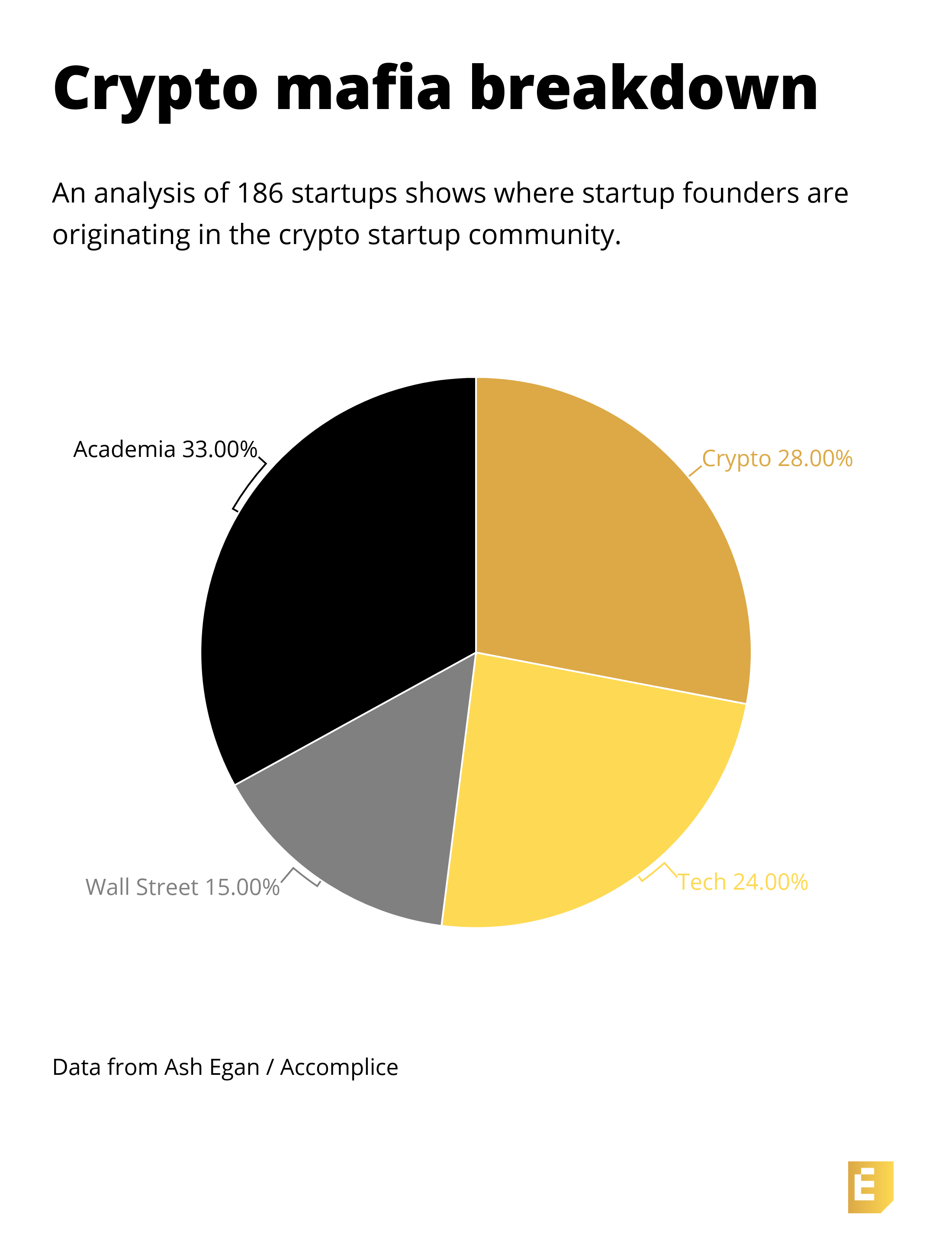
For ease of framing, I’ve separated these early-forming mafias into four categories: CryptoTechWall Street, and Academia. Since 2009, there have been 186 spinout companies originating from those four categories (33% from Academia, 28% from Crypto, 24% from Tech, and 15% from Wall Street).

crypto mafias

Obvious but important disclaimer: this article does not intend to promote organized crime within crypto.

Criteria


from Amazon – TechCrunch https://techcrunch.com/2019/06/27/the-rise-of-the-new-crypto-mafias/

Monday, June 24, 2019

What startup names are most effective?

The next service marketplace wave: Vertical market-networks

The last few decades have produced many successful marketplaces. We went from goods marketplace pioneers such as eBay and Amazon to simple service marketplaces such as Uber, Lyft, Doordash, Upwork, Thumbtack, TaskRabbit, and Fiverr. But why haven’t we seen many successful B2B service marketplaces?

Table of Contents


Why Many B2B Service Marketplaces Failed

Some would argue that companies such as Upwork, Thumbtack, Fiverr, or TaskRabbit are horizontal B2B marketplaces in the sense that they provide access to suppliers of different services. But while businesses do indeed transact with freelancers on such “horizontal” marketplaces, for most service verticals these are limited-value, one-off transactions. They fail to enable long-term business collaborations.

So, such marketplaces haven’t delivered more valuable services nor introduced a new paradigm for how businesses buy specific services at scale and on an on-going basis. Why is that?

Horizontal marketplaces are stuck at the discovery process

Horizontal services marketplaces don’t provide much value beyond matching clients with quality service providers. In other words, they don’t facilitate collaboration between buyers and suppliers, never mind provide ways for the two parties to collaborate more efficiently over time as they engage in follow-on projects.

In essence, the model these marketplaces were built around is not much different from the likes of Craigslist, which put a convenient UX on traditional classified advertisements.

Complex B2B services require workflow and collaboration tools

In their article “What’s Next for Marketplace Startups?,” Andrew Chen and Li Jin found that there aren’t many successful service marketplaces because those offerings are complex, diverse, and difficult to evaluate. It’s challenging to define a successful transaction in a service marketplace because it’s harder to quantify success.

One reason is that several service providers must often work together to complete a single job for a buyer, requiring a complex workflow from end to end. As a result, it’s difficult for marketplaces to not only mediate service delivery but also make it significantly more efficient for buyers and suppliers. If both the buyer and suppliers don’t see a significant efficiency gain other than being initially matched, why would they continue using the marketplace?

(Image via Getty Images / Lidiia Moor)

The $50 billion translation industry is a prime example of complex B2B services marketplaces. On the supply side are roughly 50,000 small agencies around the globe responsible for more than 85% of this $50 billion industry. (Note we are referring to agencies here as suppliers, though they play on both sides.)

On the demand side are businesses that need to translate text from one language into another. Plus about 1,500,000 freelance linguists work in this industry, many of whom are more specialized than professionals in other industries.

Anyone can find and hire a translator on Fiverr or Upwork. Both provide a vast selection of language translators. However, the quality and cost of the translation depends on the translation tools available to the translator as well as their subject expertise.

Neither Fiverr nor Upwork provide computer-aided translation (CAT) and collaborative workflow solutions for users of their platforms. Additionally, neither provides an effective way for all parties to collaborate and continuously improve the efficiency and quality.

But the problem with traditional marketplaces goes even further: Multiple translators and reviewers are usually needed to complete a single job for a customer. Multi-language translation projects are even more complicated. Such projects require multiple service providers and cost estimates, in addition to project management tools.

This is why building a B2B service marketplace is difficult. Service marketplaces must not only connect buyers and suppliers, but also provide tools to enable an efficient and collaborative workflow that reduces wasted time and effort.

Horizontal marketplaces suffer high attrition

In addition to the problems already outlined, traditional marketplaces experience another issue that prevents them from growing and retaining market participants: Buyer and supplier attrition.

Many business services are based on regularly recurring engagements. In some cases, a buyer and a service provider interact daily, requiring a different workflow than gig-marketplaces are built around.

Buyers and suppliers have little motivation to continue interacting on a platform with no workflow automation solutions. They lack a way to improve service efficiency and quality, automate collaboration, payment, paperwork, and other basic processes required for a business.

This is why many traditional marketplaces suffer from slow network effects and high attrition. (A network effect is what happens when a platform, product, or service delivers more value the more it is used.

Think Facebook, eBay, WhatsApp.) Why wouldn’t companies work directly with service providers outside of a marketplace after they were introduced? What incentives keep the service transaction on the marketplace? These are critical questions to answer when building a marketplace.

Traditional marketplaces target broad services, making it nearly impossible to provide workflow solutions for buyers and suppliers. Going forward, successful service marketplaces will be developed relying on an industry-specific SaaS workflow. This will focus buyers and suppliers on longer-term projects and interactions that serve the unique needs of collaborations and transactions in a specific vertical.

Image via Getty Images / OstapenkoOlena

What makes a successful service marketplace?

In “The next 10 Years Will Be About Market Networks,” James Currier, Managing Partner at NFX Ventures, defines a new era of service marketplaces, which he calls market networks.

A market network is a platform that combines elements of an n-sided marketplace, a network, and workflow solutions. An n-sided marketplace is one that requires coordination of multiple supply-side parties to provide a complex service for a single buyer.

Market networks enable multiple buyers and suppliers to interact, collaborate, and transact on the same platform. They provide users with industry-specific workflow solutions that enable efficient, ongoing collaboration on long-term projects. This reduces costs and leads to a higher quality of services and increased overall value for all users.

But how do you actually build a successful market-network platform? While the answer to that varies from company to company, here is our approach. We were able to build a market network for the translation industry that combines the components: network, marketplace, and workflow solution.

STEP 1: SaaS workflow platform unlocks high-value collaboration

The first step to building an effective complex market network is to develop a workflow that is easy for users to embrace. It might not seem like much, but this increases productivity by enabling teams to perform tasks that were previously impossible.


from Amazon – TechCrunch https://techcrunch.com/2019/06/24/the-next-service-marketplace-wave-vertical-market-networks/

Climate change, AI and ethical leadership in ‘big tech’, with Amazon principal UX design lead Maren Costa

“I just want to be proud of the company that I work for,” Maren Costa told me recently.

Costa is a Principal UX Design Lead at Amazon, for which she has worked since 2002. I was referred to her because of her leadership in the Amazon Employees for Climate Justice group I covered earlier this week for my series on the ethics of technology.

Like many of her peers at Amazon, Costa has been experiencing a tension between work she loves and a company culture and community she in many ways admires deeply, and what she sees as the company’s dangerous failings, or “blind spots,” regarding critical ethical issues such as climate change and AI.

Indeed, her concerns are increasingly typical of employees not only at Amazon, but throughout big tech and beyond, which seems worth noting particularly because hers is not the typical image many call to mind when thinking of giant tech companies.

A Gen-X poet and former Women’s Studies major, Costa drops casual references to neoliberal capitalism running amok into discussions of multiple topics. She has a self-deprecating sense of humor and worries about the impact of her work on women, people of color, and the Earth.

If such sentiments strike you as too idealistic to take seriously, it seems Glass Lewis and ISS, two of the world’s largest and most influential firms advising investors in such companies, would disagree. Both firms recently advised Amazon shareholders to vote in support of a resolution put forward by Amazon Employees for Climate Justice and its supporters, calling on Amazon to dramatically change its approach to climate issues.

Glass Lewis’s statement urged Amazon to “provide reassurance” about its climate policies to employees like Ms. Costa, as “the Company’s apparent inaction on issues of climate change can present human capital risks, which have the potential to lead to the Company having problems attracting and retaining talented employees.” And in its similar report, ISS highlighted research reporting that 64 percent of millennials would be reluctant to work for a company “whose corporate social responsibility record does not align with their values.”

Amazon’s top leadership and shareholders ultimately voted down the measure, but the work of the Climate Justice Employees group continues unabated. And if you read the interview below, you might well join me in believing we’ll see many similar groups crop up at peer companies in the coming years, on a variety of issues. All of those groups will require many leaders — perhaps including you. After all, as Costa said, leadership comes from everywhere.”

Maren Costa: (Apologizes for coughing as interview was about to start)

Greg Epstein: … Well, you could say the Earth is choking too.

Costa: Segue.

Epstein: Exactly. Thank you so much for taking the time, Maren. You are something of an insider at your company.

Costa: Yeah, I took two years off, so I’ve actually worked here for 15 years but started 17 years ago. I actually came back to Amazon, which is surprising to me.

Epstein: You’ve really seen the company evolve.

Costa: Yes.

Epstein: And, in fact, you’ve helped it to evolve — I wouldn’t call myself a big Amazon customer, but based on your online portfolio, you’ve even worked on projects I personally have used. Though find it hard to believe anyone can find jeans that actually fit them on Amazon, I must say.

Costa: [My work is actually] on every page. You can’t use Amazon without using the global navigation, and that was my main project for years, in addition to a lot of the apparel and sort of the softer side of Amazon. Because when I started, it was very super male-dominated.

I mean, still is, but much more so. Jeff literally thought by putting a search box that you could type in Boolean queries was a great homepage, you know? He didn’t have any need for sort of pictures and colors.

(Photo: Lisa Werner/Moment Mobile/Getty Images)

Epstein: My previous interview [for this TechCrunch series on tech ethics] was with Jessica Powell, who used to be PR director of Google and has written a satirical novel about Google. One of the huge themes in her work is the culture at these companies that are heavily male-dominated and engineer-dominated, where maybe there are blind spots or things that the-

Costa: Totally.

Epstein: … kinds of people who’ve been good at founding these companies don’t tend to see. It sounds like that’s something you’ve been aware of and you’ve worked on over the years.

Costa: Absolutely, yes. It was actually a great opportunity, because it made my job pretty easy.


from Amazon – TechCrunch https://techcrunch.com/2019/06/24/climate-change-ai-and-ethical-leadership-in-big-tech-with-amazon-principal-ux-design-lead-maren-costa/

Monday, June 17, 2019

Climate justice and environmental ethics in tech, with Amazon engineer Rajit Iftikhar

Nearly 8,000 Amazon employees, many in prestigious engineering and design roles, have recently signed a petition calling on Jeff Bezos and the Amazon Board of Directors to dramatically shift the giant company’s approach to climate change.

By deploying a kind of corporate social disobedience such as speaking out dramatically at shareholders meetings, and by engaging in a variety of community organizing tactics, the “Amazon Employees for Climate Justice” group has quickly become a leading example of a growing trend in the tech world: tech employees banding together to take strong ethical stances in defiance of their powerful employers.

The public actions taken by these employees and groups have been covered widely by the news media. For my TechCrunch series on the ethics of technology, however, I wanted to better understand what participating actively in this campaign has been like some of the individuals involved.

How are employees in high-pressure jobs balancing their professional roles and responsibilities with being actively, publicly in defiance of their employers on a high-profile issue? How do leaders in these efforts explain the philosophy underlying their ethical stance? And how likely are their ideas to spread throughout Amazon and beyond – perhaps particularly among younger tech workers?

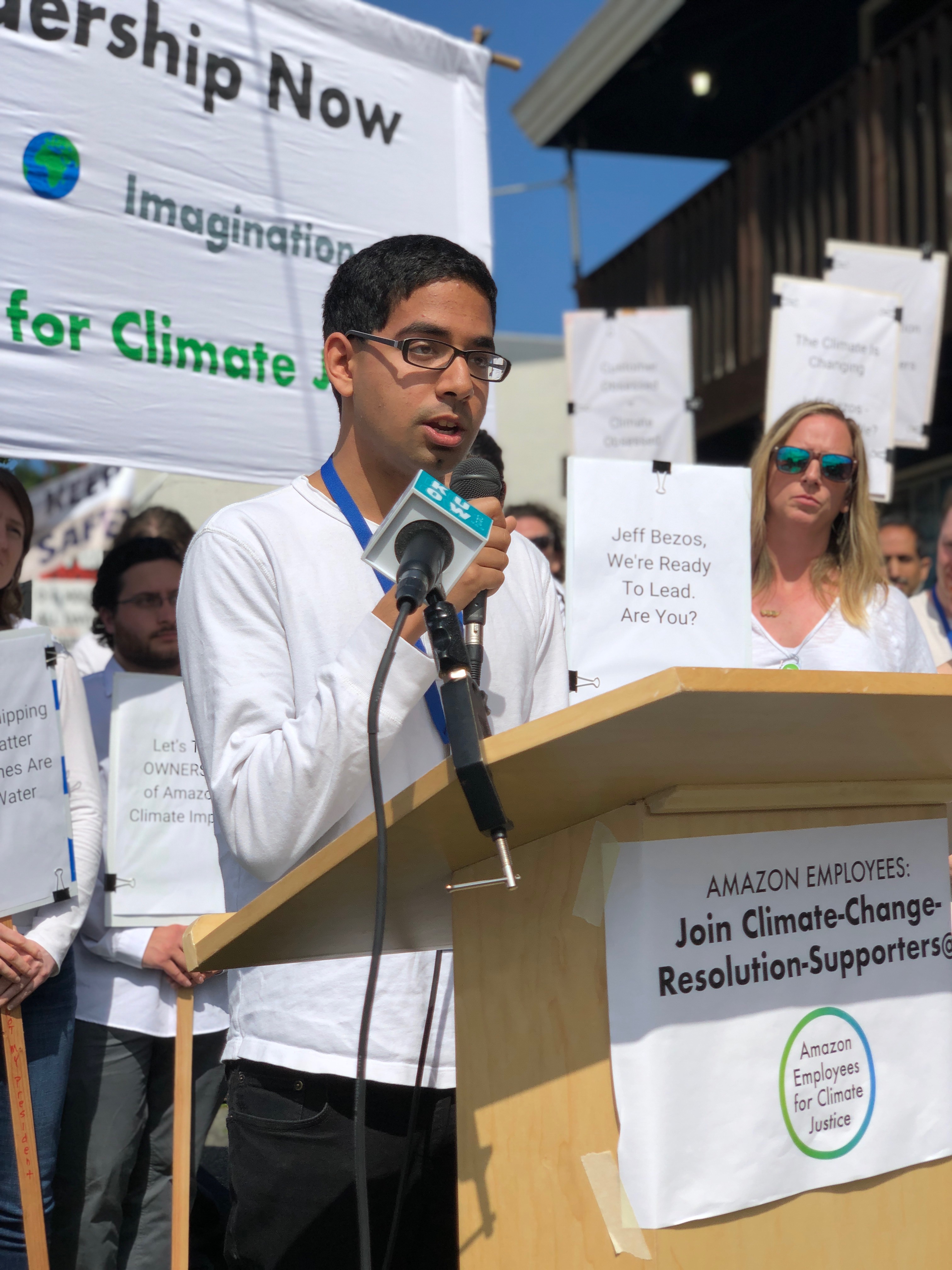
I recently spoke with a handful of the Amazon employees most actively involved in the Employees for Climate Justice campaign, all of whom inspired me– in similar and different ways. Below is the first of two interviews I’ll publish here. This one is with Rajit Iftikhar, a young software engineer from New York who moved to Seattle to work for Amazon after earning his Bachelor’s of Engineering in Computer Science from Cornell in 2016.

Rajit Iftikhar

Rajit struck me as a humble and precociously wise young man who could be a role model — though he seems to have little interest in singling himself out that way — for thousands of other software engineers and technologists at Amazon and beyond.

Greg Epstein: Your personal story has been key to your organizing with Amazon Employees for Climate Justice. Can you start by saying a bit about why?

Rajit Iftikhar: A lot of why I care about climate justice is informed by me having parents from another country that is going to be very adversely affected by [climate change]. Countries like Bangladesh are going to suffer some of the worst consequences from climate change, because of where the country’s located, and the fact that it doesn’t have the resources to adapt.

Bangladesh is already feeling the effects of climate crisis; it is much harder for people to live in the rural areas, [people are] being forced into the cities. Then you have the cyclones that the climate crisis is going to bring, and rising sea levels and flooding.

So, my background [emphasizes, for me] how unjust our emissions are in causing all these problems for people in other countries. And even for communities of color within our country who are going to be disproportionately impacted by the emissions that largely richer people [cause].


from Amazon – TechCrunch https://techcrunch.com/2019/06/17/climate-justice-and-environmental-ethics-in-tech-with-amazon-engineer-rajit-iftikhar/

Friday, June 14, 2019

You won the H-1B lottery: Don’t lose your ticket when changing jobs

Getting an H-1B skilled-worker visa is like winning the lottery — literally: With the number of new visas issued each year capped at 85,000, most of this year’s over 200,000 applicants face disappointment. But if you’re already working in the United States, then you’ve already won the H-1B lottery, and that makes you a hot commodity.

With H-1Bs in short supply, successful companies frequently poach skilled workers. Everyone knows the tech sector thrives on this free exchange of people and ideas, so if another employer needs your skills, why not start working for them?

Well, not so fast. H-1B holders can work only for the company that originally sponsored their visa application. So if you want to change employers, you’ll need to “transfer” your H-1B.

That process used to be relatively straightforward but not in the Trump era. (Boundless recently underwent this process with an employee, so we understand the pain.) The denial rate for initial H-1B applications spiked over five-fold to 32 percent just in the first quarter of fiscal 2019, up from 6 percent in 2015. Crucially, the Trump administration is targeting “continuing” H-1B applications used by existing employees to either renew their H-1B or switch it to a new employer. Even tech giants like Amazon are now seeing double-digit rejection rates.

The bottom line: The days of getting an H-1B transfer quickly rubber-stamped are long gone, and that makes it vital to do whatever you can to keep the odds in your favor. The stakes are high — if things go south, you could lose your right to live and work in the United States. Here’s what H-1B holders need to know about the right — and wrong — ways to set about switching employers:

Don’t take your transfer for granted.

First, understand that an H-1B “transfer” is actually a brand new visa application, not a simple handover of your existing H-1B visa from one employer to another — there’s no such thing.


from Amazon – TechCrunch https://techcrunch.com/2019/06/14/you-won-the-h-1b-lottery-dont-lose-your-ticket-when-changing-jobs/

Tuesday, April 23, 2019

Digging into key takeaways from our 2019 Robotics+AI Sessions Event

Extra Crunch offers members the opportunity to tune into conference calls led and moderated by the TechCrunch writers you read every day. This week, TechCrunch’s Brian Heater and Lucas Matney shared their key takeaways from our Robotics+AI Sessions event at UC Berkeley last week.

The event was filled with panels, demos and intimate discussions with key robotics and deep learning founders, executives and technologists. Brian and Lucas discuss which companies excited them most, as well as which verticals have the most exciting growth prospects in the robotics world.

“This is the second [robotics event] in a row that was done at Berkeley where people really know the events; they respect it, they trust it and we’re able to get really, I would say far and away the top names in robotics. It was honestly a room full of all-stars.

I think our Disrupt events are definitely skewed towards investors and entrepreneurs that may be fresh off getting some seed or Series A cash so they can drop some money on a big ticket item. But here it’s cool because there are so many students. robotics founders and a lot of wide-eyed people wandering from the student union grabbing a pass and coming in. So it’s a cool different level of energy that I think we’re used to.

And I’ll say that this is the key way in which we’ve been able to recruit some of the really big people like why we keep getting Boston Dynamics back to the event, who generally are very secretive.”

Brian and Lucas dive deeper into how several of the major robotics companies and technologies have evolved over time, and also dig into the key patterns and best practices seen in successful robotics startups.

For access to the full transcription and the call audio, and for the opportunity to participate in future conference calls, become a member of Extra Crunch. Learn more and try it for free. 


from Amazon – TechCrunch https://techcrunch.com/2019/04/23/roboticsai-sessions-recap-conference-call/

Thursday, April 11, 2019

WTF is Baillie Gifford?

The SoftBank Vision Fund has been screaming from the venture headlines the last few months, driven by eye-popping rounds (and valuations!) into some of the most notable startups around the world. Yet, SoftBank isn’t the only player rapidly buying up the cap tables of top startups. Indeed, another firm, more than a century old, has been fighting for that late-stage equity crown.

Baillie Gifford.

… Who the what?

When our fintech contributor Gregg Schoenberg interviewed Charles Plowden, the firm’s joint senior partner, about the firm’s prodigious investing, we realized that we have never gone in-depth on one of the most influential investors in Silicon Valley. So here goes.

Baillie Gifford is a 110-year-old asset management firm based out of Edinburgh, Scotland, and has long had a penchant for pre-IPO tech companies. The firm was an early investor into some of the world’s most valuable private and public tech companies, boasting a roster of portfolio companies that includes unicorns from nearly all generations in modern tech, including everything from Amazon, Google, and Salesforce to Tesla, Airbnb, Spotify, newly-public Lyft, Palantir, and even Space X.

Baillie Gifford’s reach stretches way beyond the 280/101 corridor. The firm has an extensive history of investing across geographies, with one of its first and most successful investments coming from an early entry into Chinese e-commerce titan Alibaba. More recently, Baillie Gifford even held a stake in recently IPO’d Chinese electric autonomous vehicle manufacturer NIO, and one the firm’s largest current holdings is South African internet conglomerate Naspers — who itself is an active investor and developer of emerging market tech infrastructure.

The firm’s low profile belies its aggressive capital deployment strategy. According to data from Pitchbook, Baillie Gifford was involved in roughly 20 deals in 2019 and was involved as a lead or participant in transactions worth over $21 billion in aggregate total deal size — beating out behemoth Tiger Global who tallied roughly $13.25 billion on the same metric.

The firm has about $2 billion focused on private companies, so while it is aggressive in getting into later-stage rounds, it is not nearly operating at the scale of say the Vision Fund or Tiger Global. While the asset manager primarily focuses on public-equity investing, the firm has participated in investment rounds as early as Series A according to Pitchbook and CrunchBase data.

Overall, the firm manages $221 billion in assets under management as of January 2019.

As one of the earliest asset managers to invest in pre-IPO tech companies, Baillie Gifford has sourced investments through its long-standing reputation as an investor. The firm first began really diving into private tech investing in the wake of the dot-com bubble. The firm doubled down on the tech sector at a time when few others were investing and sifted through the blood bath to find cheap entryways into companies that are now amongst the world’s largest.

Today, however, the landscape is undoubtedly much different. Tech companies now make up four of the top five largest companies in the world by market cap, and seven out of the top ten. Now, everyone wants a piece of the pie and there seems to be more checks being thrown at founders than most can even fit in their wallets.

With more capital at their fingertips than ever before, founders are opting to keep their startups private for longer in order to avoid the stress of having to deal with short-term public market investors who are more often than not looking for the first opportunity to cash out. So why, amongst so much choice, do companies continue to partner with Baillie Gifford?

Plowden has some insights on that front in our interview, but the summary is that Baillie Gifford just sees itself as a partner. Unlike its peers and most investment managers, Baillie Gifford has no outside shareholder owners to report to. As a partnership, wholly-owned and run by just 44 partners, the firm doesn’t face the organizational constraints that beset most firms that manage billions and billions in assets.

The result? In short, Baillie Gifford has quietly been making a killing, and probably drinking some good scotch along the way as well.


from Amazon – TechCrunch https://techcrunch.com/2019/04/11/wtf-is-baillie-gifford/

Tuesday, March 19, 2019

Media fragmentation is annoying consumers

Deloitte’s Technology, Media and Telecommunications division published its 13th-annual Digital Media Trends survey, focused on identifying changes in the ways US consumers engage with various types of media.

Led by an independent research firm, the survey had roughly 2,000 consumer respondents across demographics – with the report categorizing respondents based on age (Gen-Z: ages 14-21, Millenials: 22-35, Gen-X: 36-52, Boomers: 53-71, and Matures: 72+).

While already accompanied by a succinct 13-page executive summary, the report can largely be summarized in just a couple of sentences: more people are using streaming or alternative media services than ever before, largely due to more user freedom and customization, though the growing quantity and fragmentation of platforms are becoming more frustrating for users to manage.

The survey results directionally echo already well-discussed dynamics, which we’ve previously dug into such as here, here and here. Instead, the most poignant aspects of the report were not the answers or conclusions themselves, but the immense level of support many of them received.


Somewhat interesting:


from Amazon – TechCrunch https://techcrunch.com/2019/03/19/media-fragmentation-is-annoying-consumers/

Tuesday, February 19, 2019

Why can’t we build anything?

Last week, California governor Gavin Newsom announced that he was intending to aggressively scale back plans for the state’s high-speed rail system, which in its most ambitious routing would have connected Sacramento to San Diego. The immediate cause was ballooning costs, which have risen from $33 billion to $77 billion and looked likely to exceed 1.6 Zuckerbergs within a couple of years (the local CA currency, otherwise known as $100 billion).

Unlike other megaprojects, Newsom — and California — were fortunate on the timing. The costs of the project skyrocketed so much and so early, that Newsom still had the credibility and political capital to kill the project. And while a short route from Bakersfield to Merced remains on the table, I don’t expect even that route to be ultimately constructed, since no one knows where either of those cities are.

Why can’t we (i.e. America) build anything? High-speed rail isn’t Silicon Valley whizbang magic technology, it’s definitely not Hyperloop. It’s pretty standard in a bunch of industrialized nations around the world. Clearly that question was on the minds of reporters, because we have been inundated with autopsies on HSR. Yet, the hot takes don’t seem to be adding up to anything meaningful (surprise).

So, we are going to explore this question over the coming weeks, as one of our newest obsessions here at Extra Crunch.

This weekend, I read a book called “Politics across the Hudson: The Tappan Zee Megaproject.” In the book, Philip Mark Plotch chronicles the forty years of planning that led to the reconstruction of the Tappan Zee bridge, which connects Rockland and Westchester Counties north of New York City over the Hudson River. If you want to read about the weeds of government dysfunction around infrastructure, this is your book. It’s a telling tale of patterns we see repeatedly when trying to build great things in the United States:

  • No one wants to talk about finance: Politicians love selling the value of a megaproject without actually discussing the ways they are going to have to pay for it. Yet, paying for it is the project, since it will ultimately affect how citizens enjoy the infrastructure.In the Tappan Zee case, politicians wanted to avoid talking finances because finances meant tolls, and increasing tolls meant losing elections. New York’s current governor Andrew Cuomo ends up avoiding this conversation through luck, as the state received huge indemnities from Wall Street banks related to Iranian money laundering and sanctions that helped fund the bridge (which one planner called “manna from god”).That avoidance has led to the “Willie Brown” model of infrastructure, named for the former San Francisco mayor who wrote about how to get infrastructure projects done:

News that the Transbay Terminal is something like $300 million over budget should not come as a shock to anyone.

We always knew the initial estimate was way under the real cost. Just like we never had a real cost for the Central Subway or the Bay Bridge or any other massive construction project. So get off it.

In the world of civic projects, the first budget is really just a down payment. If people knew the real cost from the start, nothing would ever be approved.

The idea is to get going. Start digging a hole and make it so big, there’s no alternative to coming up with the money to fill it in.

Of course, that model can lead to situations like Boston’s Big Dig, where the final ticket price for a project is so high, that it effectively bankrupts an entire city and its transportation system for years to come.

Infrastructure finance may not be a sexy topic, but it is absolutely critical to getting a project done. It’s hard to tuck tens of billions of dollars in a line item in the state’s budget, and it is hard to get the different funding levers of government involved when a project’s finances aren’t clear.

  • Lack of direction / lack of leadership: Building infrastructure is hard. It’s even harder in the U.S., where a patchwork of regulatory bodies and all levels of government are involved in infrastructure decision-making. In the Tappan Zee bridge case, there were nearly two dozen agencies involved, all with their own agendas and fiefdoms. A dedicated bus lane on the bridge was cut to avoid bringing in the Federal Transit Administration. The Tappan Zee is built at one of the widest points of the Hudson River rather than the narrowest since planners wanted to avoid the jurisdiction of the Port Authority.Here’s the thing though: there were real differences of opinion about the project and what it should accomplish. Some people wanted a rail line, some wanted bus rapid transit, some wanted carpool lanes, and still others wanted more lanes of vehicular traffic. Nothing got done because there was absolutely no consensus either from the communities involved or from their elected leaders.

    One might call a 40-year planning process dysfunctional, but another view would say that this is exactly government working as intended. Things don’t get built if there is no consensus, and that’s the value — and price — of democracy.The challenge though is that you can end up in these counter-veto game theoretic morasses (the book uses “wicked problems”), where no progress will truly ever get made because everyone has an incentive to block a project to get their vision included. Here is where leadership makes such a difference. A leader in these contexts can find points of compromise, build coalitions, set agendas and a vision, and create the momentum required to get these projects moving. Unfortunately, finding leaders in American politics is excruciatingly difficult.

  • Impossibly high expectations / feature creep: Every tech product manager knows the challenges of feature creep. Another person swings by, and they have a choice feature they want added that is going to take time and resources, and has limited benefit to the rest of the user base of the product. Unfortunately, infrastructure projects face many of the same challenges.

    When a megaproject looks like it has built up momentum, everyone tries to glom on to it, adding their pet project. What starts as a bridge replacement project soon morphs into a bridge replacement with a new 30-mile railroad, multiple train stations, a new bus rapid transit system, and a complete zoning overhaul for multiple counties. Yet, those extra “features” also add additional veto points and complications to the original project. They are effectively barnacles on the hull of an already slow-moving ship.

    Big projects galvanize our imaginations, but they shrink under the weight of their own mass. Better to down scale these projects into more bite-sized chunks with clear goals and deliverables rather than being all things to all people.


One thing I was surprised reading about the Tappan Zee bridge is that the actual construction phase was relatively uneventful. The bridge was built mostly on time and on budget, mostly due to extreme attention from the NY governors’s office to not allow deviations (except to stop construction on July 4th so that construction wouldn’t mar riverfront BBQs).

Four years and billions of dollars to rebuild a bridge might be ridiculous, but so were the 36 years of planning that proceeded the reconstruction. Maybe that pattern isn’t true for every project, but the lesson of Politics across the Hudson is that once the government had a plan and timing on its side, it was (relatively) smooth-sailing to the finish line.

Lawyers!

Classen Rafael / EyeEm via Getty Images

Startups need attorneys to succeed, and today, Extra Crunch is pleased to start helping you find the most helpful ones in the industry.

Extra Crunch managing editor Eric Eldon has published his deep-dive package into startup law and startup attorneys today. The package will include profiles of leading attorneys who have been identified by founders as the most helpful to their startups (today’s profile focuses on Cynthia Hess). We also have attorney Daniel McKenzie writing about “How and why you should work with a startup lawyer.” Finally, Eric and his team created a comprehensive overview of all the legal issues that come with building a startup that they compiled into a handy A-to-Z guide.

Our hope is that some of the thornier issues of building a startup can be made just a bit easier if you are armed with the right, vetted information. Let us know your thoughts.

“Mo Money, Mo Problems” for SoftBank

KAZUHIRO NOGI/AFP/Getty Images

Written by Arman Tabatabai

SoftBank’s voracious spending habits might be starting to catch up to the company. According to the Wall Street Journal, the Vision Fund’s two largest investors — the Public Investment Fund of Saudi Arabia (PIF) and Abu Dhabi’s Mubadala Investment Company — are growing increasingly frustrated with the fund’s investment process, governance structure, and the exorbitant valuations and prices paid.

Apparently, dishing out billion dollar checks like Halloween candy doesn’t make you popular with the people who give you those billions of dollars.

This isn’t the first time we’ve heard angry whispers from Vision Fund investors, with previous reports suggesting SoftBank significantly pared down previous investments in WeWork and other portfolio companies after facing serious LP pushback on the check size.

Part of the LP concern over SoftBank’s laissez-faire attitude towards check writing comes down to issues of governance. As we’ve previously discussed in our attempts to unravel SoftBank’s beast of a corporate structure, SoftBank often invests in companies at the SoftBank holding company level before selling the ownership to the Vision Fund at a later date. In the follow-on transactions, the Vision Fund often ends up paying more — in some cases billions of dollars more — than the initial investment. Now, LPs are concerned that they’re getting fleeced for billions on the back end as SoftBank drives up those investment valuations.

The ownership transfer process is just one aspect of the reportedly more general investor concerns around an opaque, complex, and disorganized investment process where SoftBank figurehead Masayoshi Son can overrule any investment decision with a “Gladiatoresque thumbs-up, thumbs-down”. According to the WSJ:

Concerns about valuation of the fund’s investments are closely linked to concerns about its investment process, in particular the power wielded by Mr. Son. In recent weeks, Mr. Son overruled objections from partners within SoftBank to a Vision Fund investment valued at as much as $1.5 billion into Chehaoduo Group, a Chinese online car-trading platform, according to people familiar with the matter. Chehaoduo was accused of fraud in recent weeks by a competitor.

And as LPs are growing concerned on how money is flowing out of the Vision Fund, SoftBank is also facing pressure from regulators on the money it is bringing in. While we’ve touched on SoftBank’s “love for leverage” before, credit agencies are once again expressing concern over the Vision Fund and SoftBank’s frothy debt levels, even noting that the company’s already junk-rated credit ratings have a better chance of getting downgraded further rather than improving.

All this goes to say that while sexy headlines and frequent nine-figure-plus deals make it easy to think SoftBank has a blank check to dish out to any unicorn they please, the clock may be striking midnight for SoftBank as they face the reality of their enormous spending, which may not bode well for their hopes for a second Vision Fund.

The Overlooked Element of the Amazon HQ2 Battle

Written by Arman Tabatabai

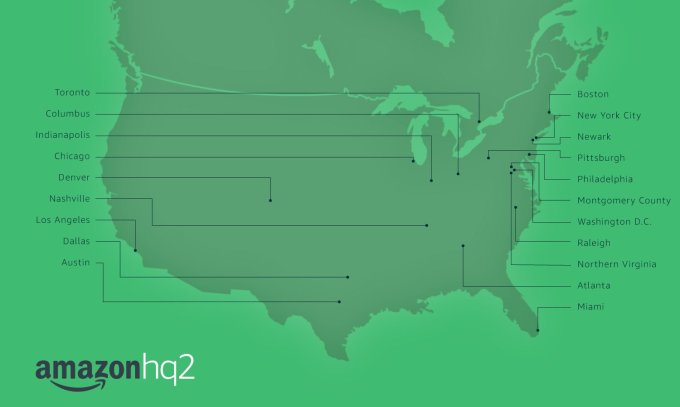
Amazon’s decision last week to halt plans to bring a second headquarters to New York City’s Long Island City neighborhood brought passionate responses from two completely schools of thought.

Some celebrated the breakup as a defeat of unjust corporate tax breaks, subsidies, and gentrification, while others threw up their hands in outrage over the disappearance of tens of thousands of jobs and future economic value that an Amazon presence would bring.

While these two arguments have been beaten to death, the remaining half of Amazon’s HQ2 development in Northern Virginia highlights an aspect of the controversial process that often gets overlooked.

Over the weekend, the Washington Post highlighted how Amazon’s pending arrival in Crystal City has helped accelerate large infrastructure projects that have long been in limbo, including public transport expansions, roadway expansions, and the construction of a new bridge to the Airport.

On top of financial investments into these projects from Amazon, the operational dates for the new HQ2 creates a timeline and has forced urgency to actually finalize plans and get these projects completed.

A huge but often overlooked political benefit of Amazon’s HQ2 process is this ability to catalyze action around public projects that otherwise may face the purgatory of public infrastructure development. While many have criticized Amazon for its auction-style selection process, many mayors and representatives from other cities that participated in the HQ2 process actually viewed the process in a positive light because they were able to unlock economic value and incentives for the city that would have been much tougher to realize otherwise.

Obsessions

  • More discussion of megaprojects, infrastructure, and “why can’t we build things”
  • We are going to be talking India here, focused around the book “Billonnaire Raj” by James Crabtree
  • We have a lot to catch up on in the China world when the EC launch craziness dies down. Plus, we are covering The Next Factory of the World by Irene Yuan Sun.
  • Societal resilience and geoengineering are still top-of-mind
  • Some more on metrics design and quantification

Thanks

To every member of Extra Crunch: thank you. You allow us to get off the ad-laden media churn conveyor belt and spend quality time on amazing ideas, people, and companies. If I can ever be of assistance, hit reply, or send an email to danny@techcrunch.com.

This newsletter is written with the assistance of Arman Tabatabai from New York


from Amazon – TechCrunch https://techcrunch.com/2019/02/19/why-cant-we-build-anything/

Monday, January 7, 2019

HQ2 fight continues as New York City and Seattle officials hold anti-Amazon summit

The heated debate around Amazon’s recently announced Long Island City “HQ2” is showing no signs of cooling down.

On Monday morning, the Retail, Wholesale and Department Store Union (RWDSU) hosted a briefing in which labor officials, economic development analysts, Amazon employees and elected New York State and City representatives further underlined concerns around the HQ2 process, the awarded incentives, and the potential impacts Amazon’s presence would have on city workers and residents.

While many of the arguments posed at the Summit weren’t necessarily new, the wide variety of stakeholders that showed up to express concern looked to contextualize the far-reaching risks associated with the deal.

The day began with representatives from New York union groups recounting Amazon’s shaky history with employee working conditions and questioning how the city’s working standards will be impacted if the 50,000 promised jobs do actually show up.

Two current employees working in an existing Amazon New York City warehouse in Staten Island provided poignant examples of improper factory conditions and promised employee benefits that never came to fruition. According to the workers, Amazon has yet to follow through on shuttle services and ride-sharing services that were promised to ease worker commutes, forcing the workers to resort to overcrowded and unreliable public transportation. One of the workers detailed that with his now four-hour commute to get to and from work, coupled with his meaningfully long shifts, he’s been unable to see his daughter for weeks.

Various economic development groups and elected officials including, New York City Comptroller Scott Stringer, City Council Speaker Corey Johnson, City Council Member Jimmy Van Bramer, and New York State Senator Mike Gianaris supported the labor arguments with spirited teardowns of the economic terms of the deal.

Like many critics of the HQ2 process, the speakers’ expressed their beliefs that Amazon knew where it wanted to bring its second quarters throughout the entirety of its auction process, given the talent pool and resources in the chosen locations, and that the entire undertaking was meant to squeeze out the best economic terms possible. And according to City Council Speaker Johnson, New York City “got played”.

Comptroller Stringer argued that Amazon is taking advantage of New York’s Relocation and Employment Assistance Program (REAP) and Industrial and Commercial Abatement Program (ICAP), which Stringer described as outdated and in need of reform, to receive the majority of the $2 billion-plus in promised economic incentives that made it the fourth largest corporate incentive deal in US history.

The speakers continued to argue that the unprecedented level of incentives will be nearly impossible to recoup and that New York will also face economic damages from lower sales tax revenue as improved Amazon service in the city cannibalizes local brick & mortar retail.

Fears over how Amazon’s presence will impact the future of New York were given more credibility with the presence of Seattle City Council members Lisa Herbold & Teresa Mosqueda, who had flown to New York from Seattle to discuss lessons learned from having Amazon’s Headquarters in the city and to warn the city about the negative externalities that have come with it.

Herbold and Mosqueda focused less on an outright rejection of the deal but instead emphasized that New York was in a position to negotiate for better terms focused on equality and corporate social responsibility, which could help the city avoid the socioeconomic turnover that has plagued Seattle and could create a new standard for public-private partnerships.

While the New York City Council noted it was looking into legal avenues, the opposition seemed to have limited leverage to push back or meaningfully negotiate the deal. According to state officials, the most clear path to fight the deal would be through votes by the state legislature and through the state Public Authorities Control Board who has to unanimously approve the subsidy package.

With the significant turnout seen at Monday’s summit, which included several high-ranking state and city officials, it seems clear that we’re still in the early innings of what’s likely to be a long battle ahead to close the HQ2 deal.

Amazon did not return requests for immediate comment.


from Amazon – TechCrunch https://techcrunch.com/2019/01/07/hq2-fight-continues-as-new-york-city-and-seattle-officials-hold-anti-amazon-summit/

Wednesday, December 5, 2018

Foxconn or Foxgone? Tariffs, Wisconsin, and iPhone fires

First some notes on SoftBank’s rumored expansion into China and its weird fund math, then Foxconn, and then quick notes on tech depression, Huawei, and more.

TechCrunch is experimenting with new content forms. This is a rough draft of something new – provide your feedback directly to the author (Danny at danny@techcrunch.com) if you like or hate something here.

SoftBank has fund visions (and a Vision Fund) for China? That, and more money

Kane Wu at Reuters reported over night that SoftBank is looking to open an office and hire an investment team in China, which Wu says will be based in Shanghai. That’s following the fund’s recent global expansion with new targeted offices in Saudi Arabia and India.

When I saw this, I sort of did a double-take: SoftBank doesn’t have a presence in China? The fund has reportedly been seeking investments in some of China’s leading unicorn stars, including controversial face recognition startup SenseTime, and leading edtech startup Zuoyebang (作业帮, which literally translates as “school assignment help”). (Hat tips to Selina Wang at Bloomberg, who seems to just be sitting in Vision Fund partner meetings). And of course, it dumped a pretty penny into WeWork China, where it was part of a $500 million syndicate, and is a huge investor in Didi.

It’s sort of obvious that SoftBank would expand to China. What will be interesting though is to see how the fund structures itself long-term. As far as I know, the Vision Fund is a singular “fund” that invests worldwide (send me an email if I am wrong on this count). China has a thicket of regulations on funds and companies, which is one of several reasons we see specifically China-focused vehicles (such as Lightspeed and Lightspeed China or Sequoia and Sequoia China). If the Vision Fund continues to be a unified fund, that would be a notable strategy shift that might be cloned by other trans-Pacific funds.

Aside: SoftBank Vision Fund math is complicated

Rajeev Misra, board director of SoftBank Group and CEO of SoftBank Investment Advisors. Photo by Drew Angerer/Getty Images.

When it first closed the Vision Fund, SoftBank explained they had raised just over $93 billion in committed capital or, more precisely, around $93.15-$93.2 billion according to the initial investor presentations and its annual Form D filings. In those docs, SoftBank said that the fund was financed with $28 billion from SoftBank and $65 billion from third-party investors.

On top of the $93 billion raised for the Vision Fund, SoftBank detailed that it had committed $4.5 billion of its own capital to a separate “Delta Fund,” which was used to alleviate conflicts around SoftBank’s Didi investment. Thus, SoftBank’s total VC funding aggregates to around $97.7 billion.

To add a complication, SoftBank later shifted $1.6 billion of the Vision Fund’s previously disclosed $65 billion in third-party capital over to the Delta Fund. In current disclosures, SoftBank shows $91.7 billion of committed capital for the Vision Fund ($28.1 billion from SoftBank and $63.6 billion from third-party investors). For the Delta Fund, SoftBank shows $6 billion in committed capital ($4.5 billion SoftBank contribution and $1.6 billion from third-party investors).

Here is where it gets even more complicated. In its latest filings, SoftBank also notes that it completed the interim closing of an additional $5 billion for the Vision Fund in mid-October, “intended for the installment of an incentive scheme for operations of SoftBank Vision Fund.” That additional cash would bring Vision Fund’s total committed capital to $96.7 billion, and $102.7 billion together with the Delta Fund.

While it wouldn’t be included in the committed equity capital total, SoftBank is also rumored to be raising a $4 billion credit facility to help finance additional acquisitions.

So, it’s probably best to say that the Vision Fund — as constituted right now — is $97 billion or $96.7 billion with precision, assuming this $5 billion reaches a final close.

SoftBank IPO

We have of course covered SoftBank quite obsessively, particularly its debt situation (Part 1, Part 2, Part 3, Part 4, and Part 5). What we haven’t covered more recently is the latest developments in SoftBank’s IPO, which is slated for December 19th and expected to bring in a haul of $21 billion. More to come on that front in the coming days.

Foxconn or Foxgone?
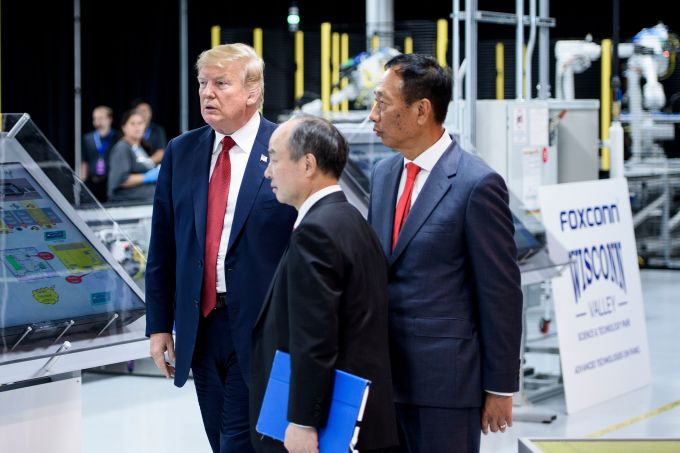
US President Donald Trump and Foxconn Chairman Terry Gou. BRENDAN SMIALOWSKI/AFP/Getty Images

The South China Morning Post reported yesterday that Foxconn is investigating expanding its factories to Vietnam in order to avoid tariffs. Makes sense, and I have some calls this week and next trying to suss out how much hardware supply chains have really changed in response to the trade conflict.

That decision though isn’t just about the trade conflict, but also about the quickly increasing wages of Chinese laborers as well as political interference from Beijing. The Trump administration’s trade policies are just the excuse Foxconn needs to (at least partially) extricate itself from China, while saving face in the process.

What’s interesting is that Foxconn is also dealing with a massive brush fire in Wisconsin, where it received one of the largest economic development incentives ever offered by an American government, a whopping $3 billion package that was expected to drive manufacturing employment in the state.

Over night, Republicans in the state legislature passed a bill that would place large restrictions on incoming Democratic governor Tony Evers. Jessie Opoien for the (Madison) Cap Times:

Under the bill, legislators would have increased influence over the Wisconsin Economic Development Corporation, and the WEDC board, not the governor, would appoint the job creation agency’s CEO. However, the governor’s power to appoint a CEO would be restored in September 2019.

That is the agency that provided the Foxconn funding, which has become a political football in Wisconsin politics. Republicans are trying to protect one of the major economic legacies of outgoing governor Scott Walker, as well as what they believe is the future direction of manufacturing work in the state. Democrats smell a boondoggle in the making.

If that wasn’t all, rumored skimpy sales for iPhones is putting enormous pressure on Foxconn’s bottom line. Debby Wu at Bloomberg reported two weeks ago that:

The contract manufacturer aims to cut 20 billion yuan ($2.9 billion) from expenses in 2019 as it faces “a very difficult and competitive year,” according to an internal document obtained by Bloomberg. The company’s spending in the past 12 months is about NT$206 billion ($6.7 billion).

Foxconn is a very dynamic organization that has weathered repeated crises over the years. It is pretty much unique in what it does today: very few other companies can scale up and down hundreds of thousands of workers to meet iPhone and other device demands with such alacrity.

But, the fundamentals of the mobile device market have apparently changed dramatically this year, and Foxconn is likely to be the company most harmed as the assembler of those devices. That could destroy not just the Chinese dream of leading in manufacturing, but also the Vietnam and Wisconsin dreams as well.

Also: If you haven’t read it, this poetry by a Foxconn worker who committed suicide really resonated with me. Foxconn’s suicide problem is well-documented, but we often don’t hear from the individuals themselves.

Quick bites

Which big tech companies are most depressed?

Blind, the anonymous enterprise chatting app that has taken the tech world by storm, published survey results asking tech employees “I believe I am depressed.” Roughly 40% of employees responded yes. Interestingly, there wasn’t too much variation between companies. Amazon had the highest rate at 43% and Apple had the lowest rate at 30%. It’s an informal survey, probably without high scientific validation, but it is a reminder for all of us in the community that mental health and burnout is very real in the startup and tech ecosystems and we should be vigilant in helping each other when times are rough.

More bad news for Huawei as British Telecom bans its equipment

This is one of those stories that we are just going to keep on hearing about. After bans in Australia and New Zealand, British Telecom has announced they will not just ban Huawei’s 5G equipment, but also its 3G and 4G equipment. Britain, like Aus/NZ, Canada and the US are part of the Five Eyes intelligence network, and national security officials have been leading the crusade against Huawei infrastructure. What’s interesting is not just the rapidity of the bans, but also that the bans haven’t (from what I have seen) migrated outside the Five Eyes community yet.

Pendo commits to hometown of Raleigh

Relaigh skyline. Photo by James Willamor used under Creative Commons via Flickr.

Pendo is a digital product management platform that has had quite a bit of success with customers and has raised more than $100 million in VC funding, most recently a Series D from Sapphire. The company announced that they have received a grant from home state North Carolina’s economic development department to grow in the Raleigh region. Pendo is committing $34.5 million to its headquarters (with the potential of creating 590 jobs), while the state will offer around $8.8 million in potential reimbursements over the next 12 years.

Given what I wrote yesterday about Wes McKinney leaving NYC and heading to Nashville and the work Chattanooga is doing to aid startups, it’s great to see other hotspots like Raleigh, NC invest to build out their ecosystems in a compelling way.

Todd Olson, CEO of Pendo, explained to me by email that, “Office rents in our downtown are a fraction of the cost of operating in other cities, and the cost of living is appealing to our employees. They can afford to buy a house here. In some markets around the country, that is becoming more difficult. It’s also just a nice place to live and work.”

Creative work is increasingly going to have to find a lower cost home.

What’s next

I am still obsessing about next-gen semiconductors. If you have thoughts there, give me a ring: danny@techcrunch.com.

Thoughts on Articles

The LP Anti-Portfolio – Great short read. Lindel Eakman, former managing director at UTIMCO, the University of Texas/Texas A&M endowment, gives a list of funds that he passed on that he now regrets. Unfortunately, this is pretty rare coming from an LP, albeit a former one. It would be great to get more public discussion on what funds were missed and why by LP investors.

Hopefully more reading time tomorrow.

Reading docket

What I’m reading (or at least, trying to read)

  • Huge long list of articles on next-gen semiconductors. More to come shortly.


from Amazon – TechCrunch https://techcrunch.com/2018/12/05/foxconn-or-foxgone-tariffs-wisconsin-and-iphone-fires/